Tech · Beginner to Advanced · Handwritten PDF notes
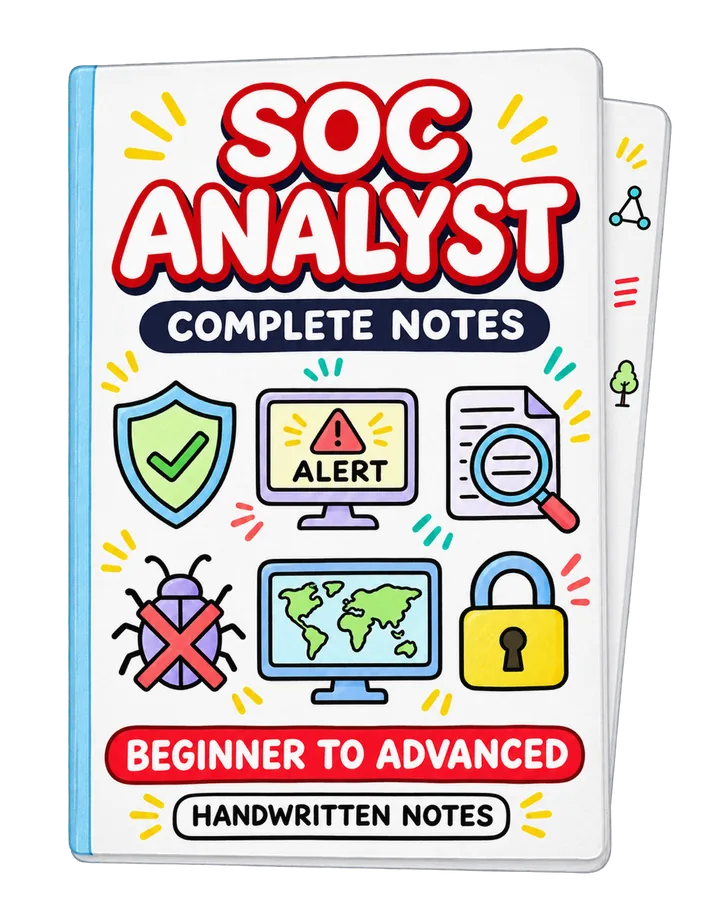
SOC Analyst Complete Notes
Instant PDF download after payment. Pay once, keep forever.
- Instant download
- Lifetime access
- UPI, GPay, PhonePe, cards
Complete coverage
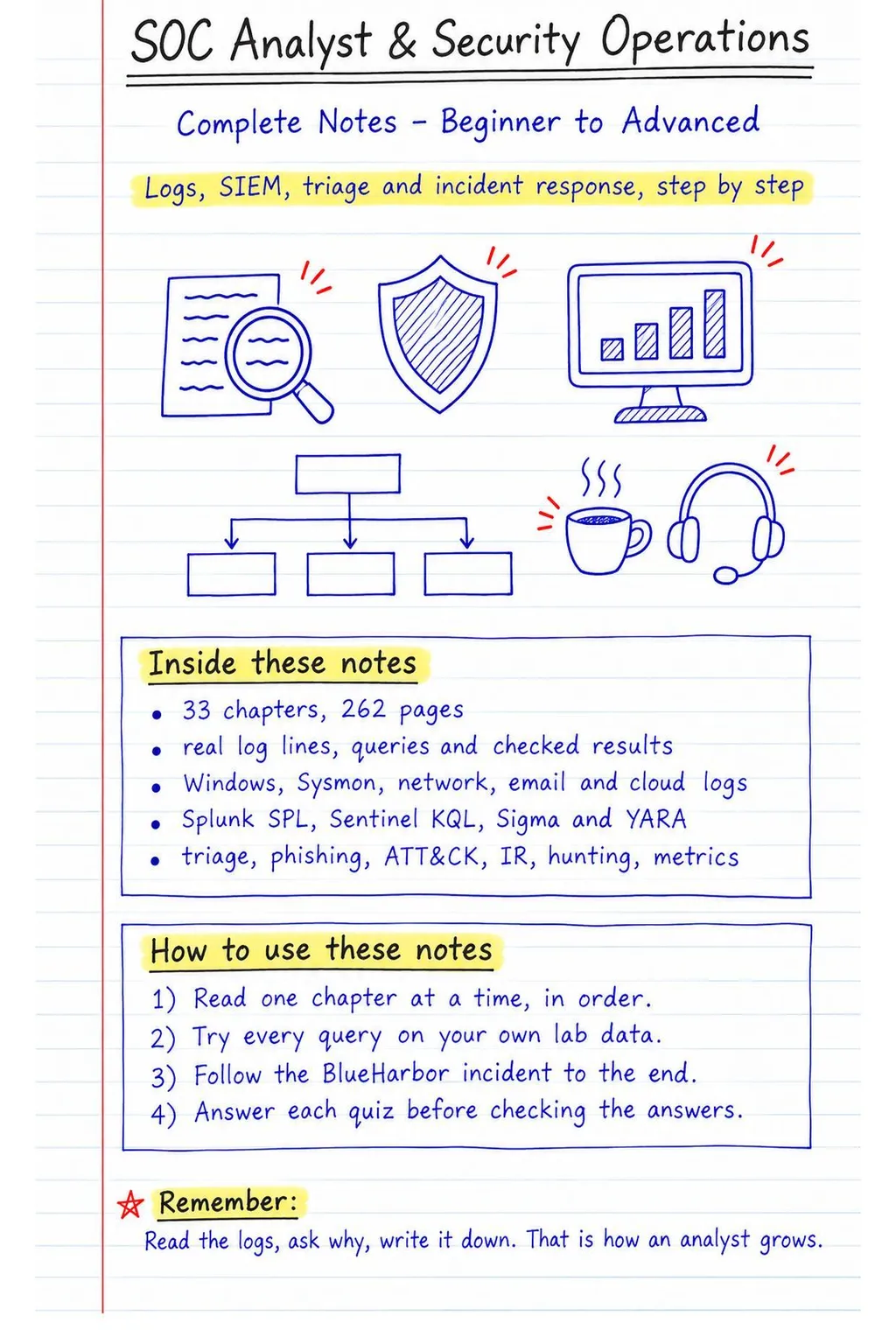
What you learn in all 33 chapters
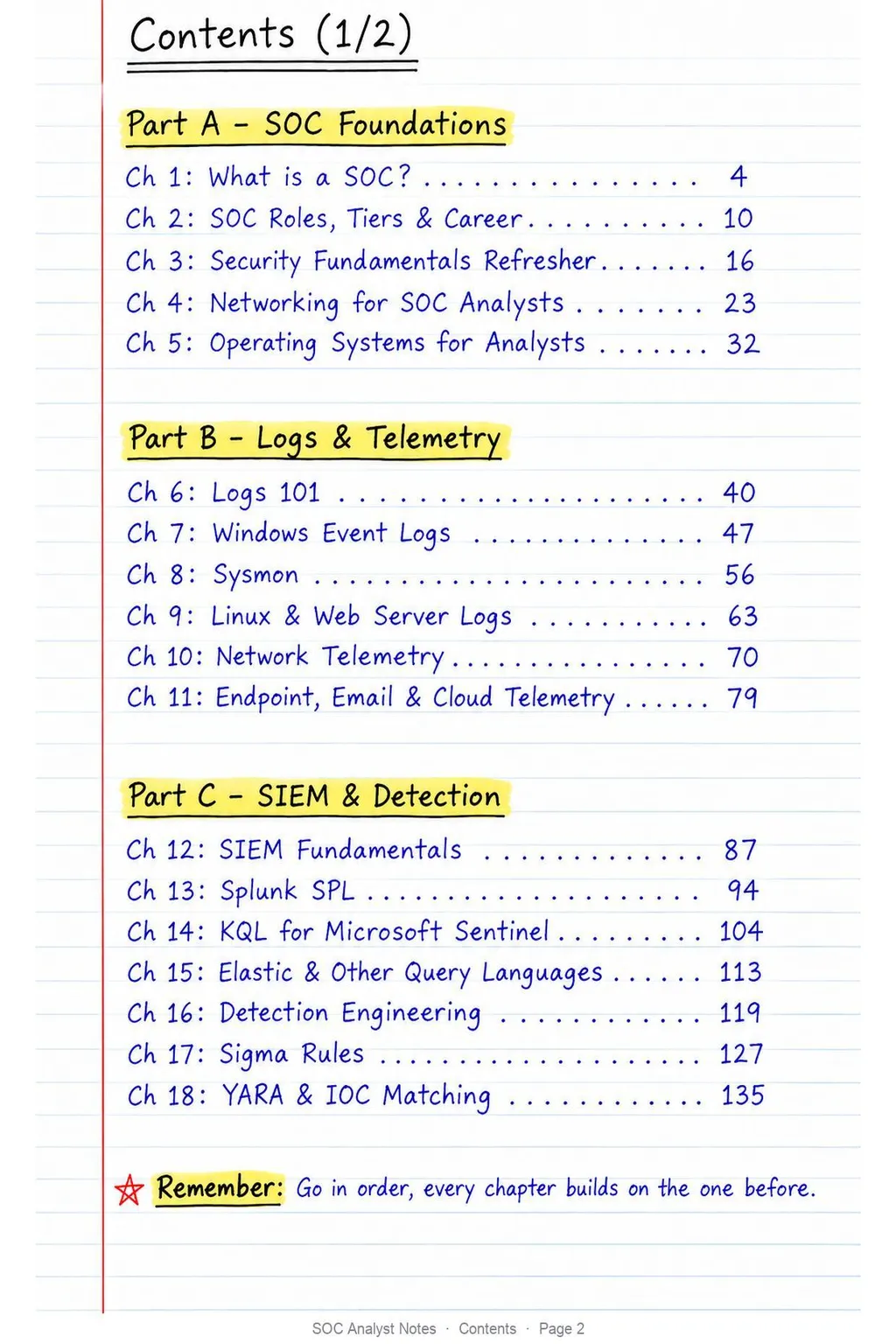
Open any chapter to see every topic it covers and the page it is on.
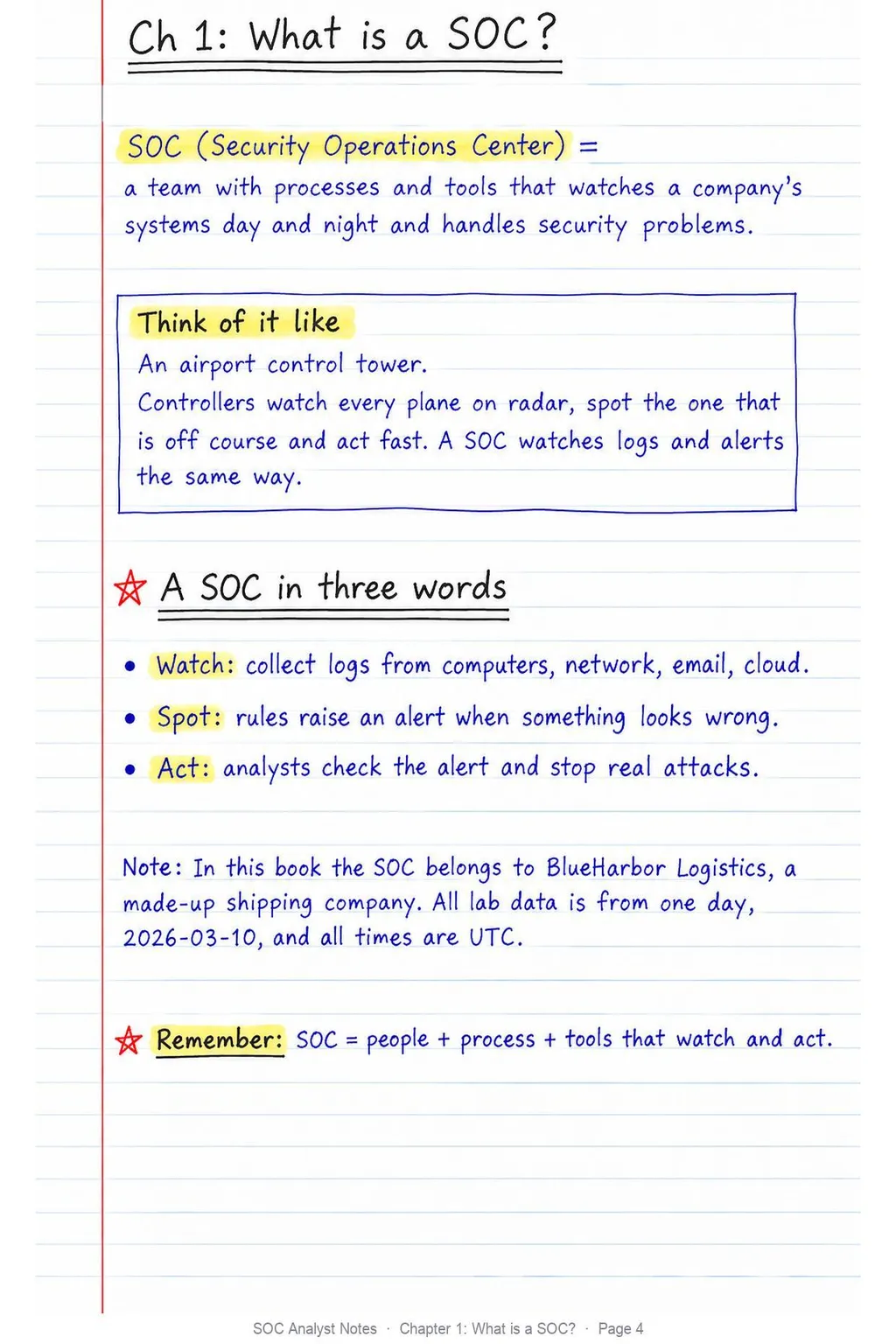
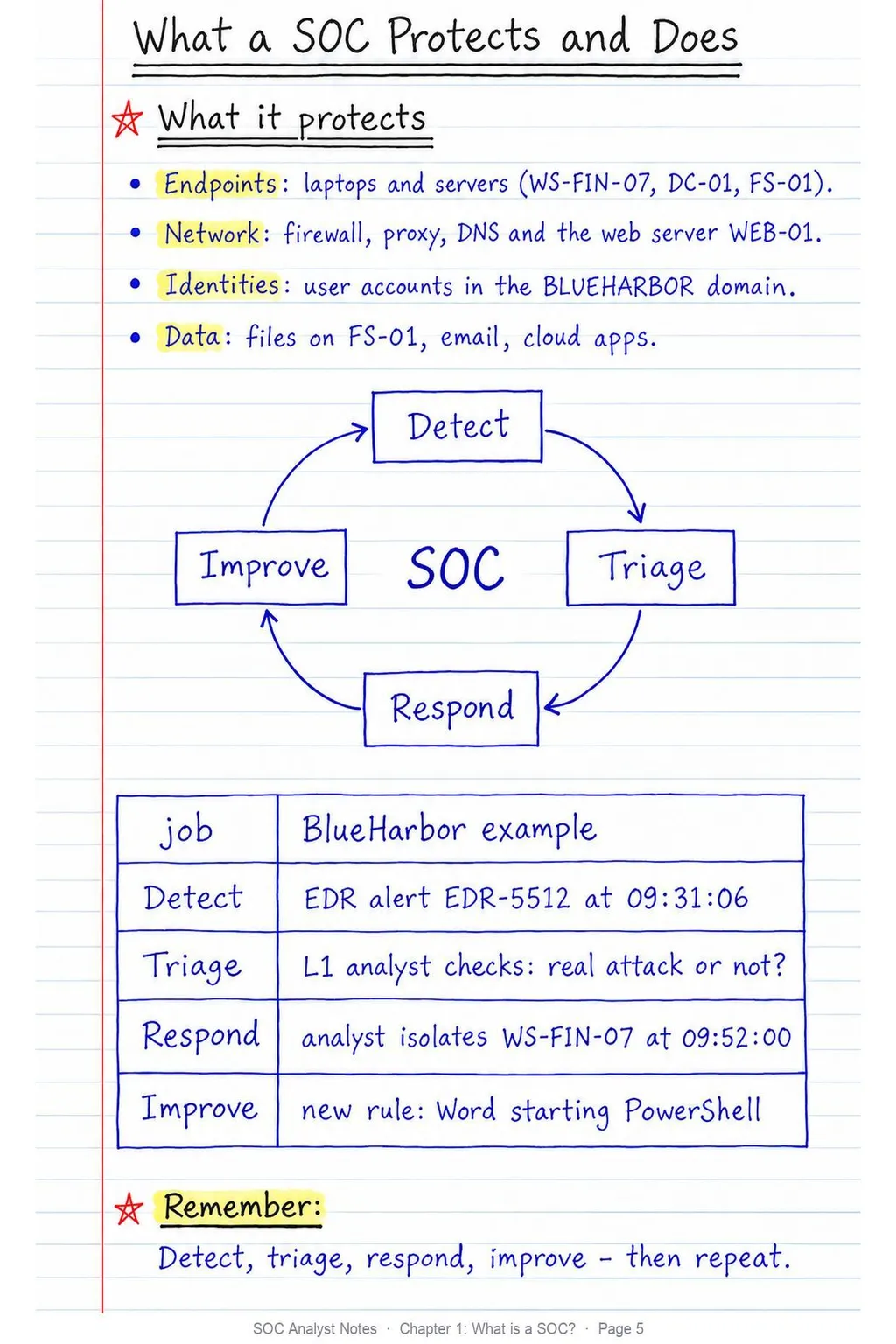
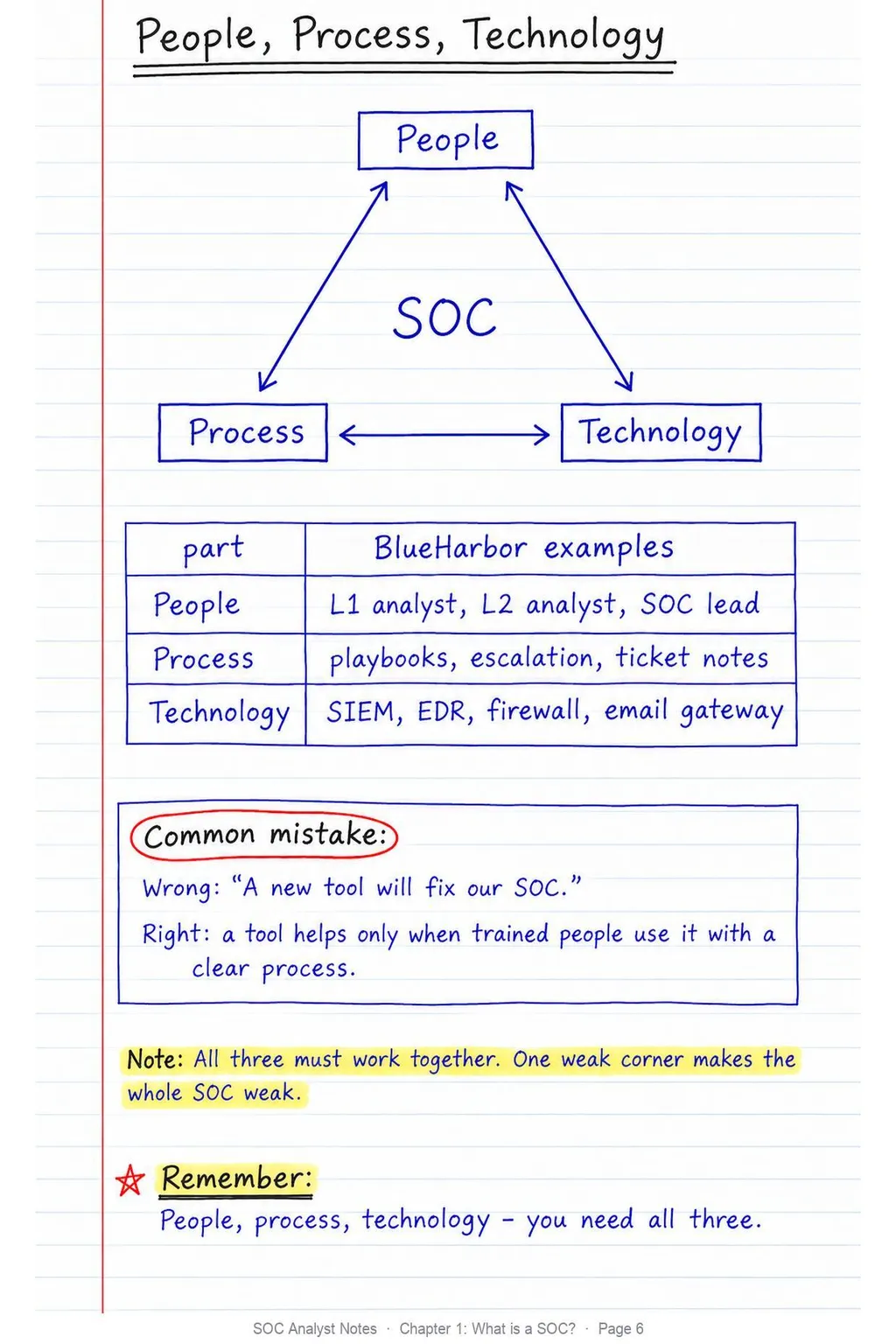
Understand what a SOC is: what it protects and does, people, process and technology, SOC models, and a day at the BlueHarbor SOC.
Learn how a SOC team is organised: L1, L2 and L3 tiers, other SOC roles, shifts, handover and 24x7 coverage, the skills that matter and an overview of certifications.
Refresh the security basics: the CIA triad, threat, vulnerability and risk, attacker types and motives, common attacks an analyst sees, defense in depth and security controls.
Learn the networking an analyst needs: OSI versus TCP/IP, IP ranges, ports and protocols, the TCP handshake, DNS lookups, HTTP and HTTPS status codes, NAT, proxies, firewalls and reading a connection record.
Read operating systems like an analyst: processes, PIDs and parents, a normal Windows process tree, users, groups and privileges, registry and autoruns, key paths, Linux essentials and suspicious versus normal.
Learn why logs matter: what a log is, a log sources map, Syslog, JSON, CSV and CEF formats, timestamps and UTC, parsing and normalization, retention and log volume.
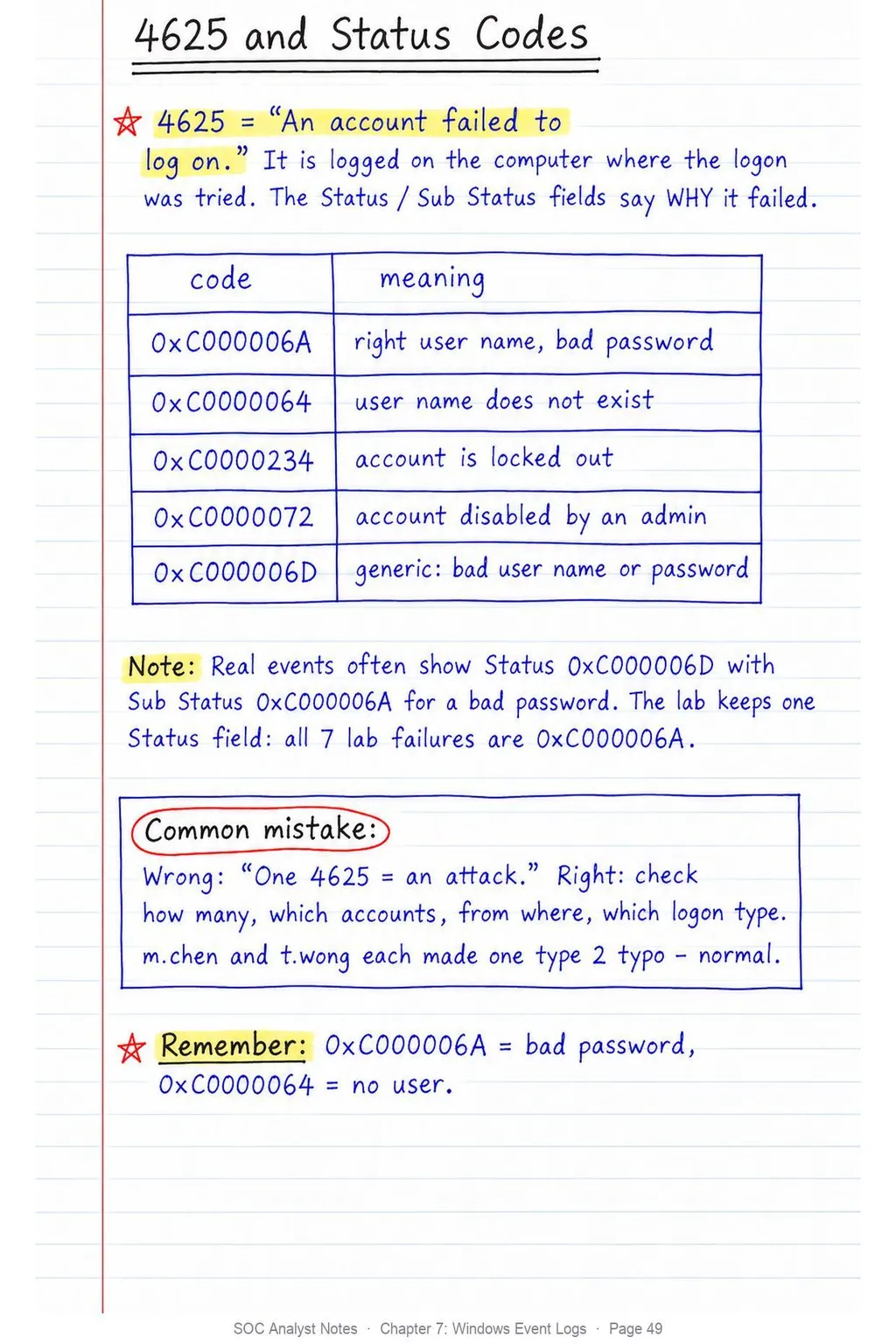
Read Windows Event Logs: Event Viewer, 4624 logon types, 4625 failures and status codes, the FS-01 failures, 4688 process creation, persistence and account events, Kerberos and NTLM, and 1102 log cleared.
Use Sysmon to see more: what it adds, key event IDs, WINWORD starting PowerShell, DNS and network events, file drops and LSASS access, and Sysmon config basics in XML.
Investigate Linux and web server logs: auth.log and sshd messages, counting a brute force with grep and awk, journalctl, web access logs, spotting web attacks, and a brief look at fail2ban and auditd.
Read network telemetry: firewall allow and deny logs, proxy logs showing C2 traffic, DNS logs and the rarest name, NetFlow versus full packet capture, tshark, Zeek conn.log, Suricata alerts and Snort rule anatomy.
Collect evidence from endpoints, email and cloud: what EDR records, antivirus versus EDR versus XDR, email gateway logs, email headers, SPF, DKIM and DMARC, cloud audit logs and identity logs with MFA events.
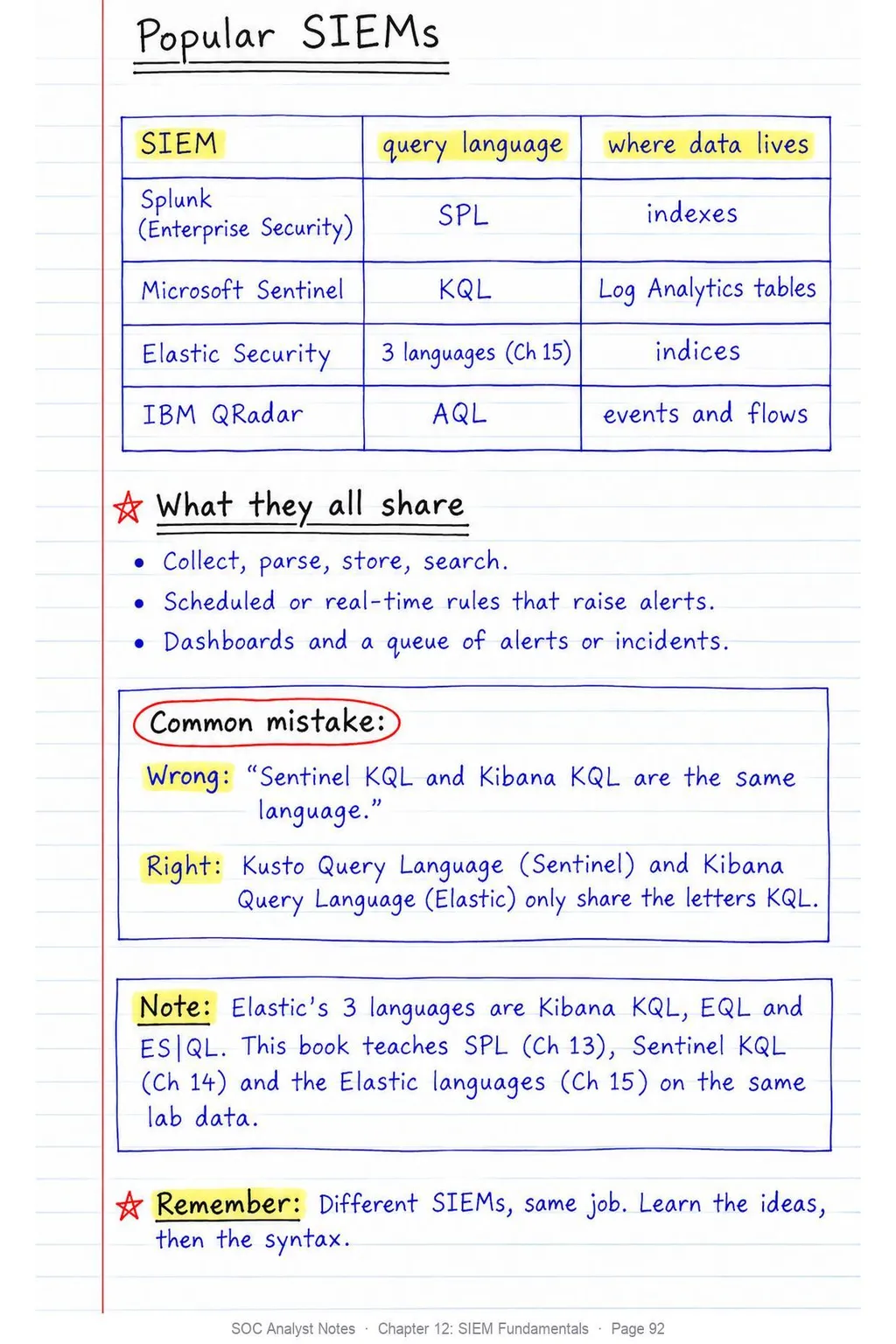
Learn what a SIEM does: collection with agents, syslog and APIs, parsing and normalization, correlation rules such as failures then success, events, alerts, notables and incidents, and popular SIEMs.
Search and hunt in Splunk with SPL: search basics, fields and filters, stats count by, table, sort and dedup, eval and where, rex on auth.log, timechart, top and rare, and a full hunt for C2 beacons.
Query Microsoft Sentinel with KQL: table and where, project and take, summarize count() by, extend and string operators, ago() and bin(), joining to find which process made a connection, SPL versus KQL and scheduled analytics rules.
Compare other query languages: Elastic Security and ECS, Kibana KQL and Lucene filters, EQL sequences, ES|QL pipes, and the same question asked in four languages.
Engineer detections that work: use cases, the detection lifecycle, TP, FP, BTP and FN, thresholds and time windows, tuning with allow-lists (CHG-1182), testing with replayed lab data and detection as code.
Write Sigma rules: what Sigma is, rule structure, detection and condition, value modifiers, an Office app spawning PowerShell, converting with pySigma, and an encoded PowerShell rule with tags and level.
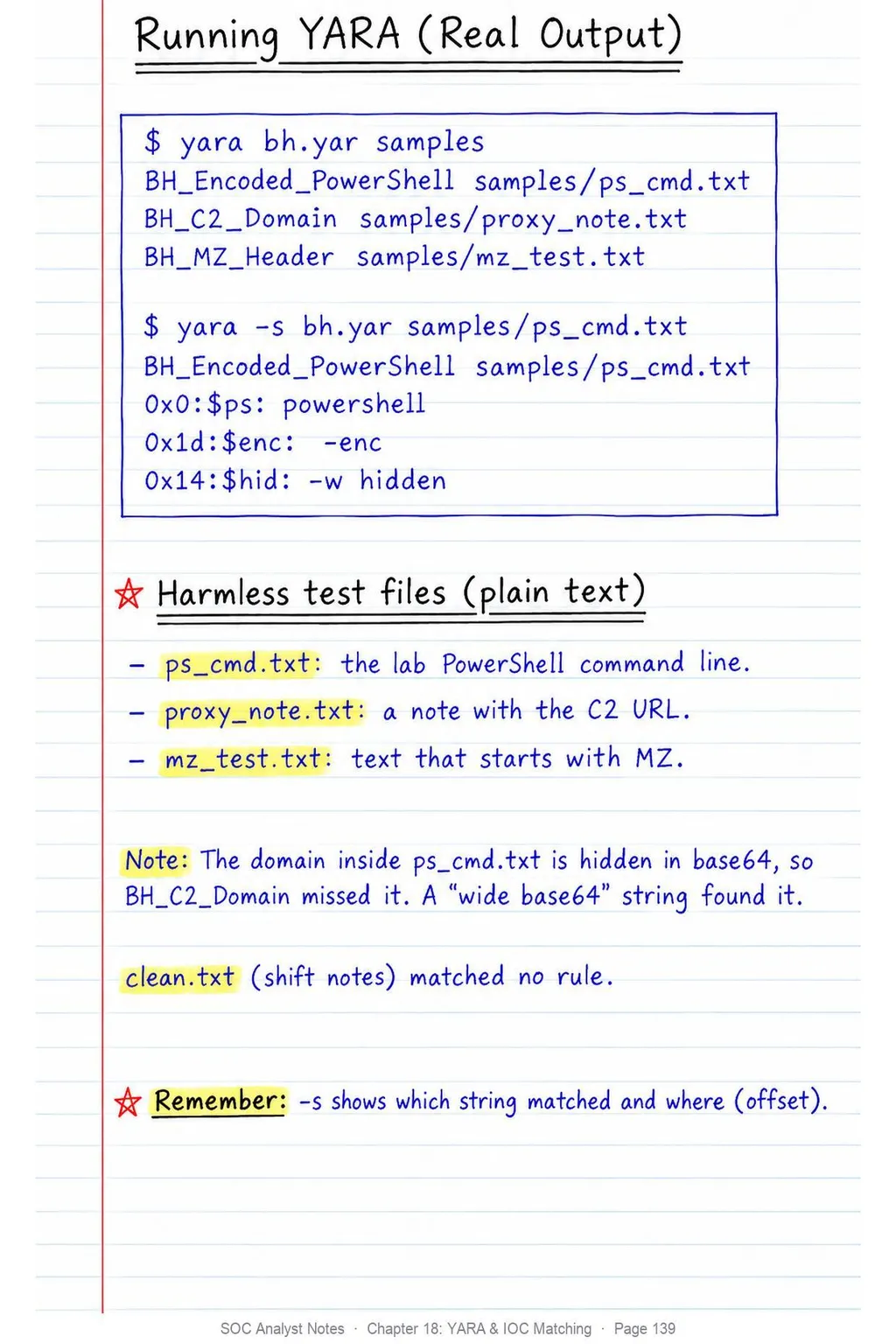
Match indicators with YARA and IOC sweeps: IOC types, the Pyramid of Pain, YARA rule anatomy, strings and conditions, running YARA on real output, and hash and IOC sweeps in the SIEM.
Triage alerts with a repeatable workflow: the alert queue, the triage flowchart, severity and priority, the 5 W's, enrichment of user, host, IP and hash, TP, FP and BTP decisions, and writing the ticket note.
Investigate phishing end to end: phishing types, the user-reported email workflow, header analysis, SPF, DKIM and DMARC results, safe URL and attachment analysis, scoping who else got it, and response by purge, block and reset.
Investigate endpoint alerts: process tree analysis, decoding -enc with Python, suspicious parent-child pairs, LOLBins, persistence checks, discovery commands, LSASS credential access signs and a host timeline.
Investigate network alerts: brute force analysis, beaconing and finding beacons with Python, DNS anomalies, data exfiltration signs, lateral movement signs, port scans and IDS alerts.
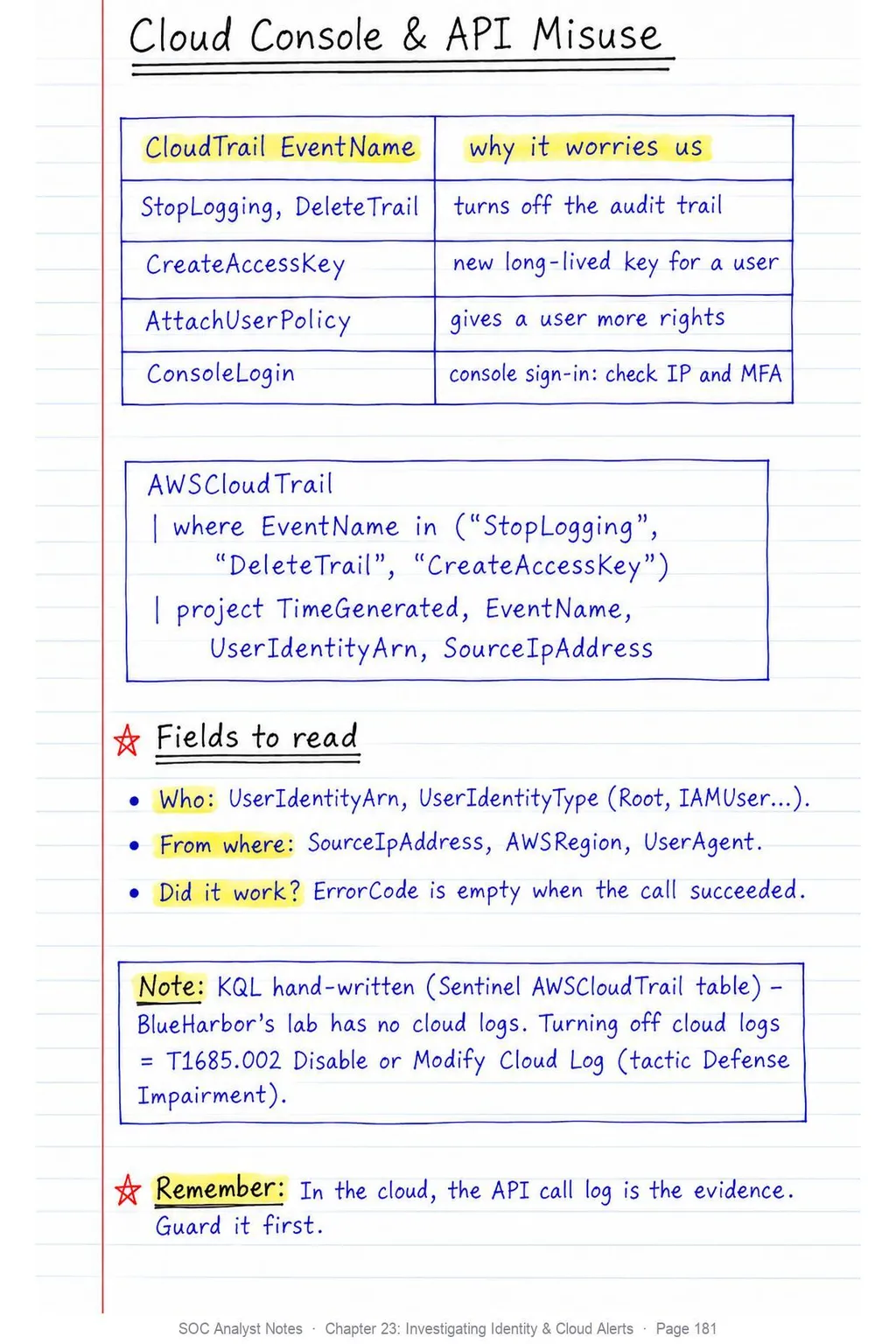
Investigate identity and cloud alerts: attacks on accounts, impossible travel, password spray versus brute force, MFA fatigue, suspicious sign-ins, privileged changes (real or benign) and cloud console and API misuse.
Use threat intelligence in the SOC: the three levels of threat intel, IOC versus IOA versus TTP, sources and feeds, enrichment lookups, STIX, TAXII and TLP, and defanging for safe sharing.
Apply MITRE ATT&CK in practice: how the matrix is built, the 15 enterprise tactics, mapping Case B from email to persistence and from discovery to exfiltration, ATT&CK Navigator, coverage gaps and kill chain versus ATT&CK.
Follow the incident response process: event versus alert versus incident, the NIST lifecycle, NIST Rev 3, CSF 2.0 and SANS PICERL, preparation, declaring IR-2026-031, severity levels, escalation and communication.
Contain, eradicate and recover: short-term versus long-term containment, containment actions for IR-2026-031, removing every foothold, recovery and monitoring, the lessons learned meeting and the containment timeline.
Learn digital forensics basics: forensics versus incident response, order of volatility, chain of custody, hashing evidence, memory versus disk evidence, Windows artifacts and forensic tools to know.
Automate with SOAR: why automate and alert fatigue, a phishing playbook, enrichment automation, automated containment with approval, case management and SOAR tools to know.
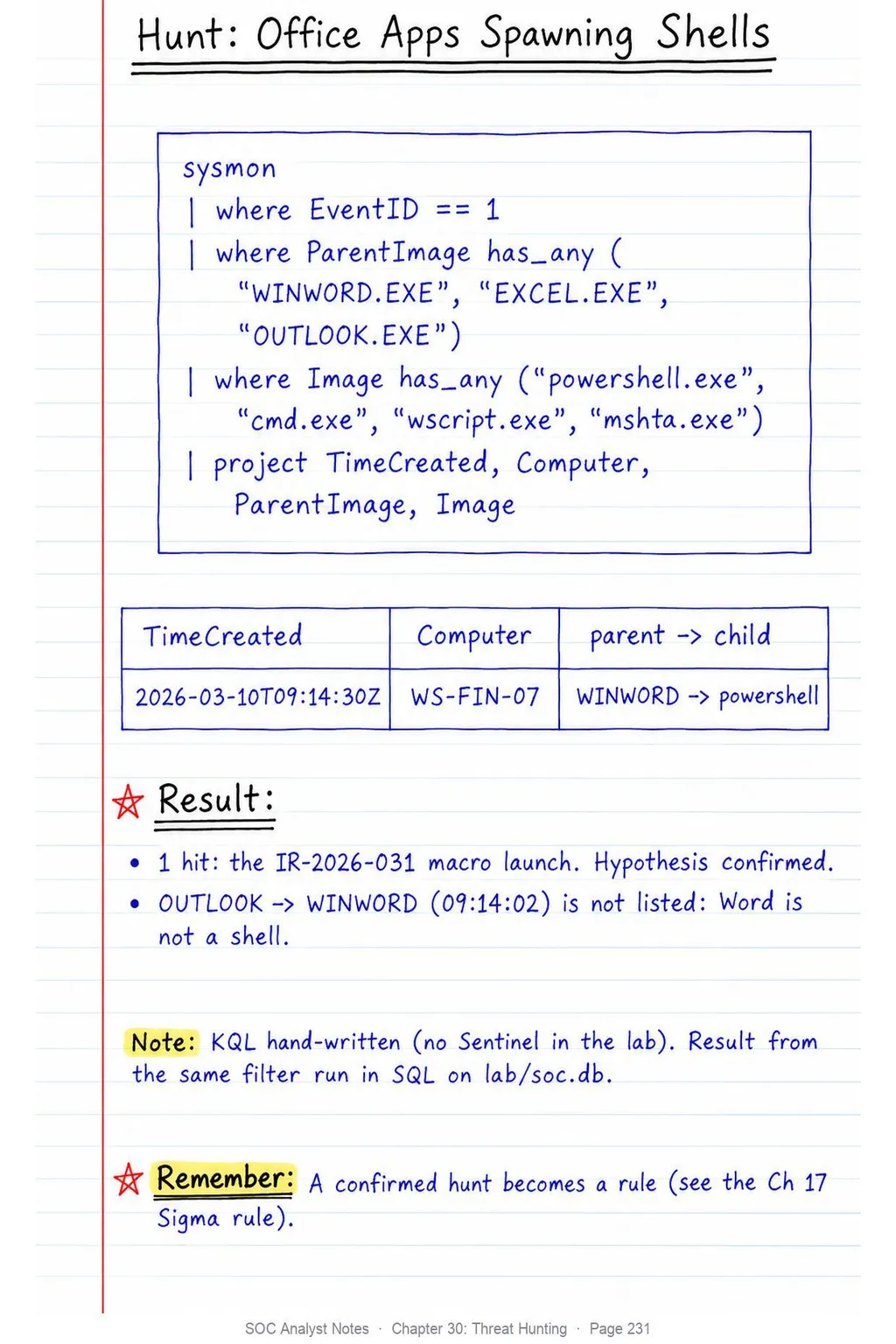
Hunt for threats before alerts fire: hunting versus alerting, the hypothesis-driven loop, the data you need, stacking to find the long tail, and hunts for Office apps spawning shells and rare outbound domains.
Measure and report SOC work: key metrics, BlueHarbor's alert numbers, IR-2026-031 in numbers, helpful dashboards, writing an incident report and shift handover notes.
Investigate IR-2026-031 from first alert EDR-5512 to final report: scoping the host, process tree, beacons, persistence, lateral movement to FS-01, 48 MB exfiltration, who else opened it, containment and the full timeline.
Prepare for the job: interview questions on basics, SIEM, triage, attacks, response, intel, rules and a scenario, an Event ID and port cheat sheet, top 10 analyst mistakes, a learning roadmap and the whole SOC on one page.
Watch before you buy
Students on All Notes PDF
Real students talking about how they revise with our handwritten notes.
How it works
Get your notes in 3 easy steps
No app, no waiting. The whole thing takes under a minute.
- STEP 110 sec
Choose your notes
One subject, any two, or a full class set.
- STEP 230 sec
Pay with UPI or card
GPay, PhonePe, Paytm or card. Pay once, no subscription.
- STEP 3Instant
Download your PDFs
Tap Download on any chapter. Links never expire.
- Log in
- My library
- Download
What you get
- Format
- Downloadable PDF (not a printed book)
- Chapters
- 33 chapters in one 262 page PDF
- Level
- SOC Analyst from beginner to advanced. No experience needed
- Style
- Handwritten-style notes with diagrams, code explained line by line, common mistakes and quizzes
- Devices
- Phone, tablet and laptop. Print any chapter if you like
- Access
- Lifetime. Download again anytime from My library
- Instant downloadRight after payment
- Free updatesCorrections added free
- Secure paymentUPI, cards, net banking