
Tech · Beginner to Advanced · Handwritten PDF notes
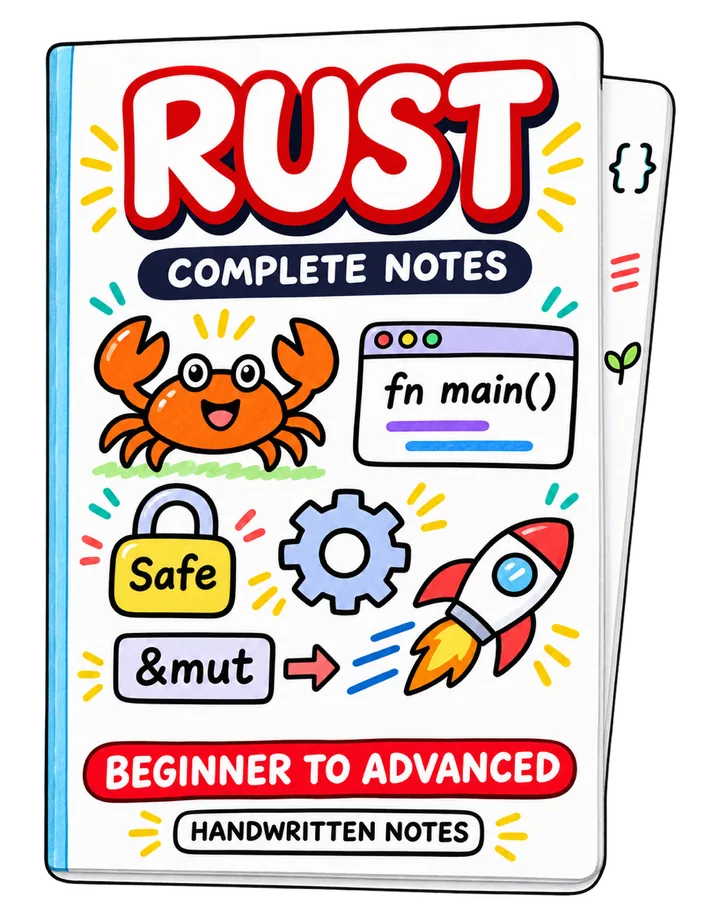
Rust Complete Notes
Instant PDF download after payment. Pay once, keep forever.
- Instant download
- Lifetime access
- UPI, GPay, PhonePe, cards
Complete coverage
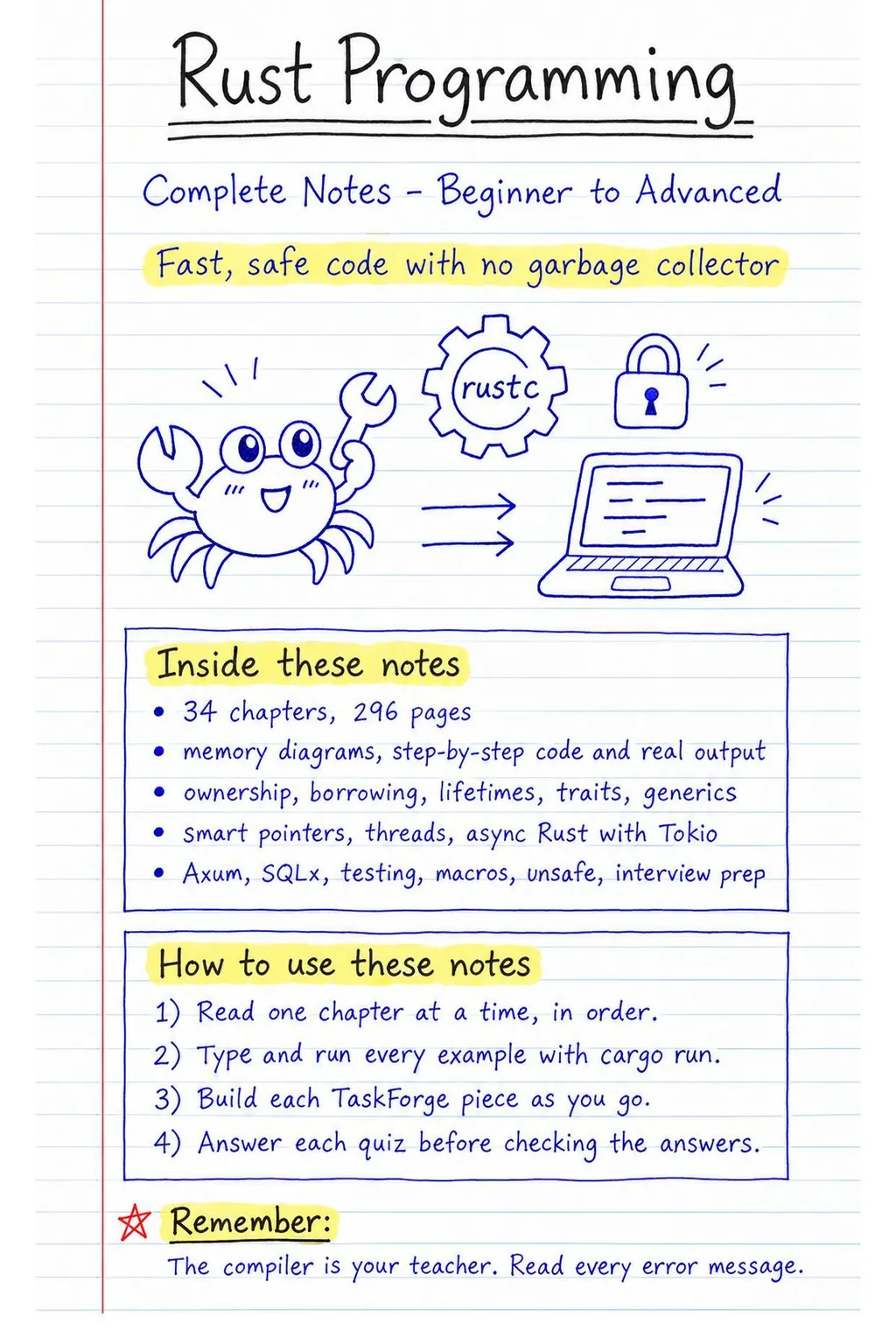
What you learn in all 34 chapters
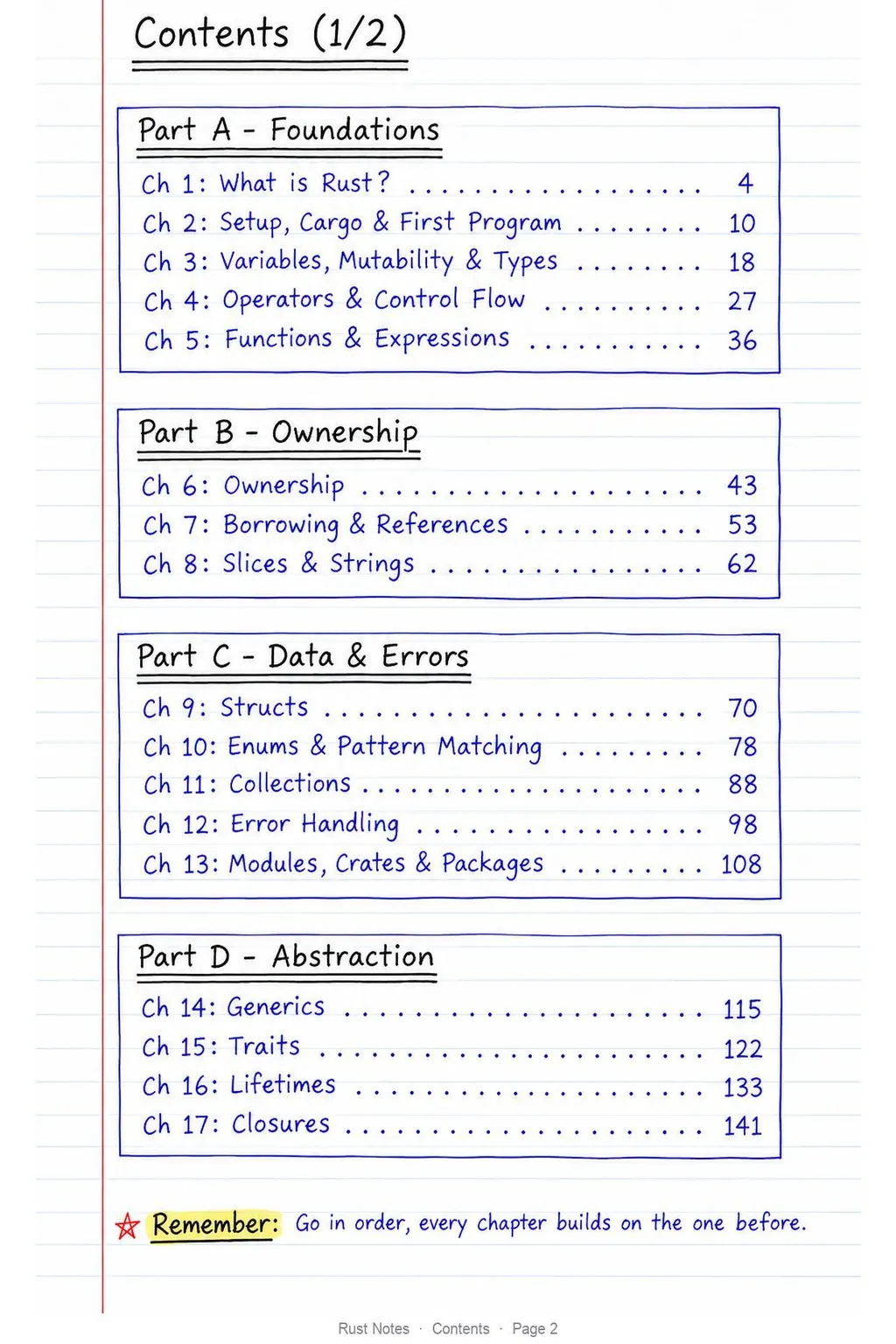
Open any chapter to see every topic it covers and the page it is on.
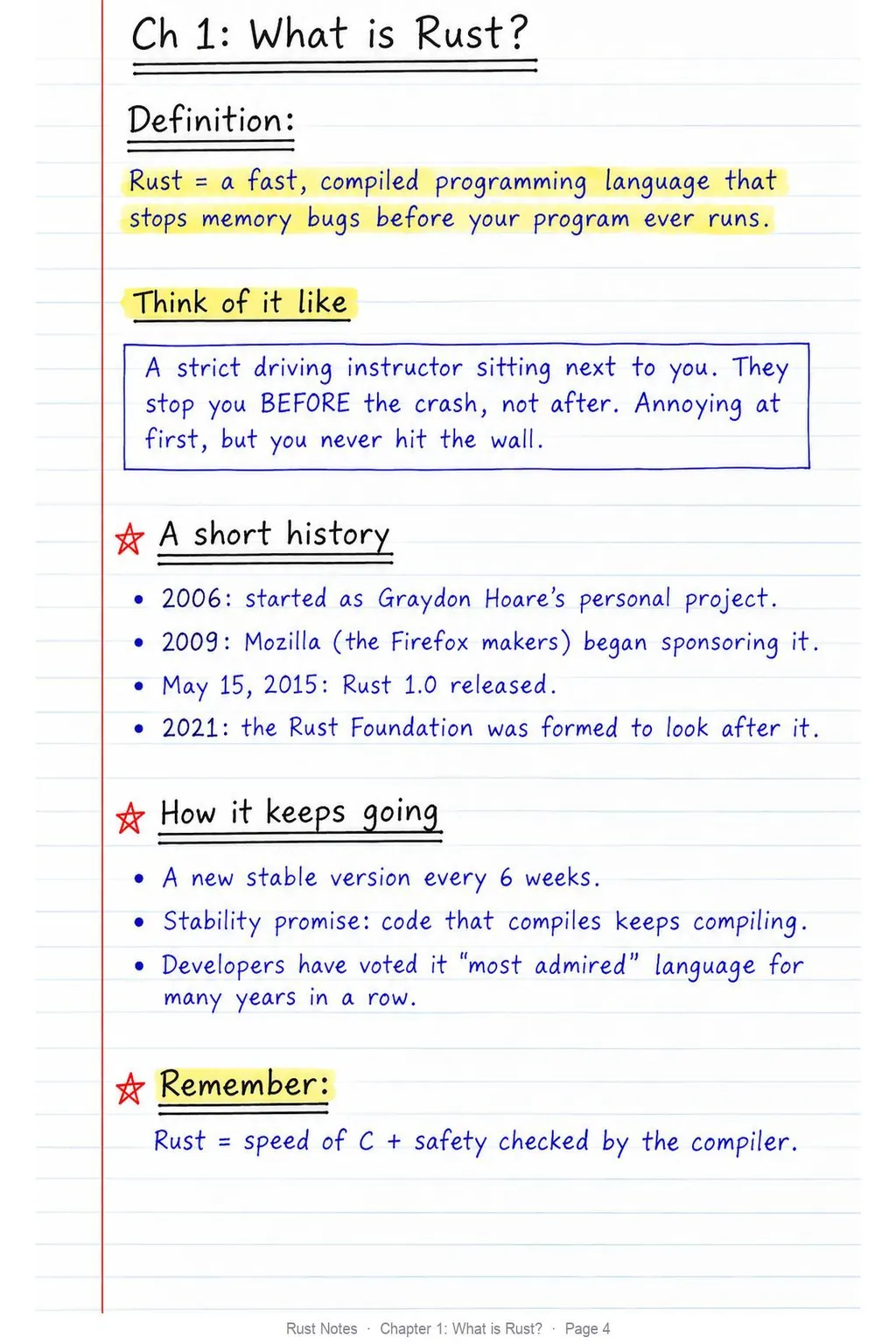
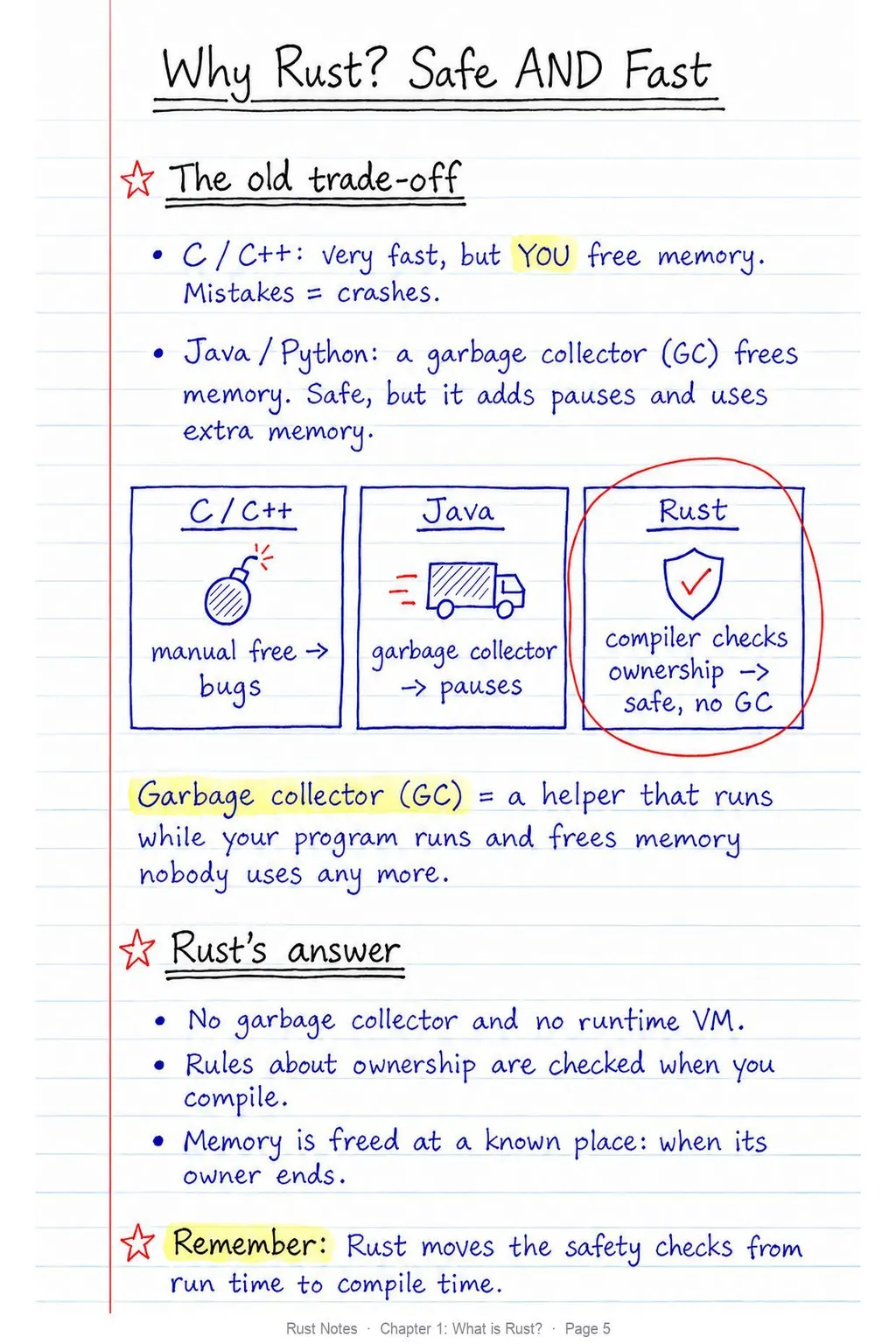
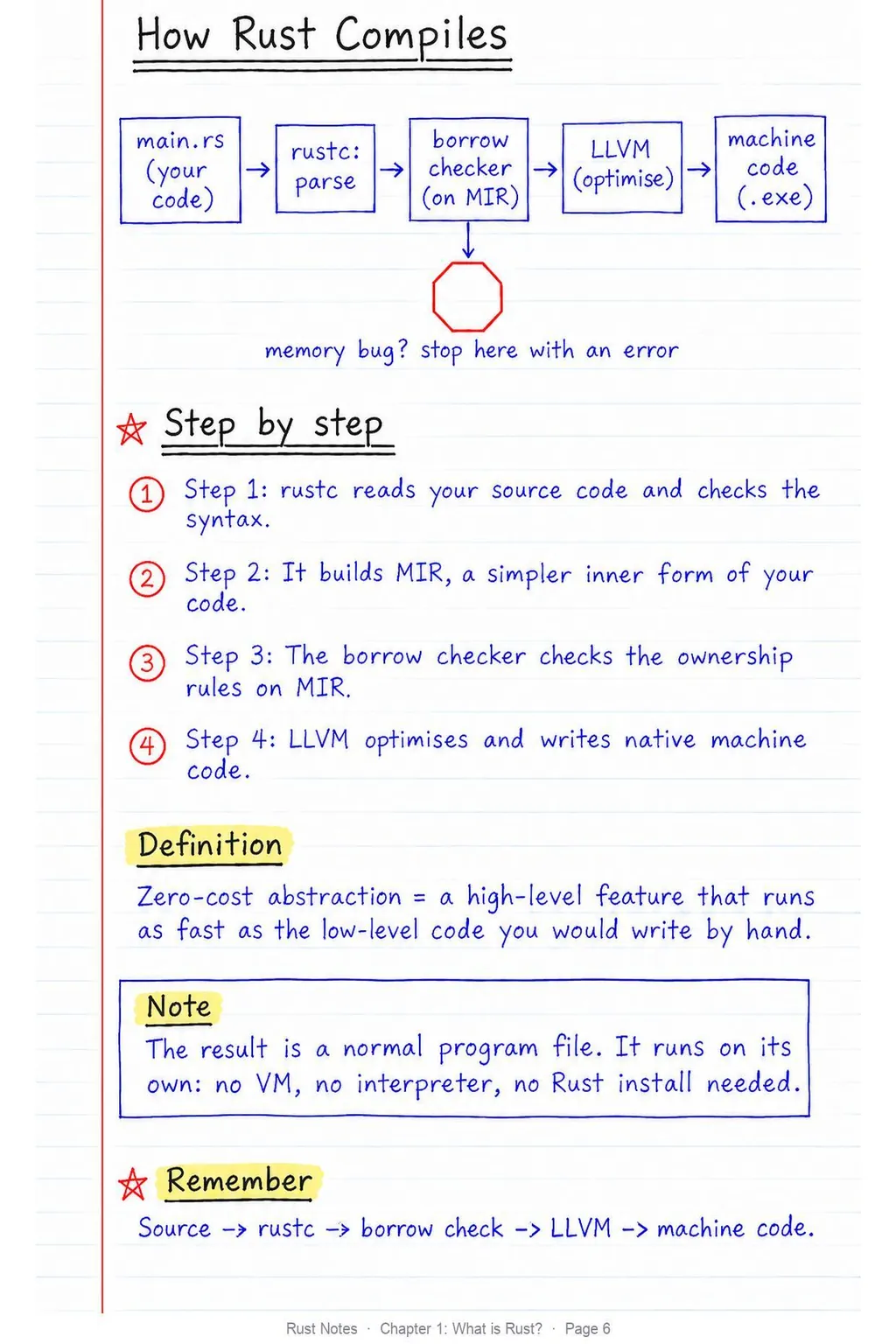
Learn what Rust is and why it is both safe and fast, how it compiles, where it is used, and how it compares with C++, Go and Python.
Install Rust with rustup, start a project with cargo new, read Hello World line by line, understand Cargo.toml and Cargo.lock, and use cargo check, build, run and println! formatting.
Store data with variables: immutable by default, mut, shadowing, const and static, integer, float, bool and char types, integer overflow, tuples, arrays and casting with as.
Control program flow with operators, if as an expression, loop with break values, while and for loops with ranges, loop labels, a first look at match and reading keyboard input.
Write functions: anatomy and parameter types, statements versus expressions, return and the unit type, blocks as expressions, and recursion with the call stack.
Master ownership: why it exists, stack versus heap, a String in memory, the three ownership rules, moves, clone, Copy types, passing and returning ownership and drop.
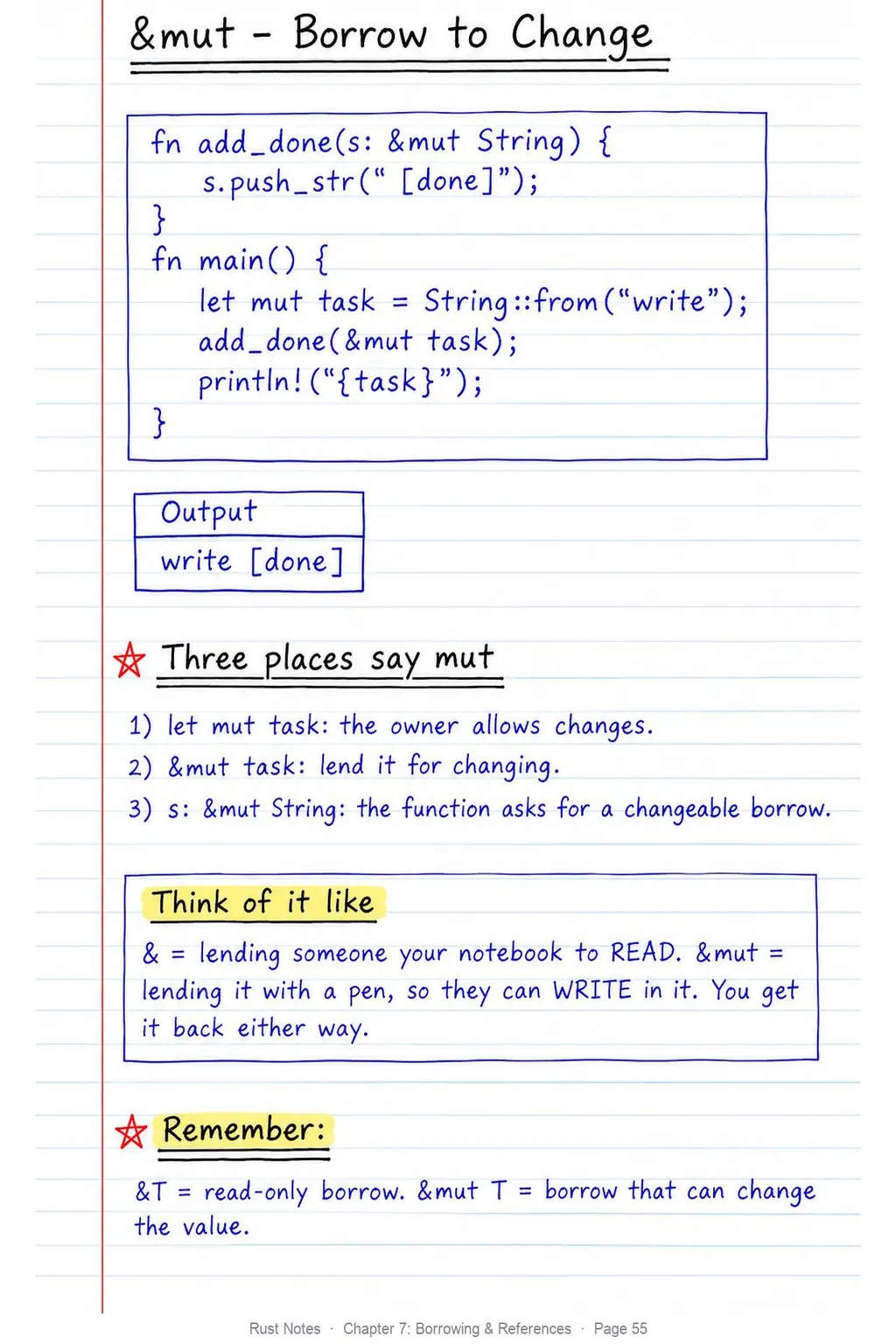
Borrow without taking ownership: references, borrowing in function calls, &mut, the borrowing rules and how they stop data races, where a borrow ends, no dangling references and the borrow checker.
Work with slices and strings: &str versus String, building and updating strings, why s[0] fails, chars and bytes, char boundaries, array and Vec slices, and taking &str parameters.
Group data with structs: defining a Task type, init shorthand and struct update, tuple and unit structs, derive Debug, methods with impl, self, &self and &mut self, and associated functions.
Model choices with enums: enums that carry data, Option instead of null, exhaustive match, if let, let else and while let, and more patterns with ranges, guards, @ and destructuring.
Use collections: Vec and how it grows, looping under the borrow rules, HashMap and the entry API, HashSet, BTreeMap, VecDeque and BinaryHeap, and which collection to choose.
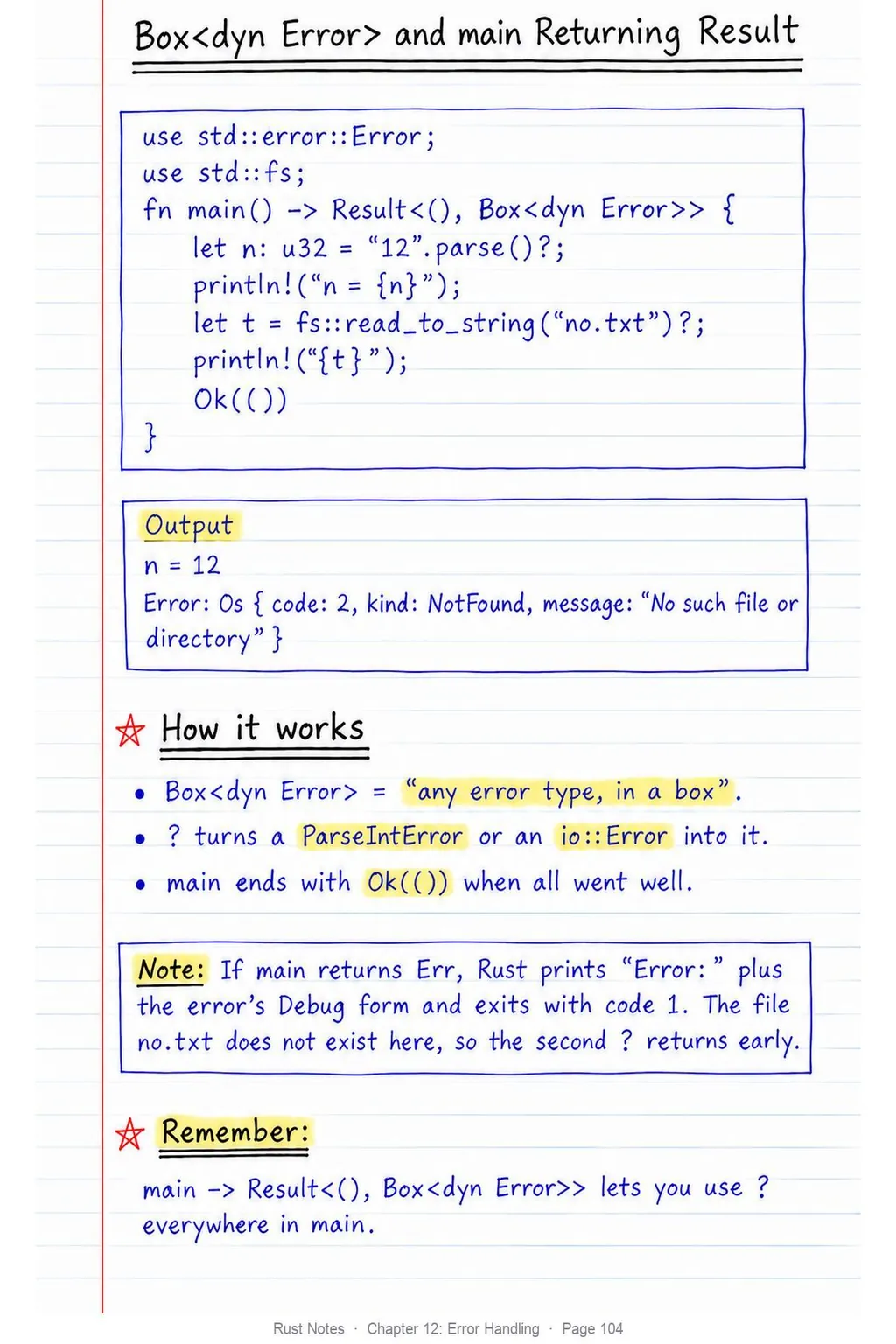
Handle errors the Rust way: panic! versus Result, match, unwrap and expect, the ? operator with Result and Option, Box<dyn Error>, your own error enum, and thiserror versus anyhow.
Organise code into packages, crates and modules: mod and pub privacy, paths with crate:: and super::, use, splitting modules into files, lib.rs with main.rs, adding crates, workspaces and features.
Write generic code: generic structs, enums, methods and impl blocks, trait bounds, monomorphization for zero-cost generics and const generics.
Share behaviour with traits: implementing for many types, default methods, impl Trait and trait bounds, where clauses, trait objects, static versus dynamic dispatch, derive, operator overloading and From and Into.
Understand lifetimes: the dangling reference problem, 'a annotations and how to read them, the three elision rules, structs holding references, 'static, and generics, traits and lifetimes together.
Use closures: capturing the environment, Fn, FnMut and FnOnce, move closures, closures as parameters and return values, and closures in the standard library.
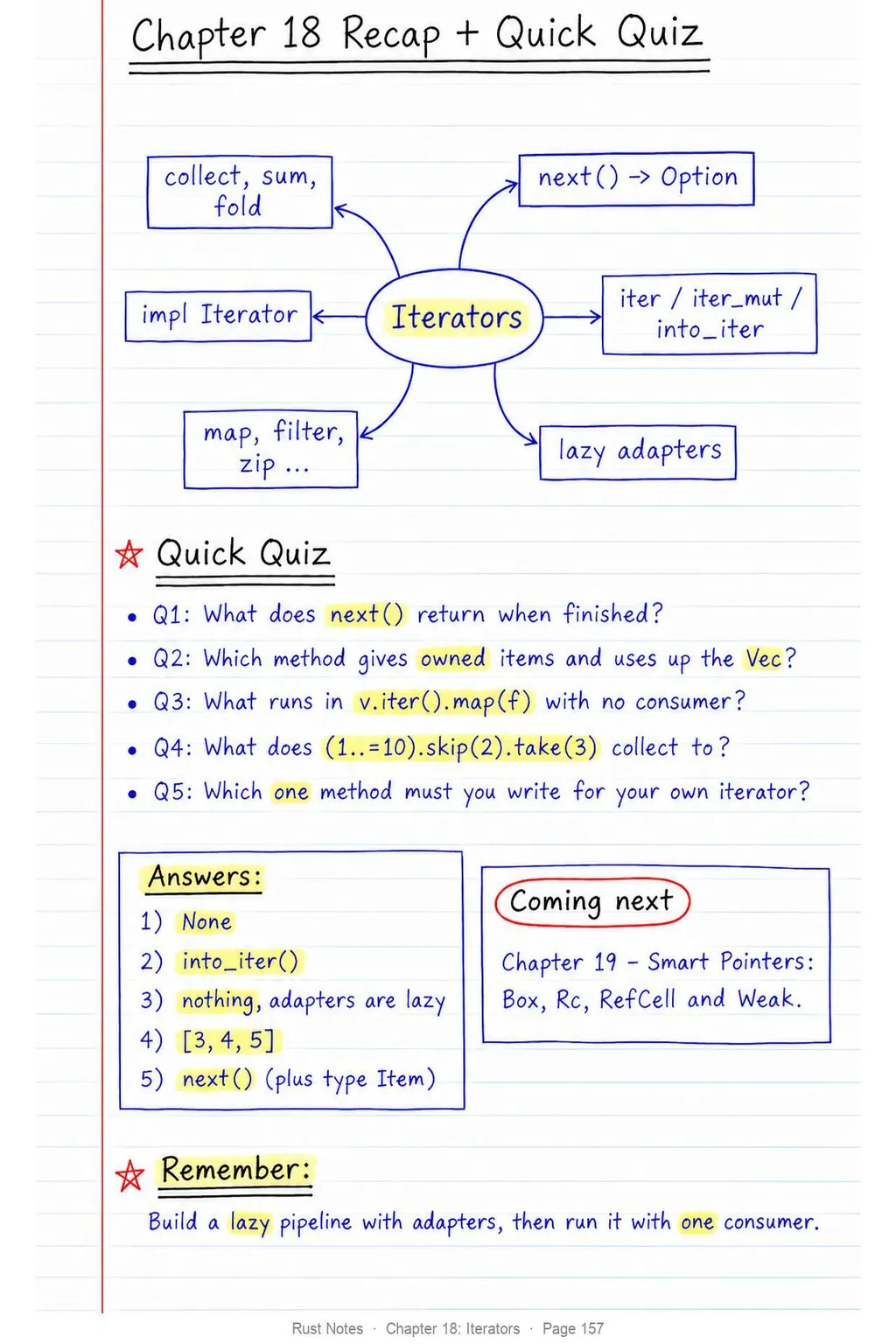
Process data with iterators: the Iterator trait, iter versus iter_mut versus into_iter, lazy adapters, map, filter and collect, common adapters and consumers, your own iterator and zero-cost iteration.
Use smart pointers: Box for heap values and recursive types, Deref and Drop, Rc for shared ownership, RefCell for interior mutability, Rc<RefCell<T>>, reference cycles with Weak, Cell and Cow.
Test your code with cargo test: #[test] and assert macros, should_panic and Result tests, unit tests in cfg(test) modules, integration tests, doc tests and running only some tests.
Run work in parallel safely: threads with spawn, join and scope, move closures, channels with many producers, Mutex and Arc<Mutex<T>>, Send and Sync, atomics, RwLock and Rayon.
Write async Rust with Tokio: async versus threads, futures, async fn and .await, why futures are lazy, the Tokio runtime, spawn, join! versus select!, async channels, spawn_blocking and how polling works.
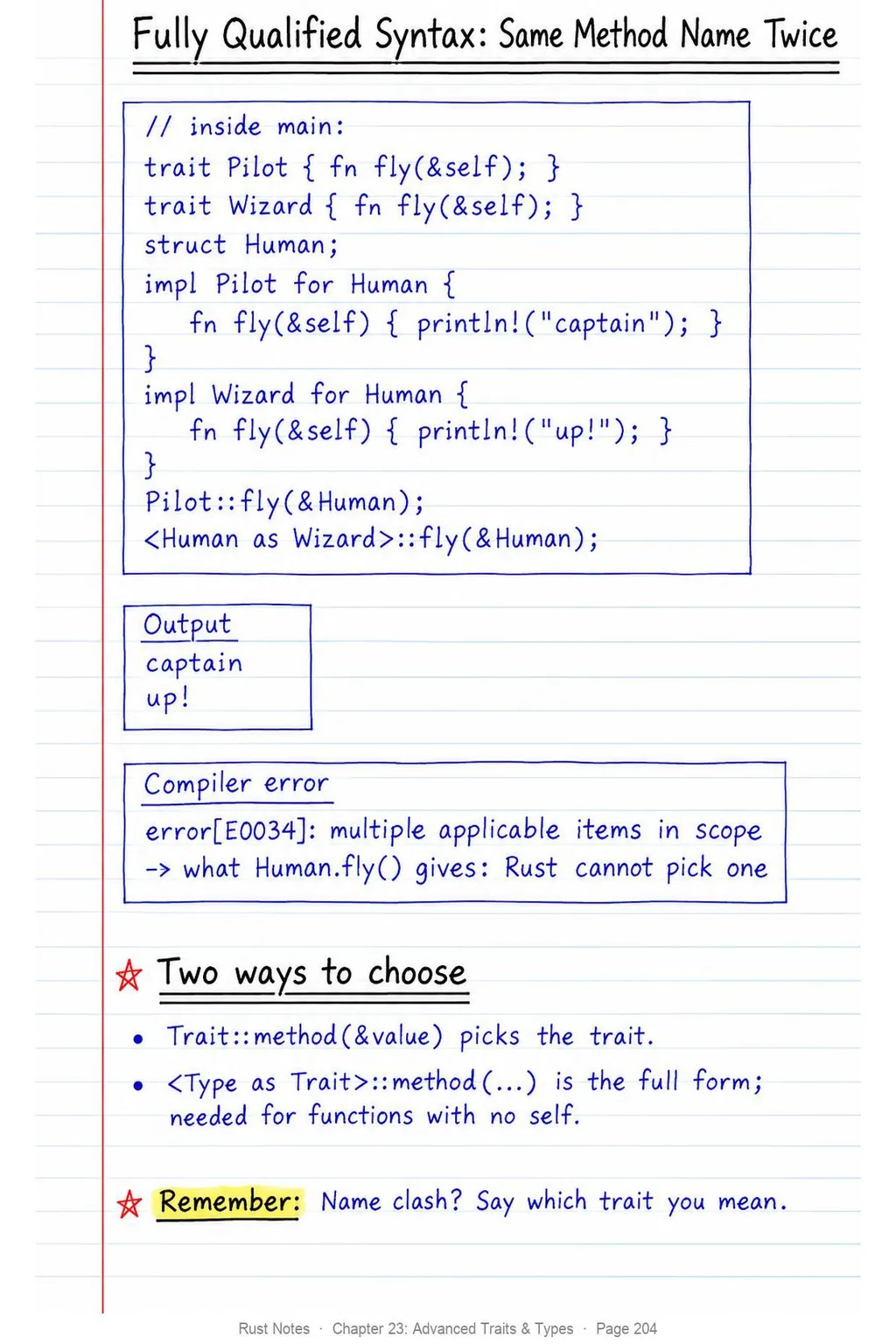
Go deeper with traits and types: associated types, default generic types, supertraits, the newtype pattern, type aliases, the never type, Sized and ?Sized, and fully qualified syntax.
Write macros: macros versus functions, macro_rules! basics, repetition to build your own vec!, fragment specifiers, procedural macros, viewing the expansion and when to use macros.
Use unsafe Rust responsibly: why it exists, the five unsafe superpowers, raw pointers, safe abstractions over unsafe code, calling C through FFI and checking code with Miri.
Understand memory layout and performance: type sizes, alignment and padding, enum niche optimization, allocation costs, release profiles, benchmarking with Criterion and profiling for common speedups.
Read and write files: reading and writing with OpenOptions, BufReader for big files, paths and directories, and JSON with serde, pretty output and serde attributes.
Build a command-line tool: reading arguments, clap with a struct, subcommands, exit codes and stderr, and a TaskForge CLI that loads, changes and saves tasks.
Build web APIs with Axum: routes and handlers, Path and Query extractors, JSON in and out, shared state with Arc<Mutex>, status codes, a custom AppError, middleware and Tower layers.
Use databases with SQLx: connecting with SqlitePool, migrations, INSERT and query_as with FromRow, UPDATE and DELETE with rows_affected, and transactions.
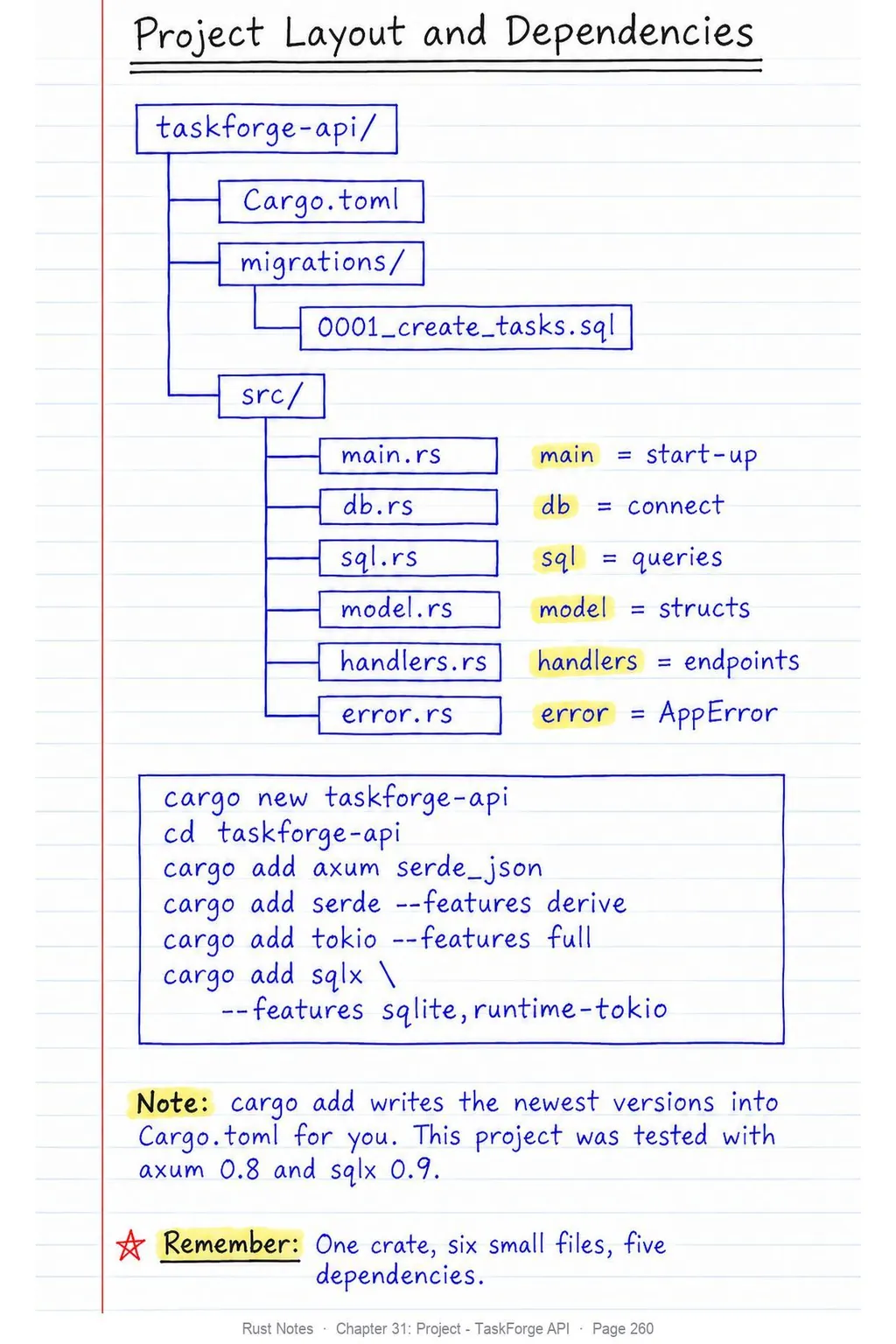
Build the TaskForge API from scratch: the task model, database and migrations, all the SQL in one place, app state, GET, POST, PATCH and DELETE handlers, validation, JSON errors, tests and a curl checklist.
Use the Rust toolbox and ecosystem: Clippy and rustfmt, doc comments and cargo doc, the crate ecosystem map, WebAssembly with wasm-bindgen, and embedded and systems Rust.
Write idiomatic Rust with the builder, newtype and type-state patterns, RAII guards, traits versus closures for strategy, iterator style, error handling idioms and the top idioms at a glance.
Prepare for interviews with Q&A on ownership, pointers, threads, traits, errors, iterators, async and unsafe, then revise with cheat sheets, the top 10 mistakes, ownership on one page and a learning roadmap.
Watch before you buy
Students on All Notes PDF
Real students talking about how they revise with our handwritten notes.
How it works
Get your notes in 3 easy steps
No app, no waiting. The whole thing takes under a minute.
- STEP 110 sec
Choose your notes
One subject, any two, or a full class set.
- STEP 230 sec
Pay with UPI or card
GPay, PhonePe, Paytm or card. Pay once, no subscription.
- STEP 3Instant
Download your PDFs
Tap Download on any chapter. Links never expire.
- Log in
- My library
- Download
What you get
- Format
- Downloadable PDF (not a printed book)
- Chapters
- 34 chapters in one 296 page PDF
- Level
- Rust from beginner to advanced. No experience needed
- Style
- Handwritten-style notes with diagrams, code explained line by line, common mistakes and quizzes
- Devices
- Phone, tablet and laptop. Print any chapter if you like
- Access
- Lifetime. Download again anytime from My library
- Instant downloadRight after payment
- Free updatesCorrections added free
- Secure paymentUPI, cards, net banking