
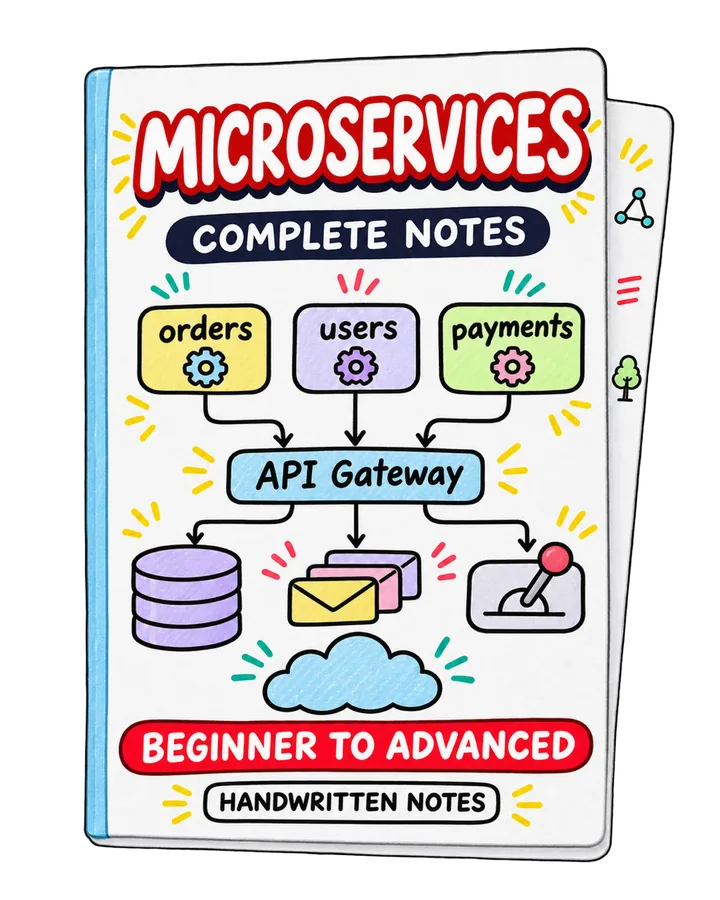
Tech · Beginner to Advanced · Handwritten PDF notes
Microservices Complete Notes
Instant PDF download after payment. Pay once, keep forever.
- Instant download
- Lifetime access
- UPI, GPay, PhonePe, cards
Complete coverage
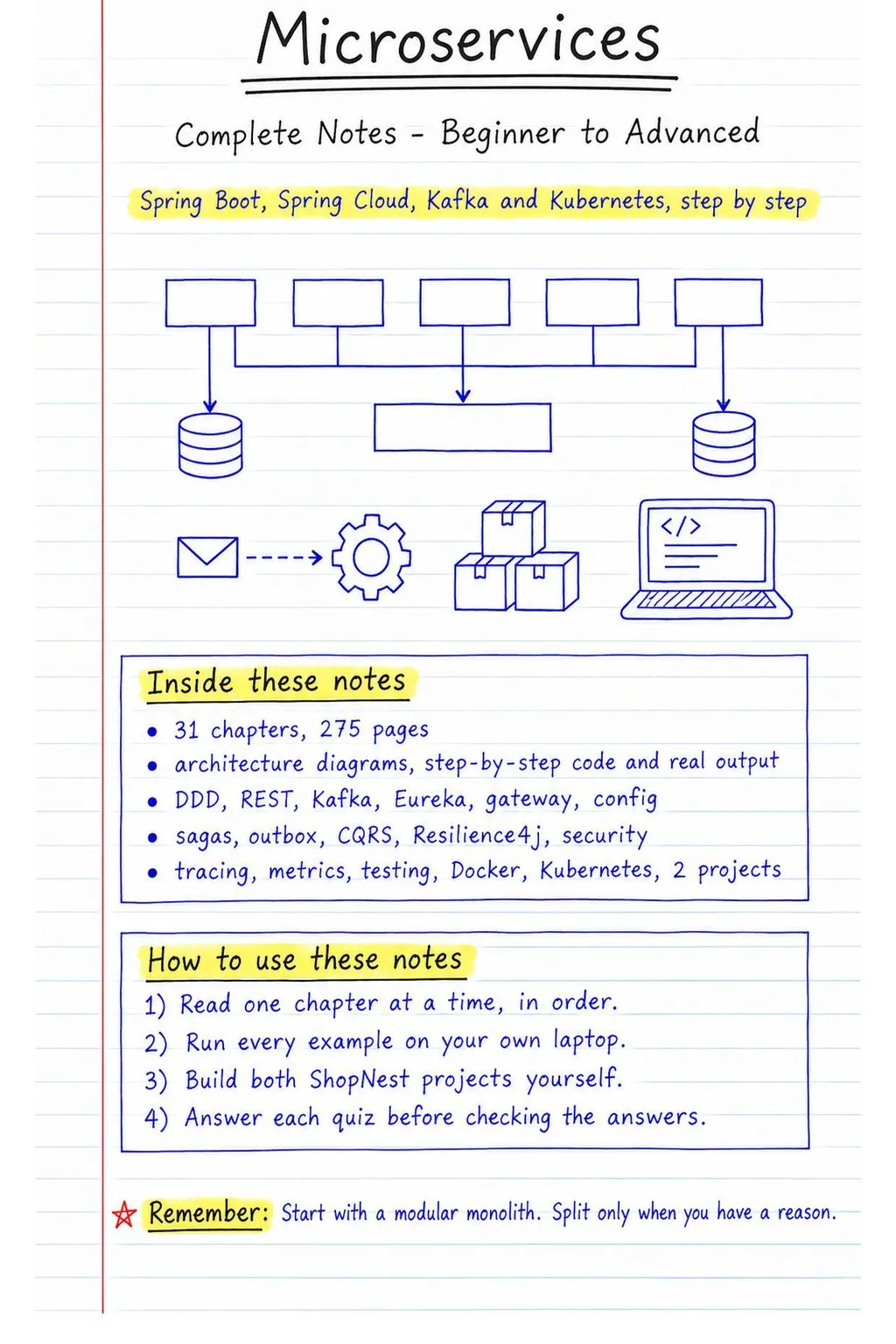
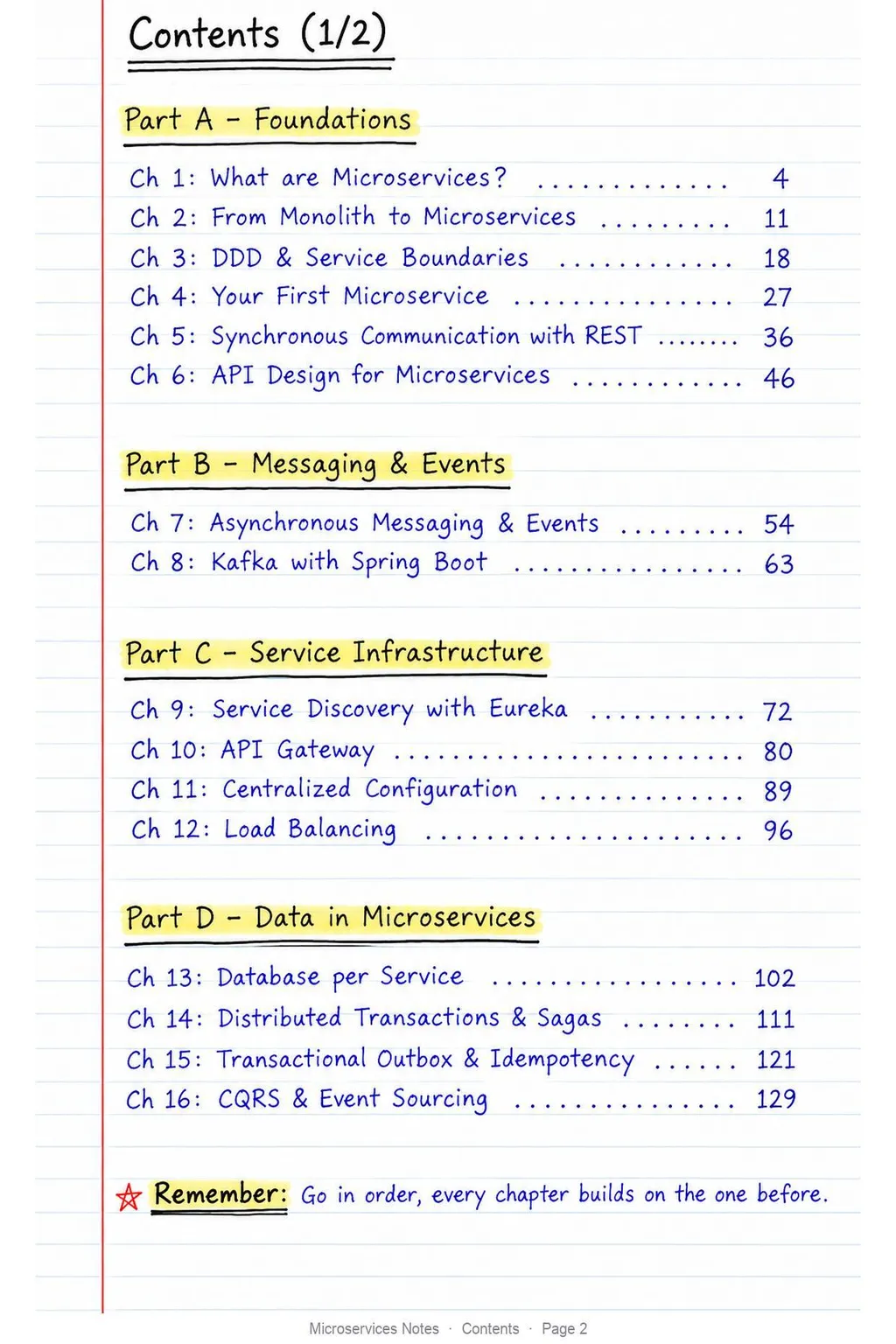
What you learn in all 31 chapters
Open any chapter to see every topic it covers and the page it is on.
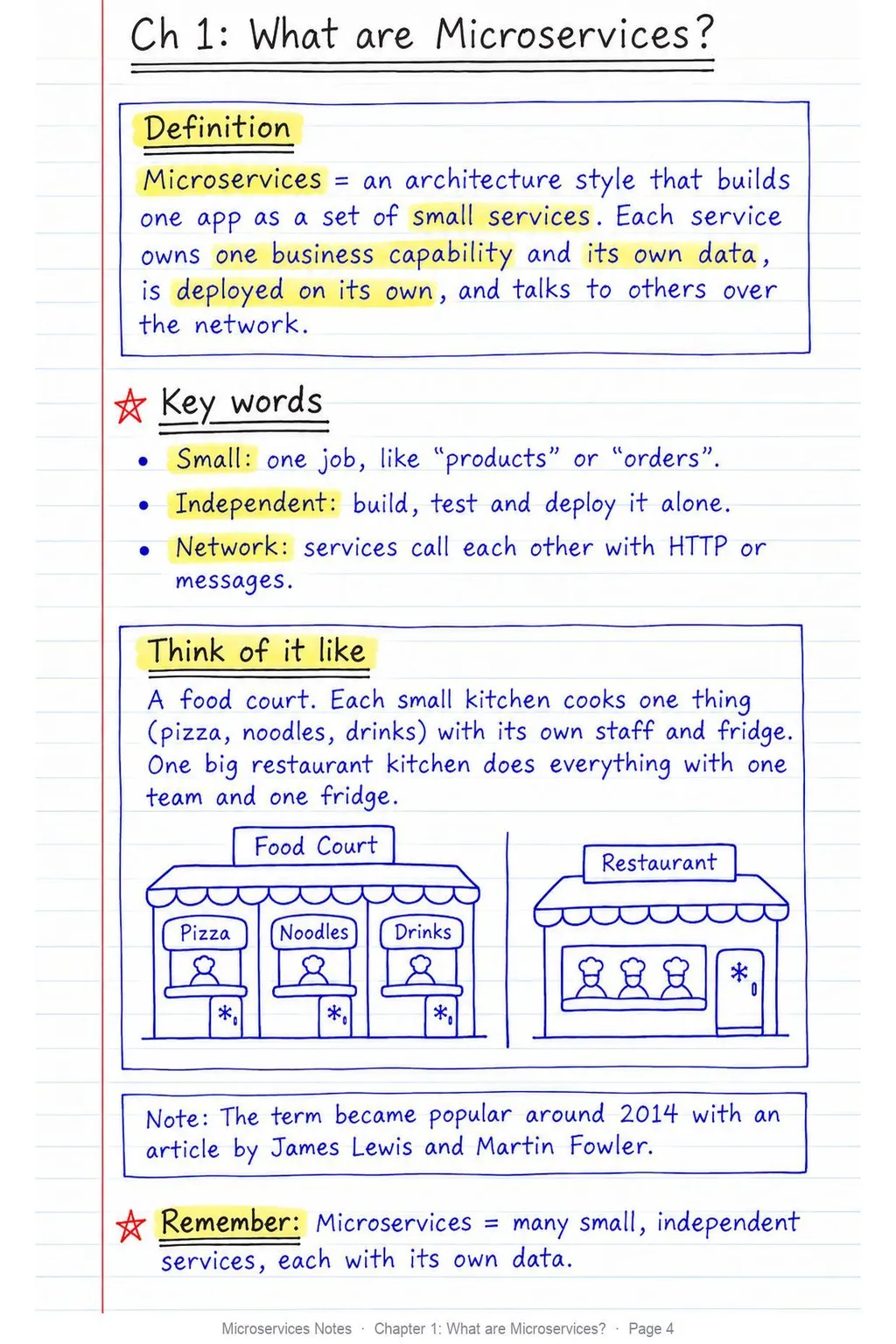
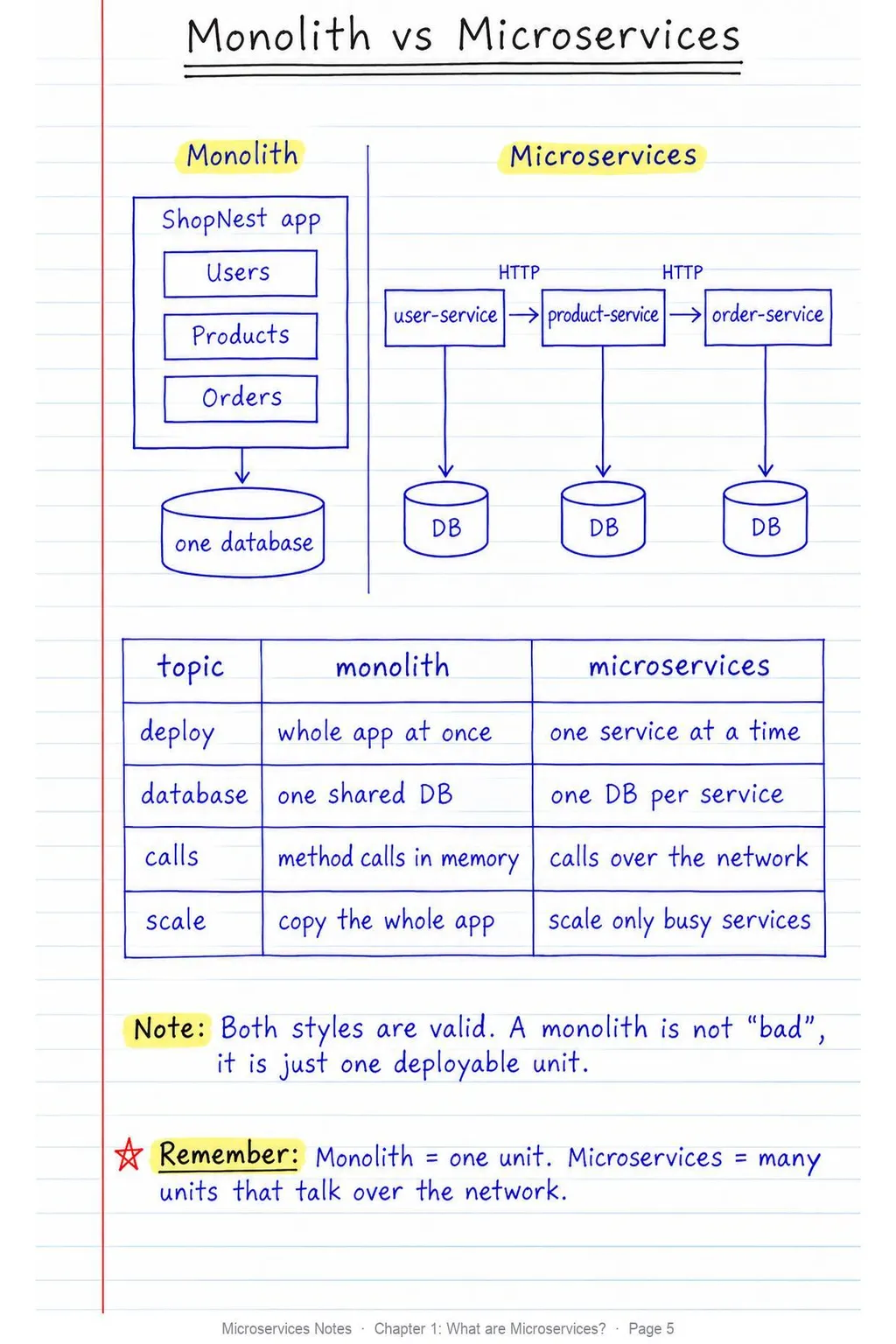
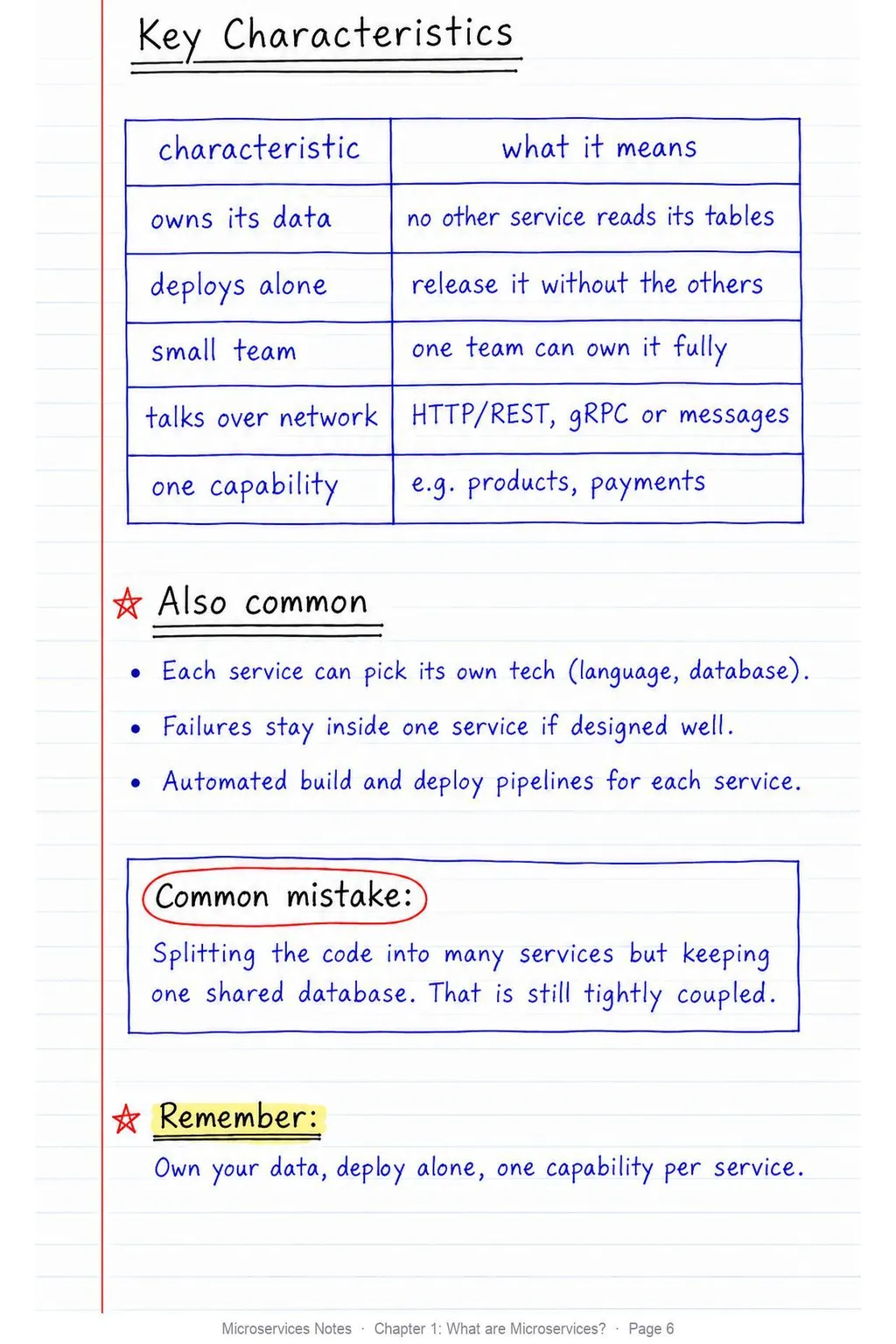
Learn what microservices are: monolith versus microservices, key characteristics, benefits, the costs and the microservice premium, and the ShopNest running example.
Move from monolith to microservices: the ShopNest monolith, pain points as it grows, the modular monolith, when not to use microservices, strangler fig migration, and Conway's Law and teams.
Draw service boundaries with domain-driven design: why boundaries matter, ubiquitous language, bounded contexts, core, supporting and generic subdomains, entities, value objects and aggregates, aggregate rules, context maps and the ShopNest decomposition.
Build your first microservice with Spring Boot: create it on start.spring.io, project layout and config, the Product entity and repository, seed data, ProductController GET endpoints, run and call it, and Actuator health and info.
Call other services synchronously with REST: RestClient, placing an order, declarative clients with @HttpExchange, OpenFeign, handling 404 and other errors, connect versus read timeouts, the problem with call chains and sync versus async.
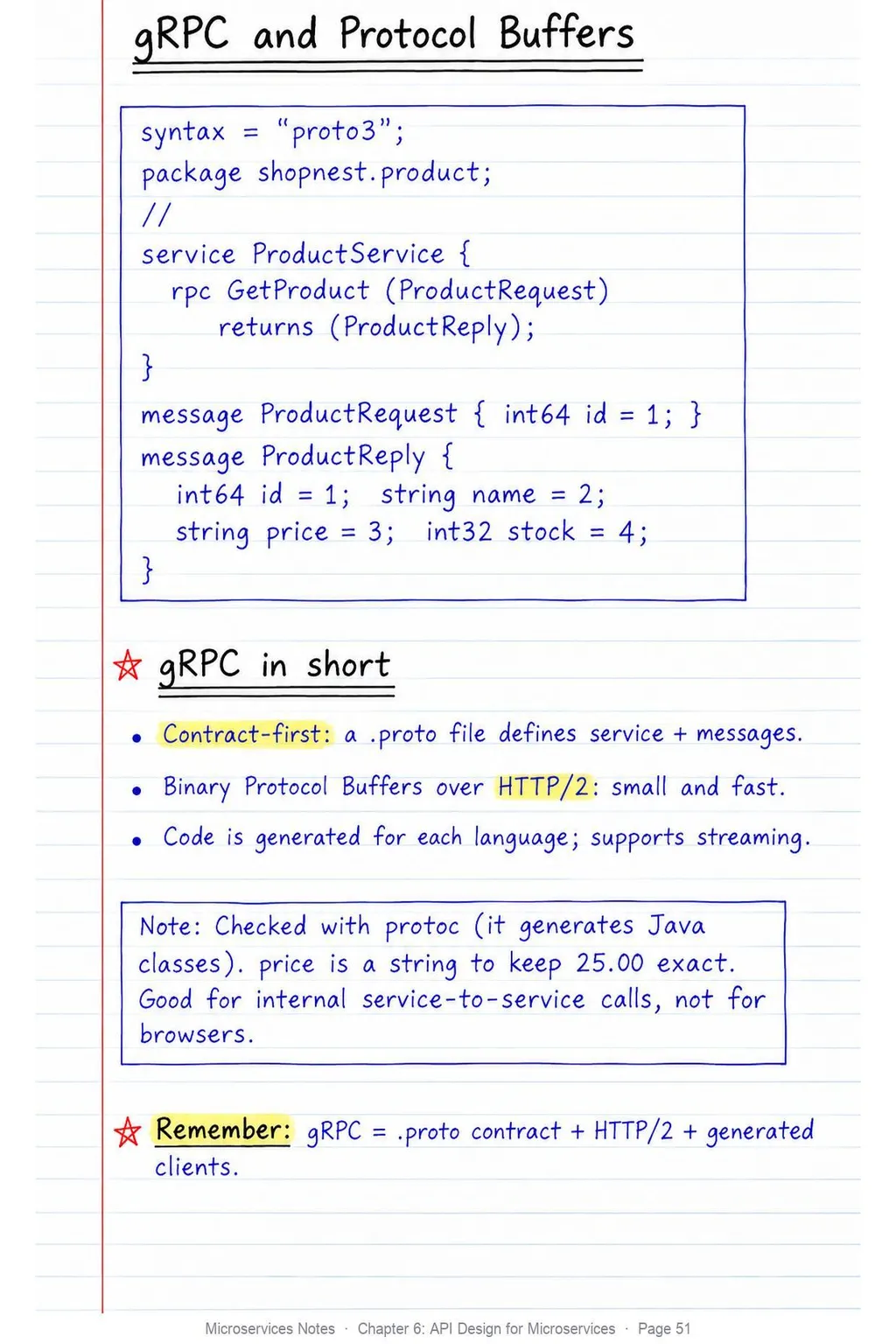
Design good APIs: resource URLs and status codes, error responses with ProblemDetail, versioning options, idempotency keys for safe retries, OpenAPI contracts with springdoc, gRPC and Protocol Buffers, and REST versus gRPC versus messaging.
Understand asynchronous messaging and events: why use messaging, queue versus topic, commands versus events, two kinds of event payload, delivery guarantees, ordering and message keys, Kafka versus RabbitMQ and an event-driven ShopNest.
Use Kafka with Spring Boot: Kafka in one picture, running it in Docker with KRaft, a producer with KafkaTemplate, a consumer with @KafkaListener, consumer groups and partitions, JSON serialization, retries with a dead-letter topic and @EmbeddedKafka tests.
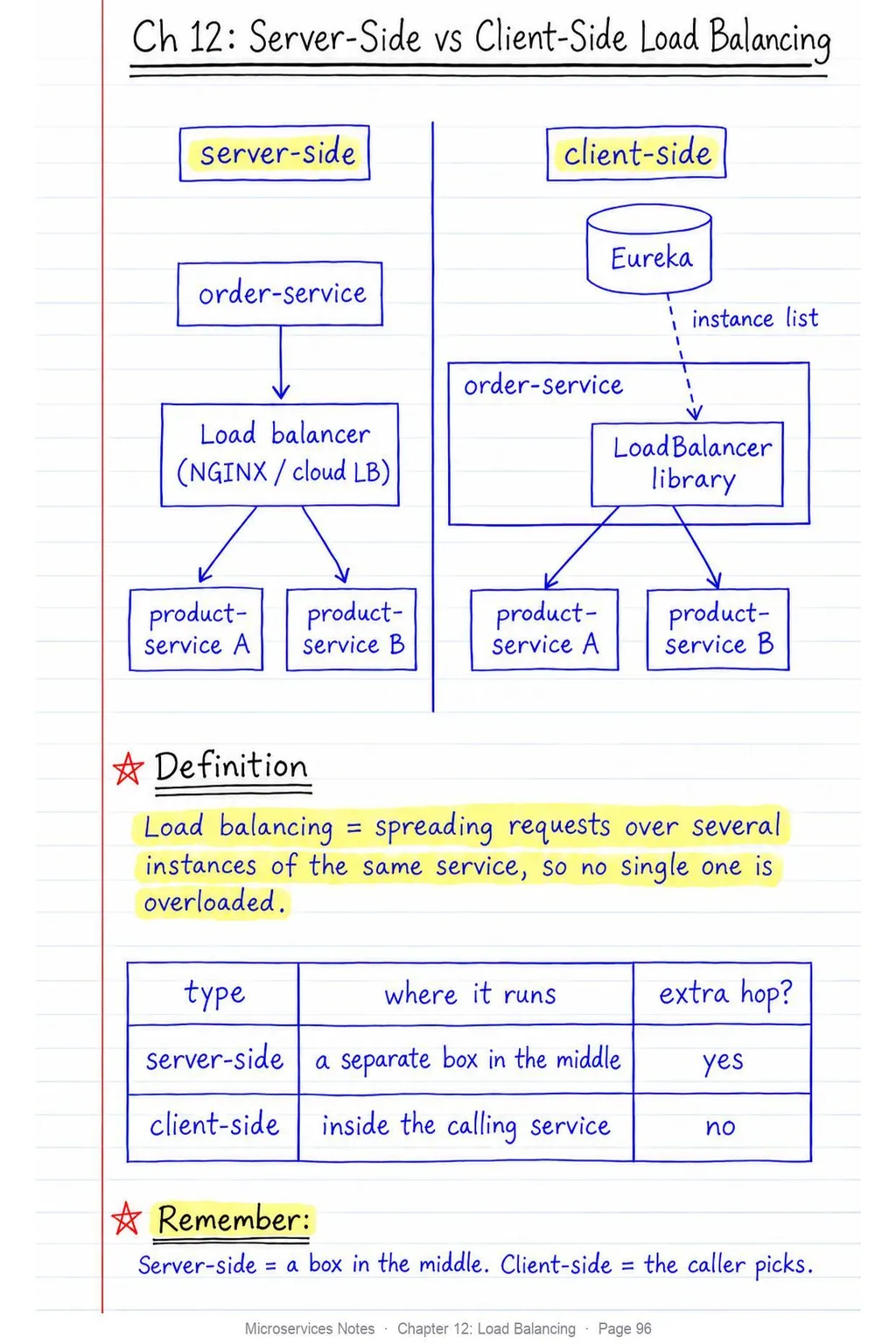
Find services by name with Eureka: the problem with hard-coded URLs, client-side versus server-side discovery, building the Eureka server, registering product-service, calling with @LoadBalanced, heartbeats and self-preservation, and discovery on Kubernetes.
Add an API gateway with Spring Cloud Gateway: why use one, what it does, creating api-gateway, routes in YAML, calling through the gateway, AddRequestHeader and StripPrefix filters, a correlation id filter and the BFF pattern.
Centralize configuration: the config sprawl problem, Config Server setup with a native backend, {application}-{profile}.yml files, a client reading its config, runtime refresh with @RefreshScope, Spring Cloud Bus and secrets.
Spread traffic across instances: server-side versus client-side load balancing, Spring Cloud LoadBalancer with round robin, health-aware routing, load balancing on Kubernetes, and sticky sessions and why to avoid them.
Give each service its own data: the shared database anti-pattern, database per service, three ways to keep data private, Postgres per service with Docker, polyglot persistence, API composition, data duplication and eventual consistency.
Handle distributed transactions with the saga pattern: one order across three services, why not two-phase commit, local steps with compensations, choreography and orchestration sagas, ShopNest saga code, watching a compensation and saga pitfalls.
Publish events reliably: the dual-write problem, the transactional outbox pattern, the outbox table and entity, a polling relay with @Scheduled, CDC with Debezium, the idempotent consumer and a test sending the same message twice.
Separate reads from writes with CQRS and event sourcing: the ShopNest order-history read model, building the view from events, storing events instead of state, rebuilding state, snapshots and replay, and when to use or avoid them.
Learn fault tolerance basics: the 8 fallacies of distributed computing, cascading failure, timeouts everywhere, retries with backoff and jitter, failing fast, graceful degradation and an overview of resilience patterns.
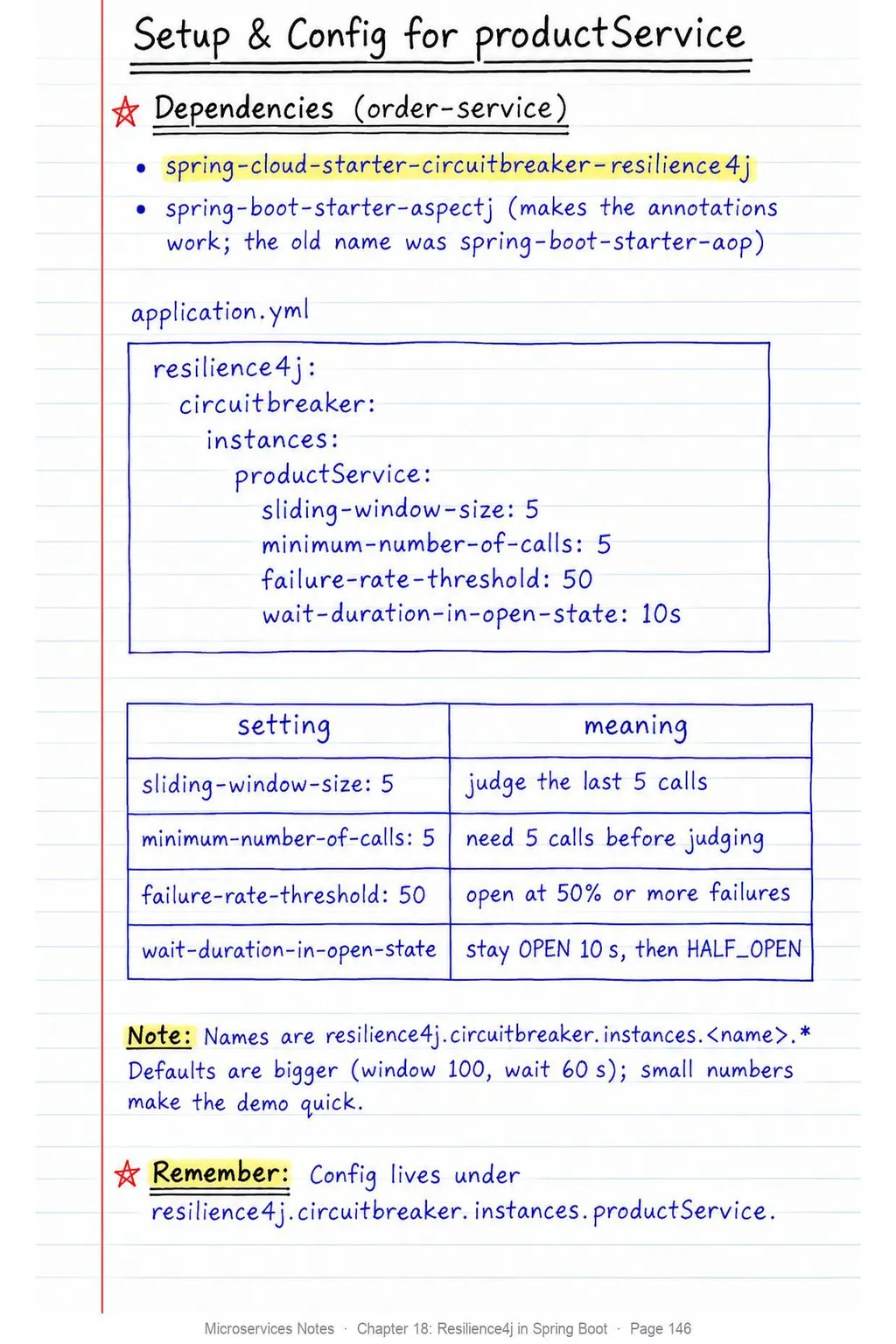
Add resilience with Resilience4j: its modules, the circuit breaker state machine, config for productService, @CircuitBreaker with a fallback, @Retry with exponential backoff, rate limiter, bulkhead, time limiter and combining patterns.
Secure microservices: where to check security, OAuth 2.0 and OpenID Connect roles, JWT anatomy, resource server setup, protecting endpoints with SecurityFilterChain, a demo auth server with client credentials, 401 versus 200, token relay, mTLS and secrets management.
Make logs useful across services: the problem of logs in five places, centralized logging, structured JSON logs, a correlation ID filter, passing the ID downstream, one ID across two services and logging do's and don'ts.
Follow requests with distributed tracing: traces and spans, Micrometer Tracing with Zipkin, traceId and spanId in logs, traceparent and b3 propagation headers, running Zipkin to view a trace, sampling and OpenTelemetry.
Monitor your services: metrics versus logs versus traces, Actuator liveness and readiness health, Micrometer and /actuator/prometheus, a custom orders counter, Prometheus scraping, Grafana dashboards with the RED method and alerting basics.
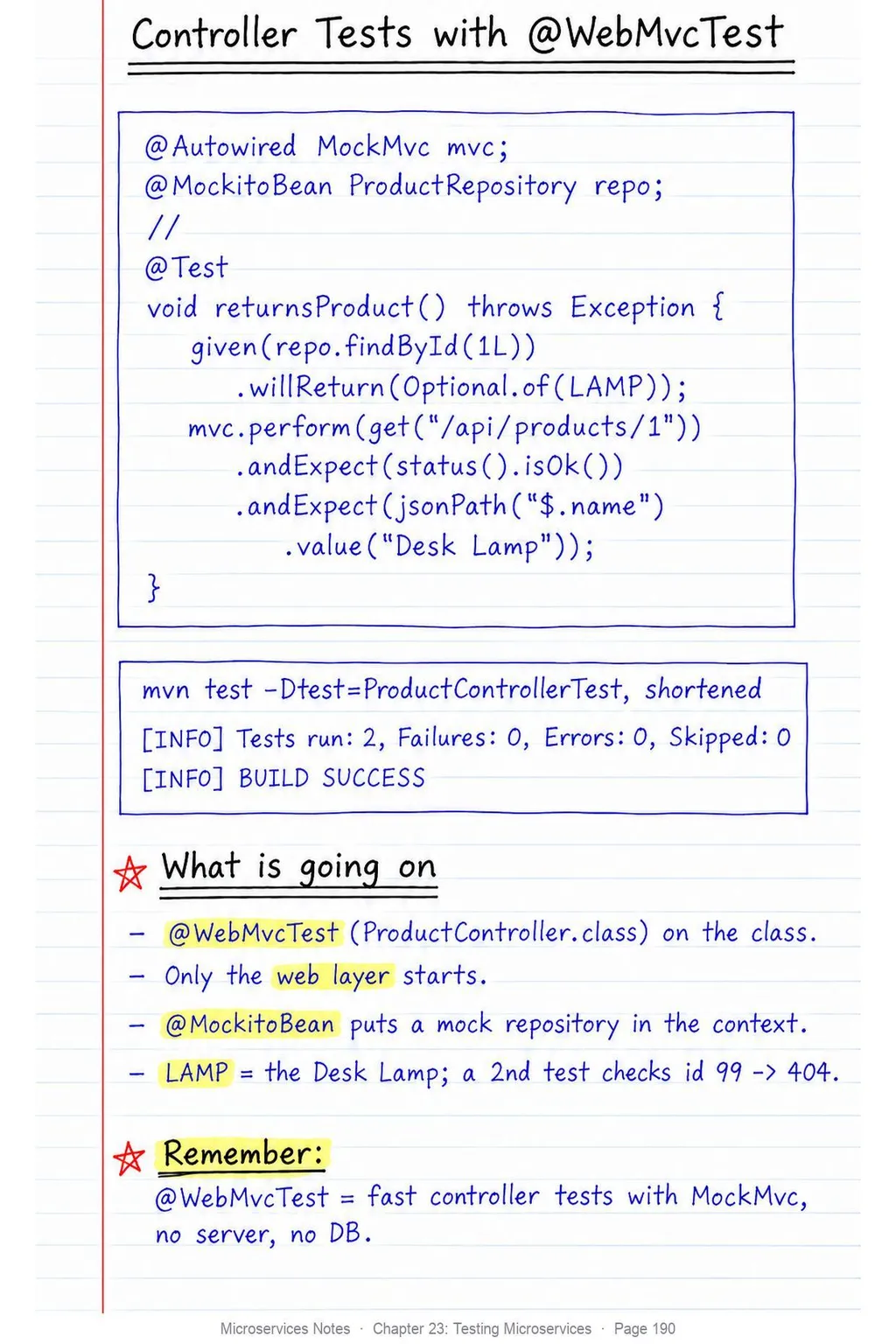
Test microservices at every level: the test pyramid, JUnit 5 unit tests, @WebMvcTest controller tests, MockRestServiceServer, Testcontainers with Postgres, a Kafka integration test, consumer-driven contract testing and a few end-to-end tests.
Package services with Docker: why containers, a Dockerfile for product-service, building and running the image, multi-stage builds and layered jars, buildpacks, and docker compose for ShopNest in three parts.
Run services on Kubernetes: Kubernetes in one picture, the core objects, a kind cluster, Deployment and Service YAML with DNS names, applying and checking, ConfigMap and Secret, liveness and readiness probes, scaling, self-healing and rolling updates.
Go further with Kubernetes in production: Ingress and Gateway API, HorizontalPodAutoscaler, resource requests and limits, Helm charts, service mesh sidecar proxies and what a mesh gives you.
Deliver with CI/CD: one pipeline per service, a GitHub Actions workflow in two parts, rolling updates, blue-green deployment, canary releases, feature flags and database migrations.
Recognize patterns and anti-patterns: the pattern map, sidecar and ambassador, anti-corruption layer, API composition versus CQRS, the distributed monolith, shared database, chatty and nano services anti-patterns and a decision checklist.
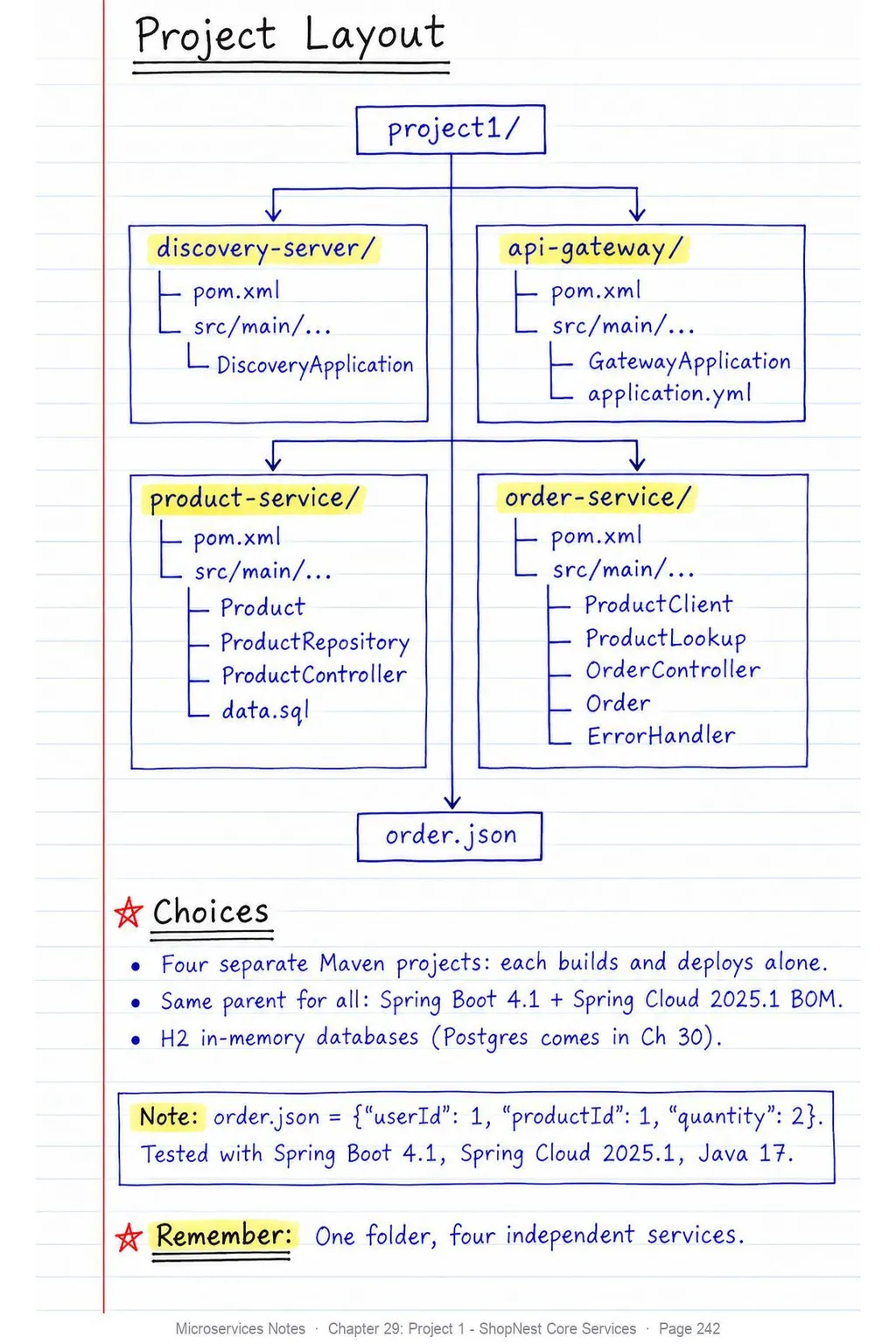
Build Project 1, the ShopNest core services: goal and architecture, project layout, discovery-server, product-service, order-service with Feign, a circuit breaker on product calls, api-gateway routes, startup order, placing an order and the fallback.
Build Project 2, the event-driven order saga: topics and events, order-service outbox, inventory-service stock reservation, payment-service charging, notification-service, docker compose with Kafka, Zipkin and Postgres, happy and failure runs and the saga in Zipkin.
Prepare for interviews and plan your next steps: four sets of Q&A from basics to ops and delivery, a cheat sheet of which piece does what, the top 10 mistakes, a learning roadmap and ShopNest on one page.
Watch before you buy
Students on All Notes PDF
Real students talking about how they revise with our handwritten notes.
How it works
Get your notes in 3 easy steps
No app, no waiting. The whole thing takes under a minute.
- STEP 110 sec
Choose your notes
One subject, any two, or a full class set.
- STEP 230 sec
Pay with UPI or card
GPay, PhonePe, Paytm or card. Pay once, no subscription.
- STEP 3Instant
Download your PDFs
Tap Download on any chapter. Links never expire.
- Log in
- My library
- Download
What you get
- Format
- Downloadable PDF (not a printed book)
- Chapters
- 31 chapters in one 275 page PDF
- Level
- Microservices from beginner to advanced. No experience needed
- Style
- Handwritten-style notes with diagrams, code explained line by line, common mistakes and quizzes
- Devices
- Phone, tablet and laptop. Print any chapter if you like
- Access
- Lifetime. Download again anytime from My library
- Instant downloadRight after payment
- Free updatesCorrections added free
- Secure paymentUPI, cards, net banking