Tech · Beginner to Advanced · Handwritten PDF notes
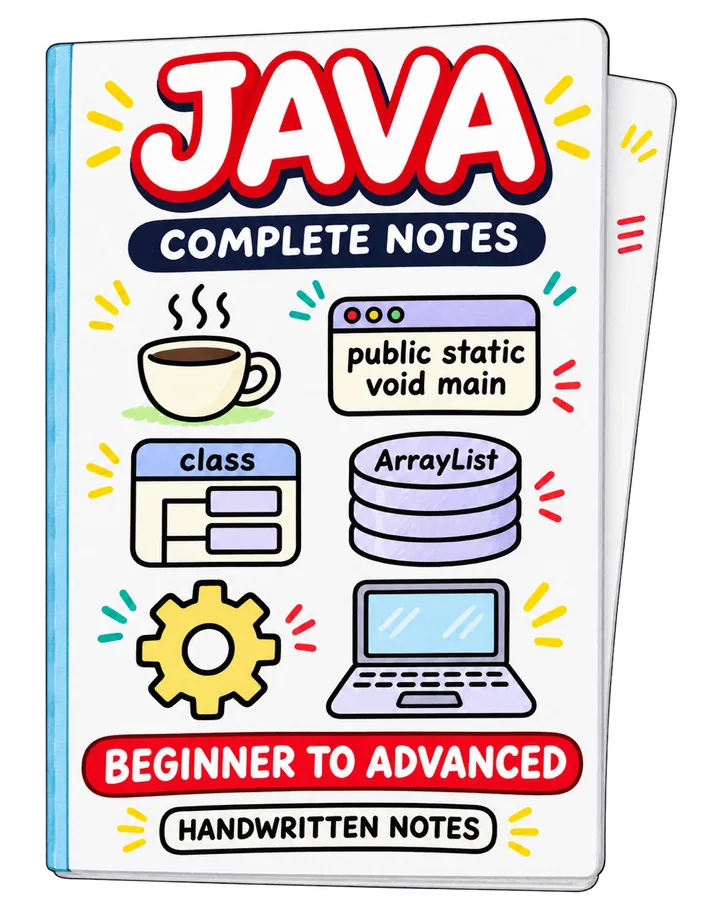
Java Complete Notes
Instant PDF download after payment. Pay once, keep forever.
- Instant download
- Lifetime access
- UPI, GPay, PhonePe, cards
Complete coverage
What you learn in all 35 chapters
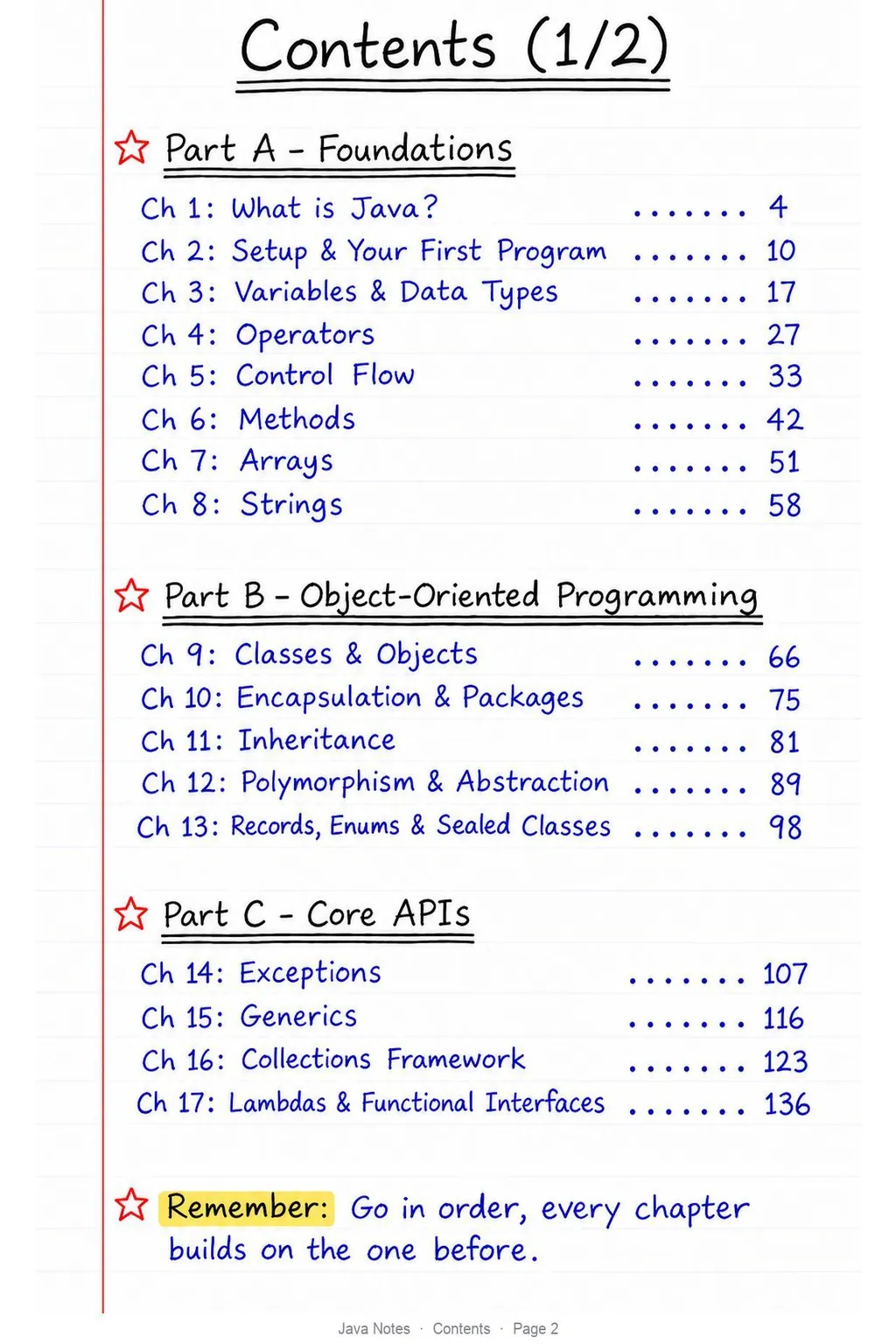
Open any chapter to see every topic it covers and the page it is on.
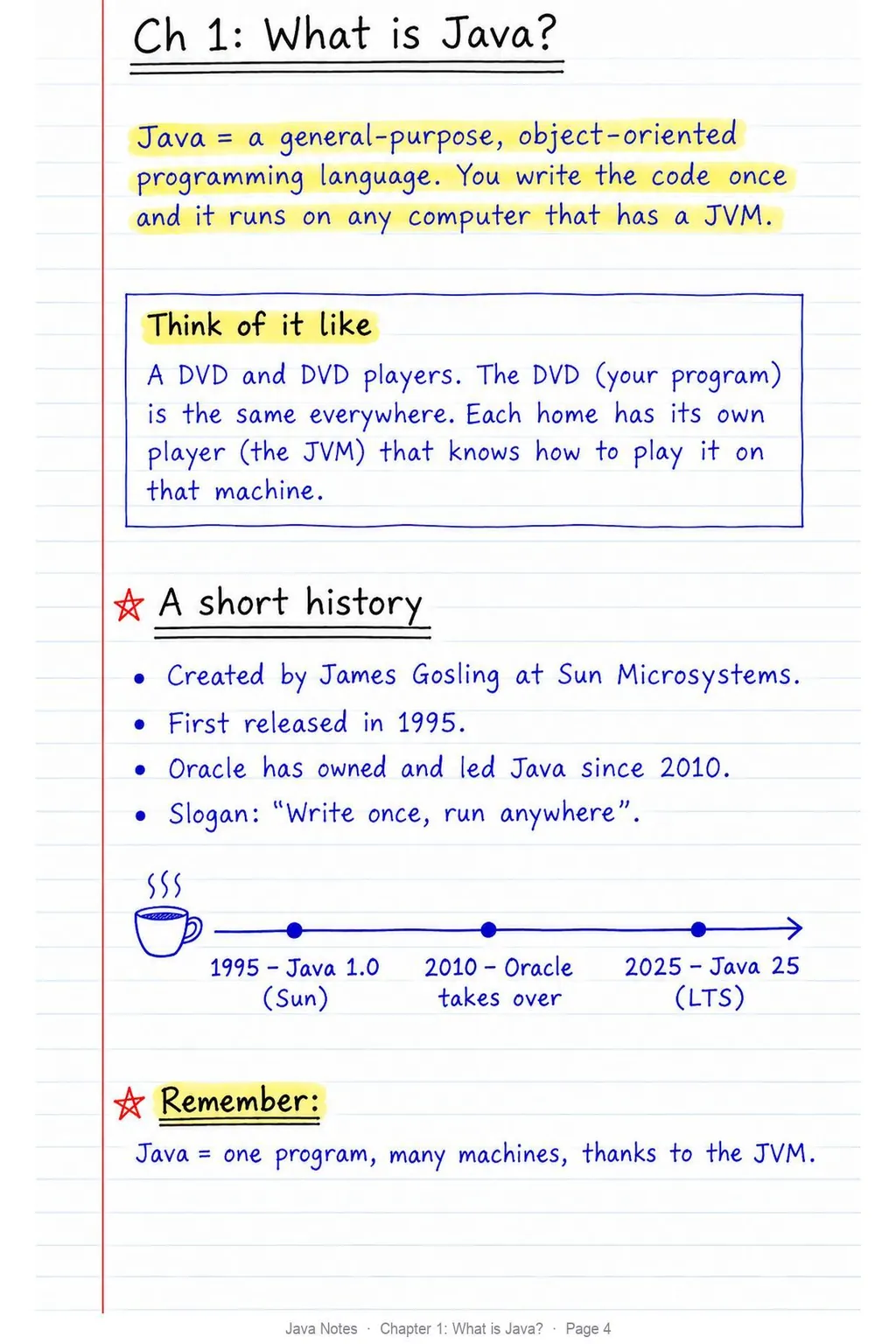
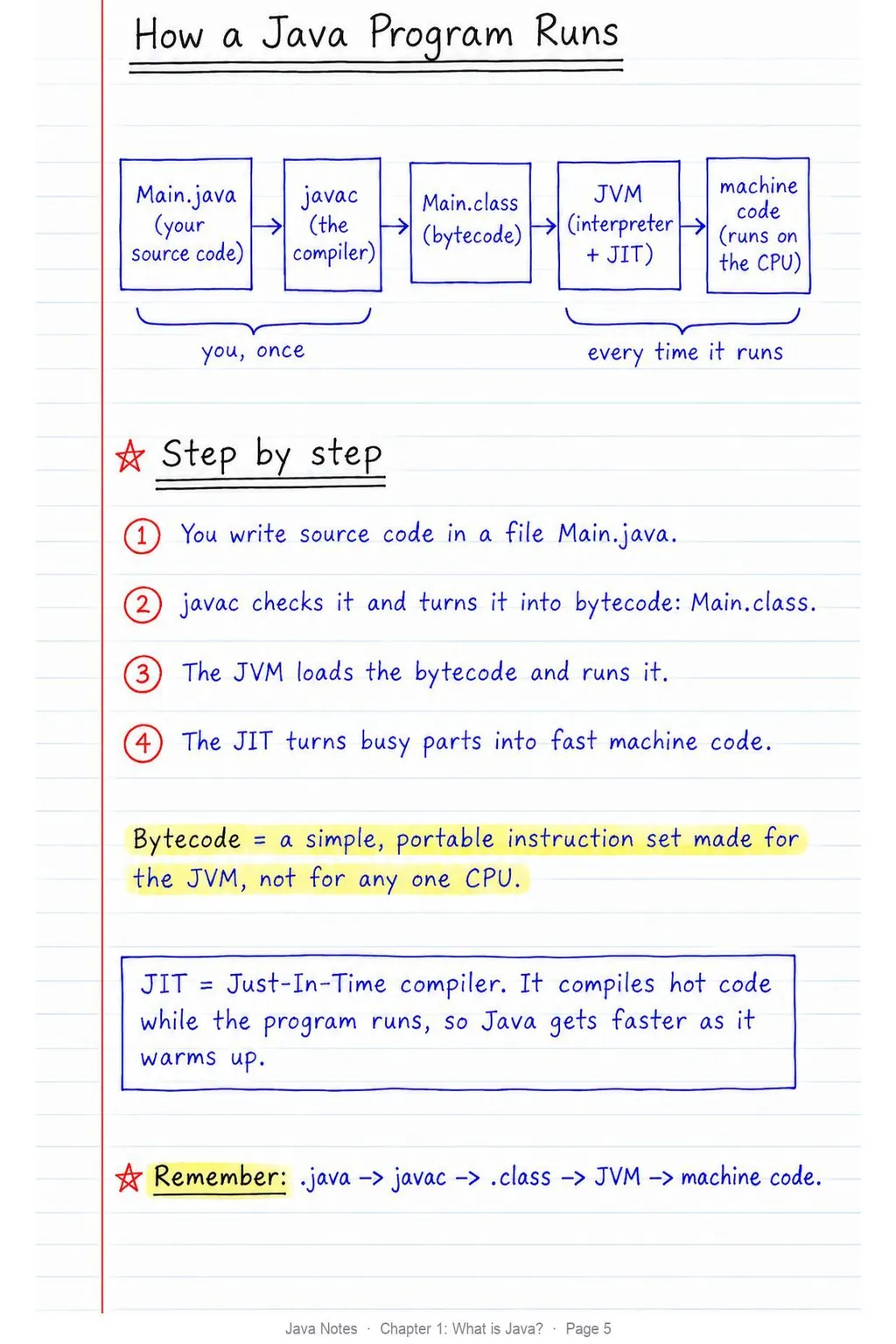
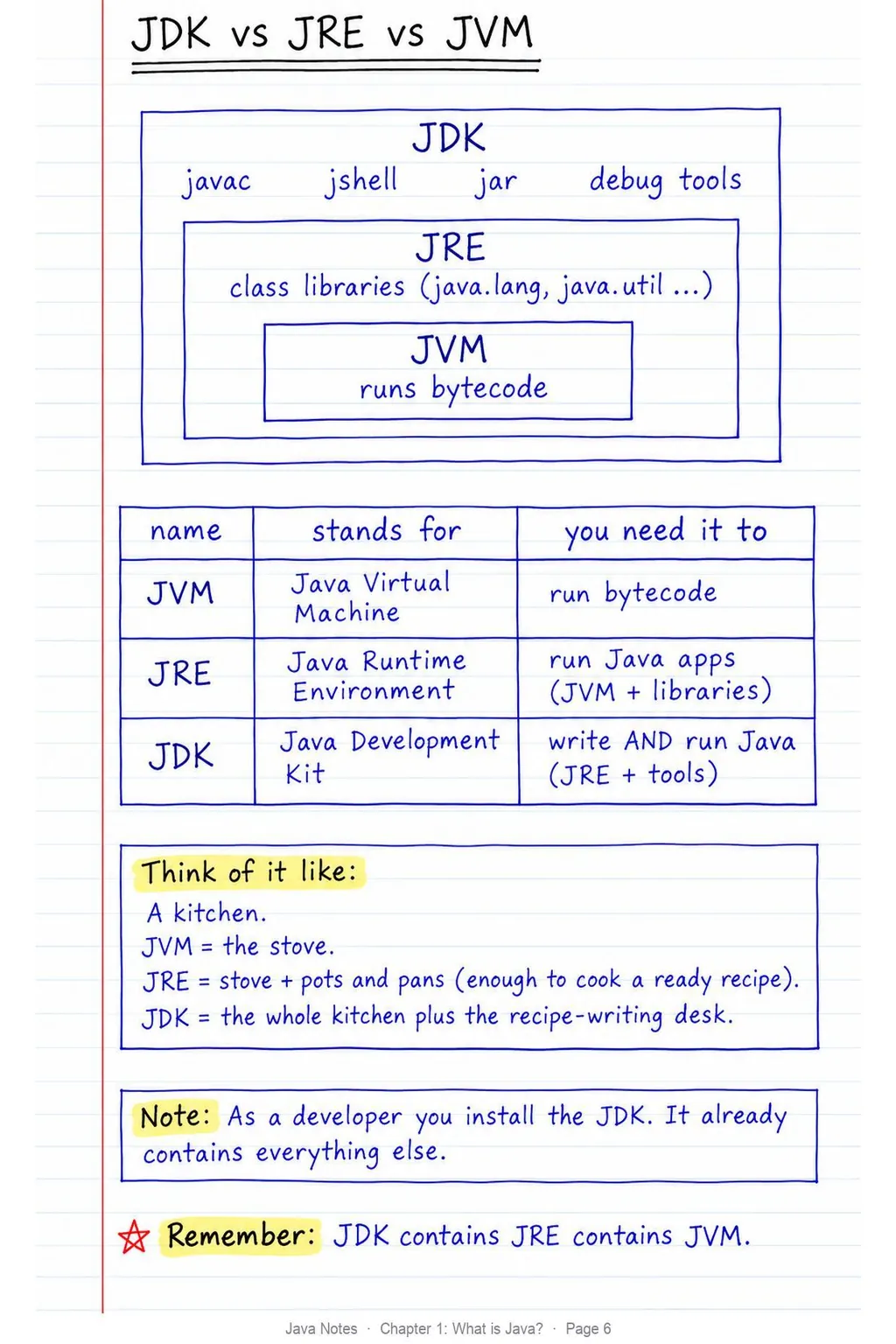
Understand what Java is and how it runs: how a program goes from source to the JVM, JDK versus JRE versus JVM, where Java is used and how it compares with Python, C++ and JavaScript.
Set up your tools and run your first program: install the JDK, read Hello World line by line, compile with javac and run with java, use single-file run and JShell, try Java 25 compact source files and follow IDE and naming rules.
Store and convert data with variables: the 8 primitives, literals, widening and narrowing casts, var, final constants, wrapper classes and autoboxing, plus the overflow and floating point surprises.
Use operators with confidence: arithmetic, integer division and %, prefix and postfix ++ and --, comparison and logical operators, compound assignment and its hidden cast, the ternary operator and precedence.
Control what your program does next: if and else, classic switch and the fallthrough trap, switch expressions with -> and yield, while, do-while and for loops, for-each, break, continue and labels, and reading input with Scanner.
Write reusable methods: parameters and return values, pass-by-value for primitives and references, overloading, varargs, recursion, and static versus instance methods.
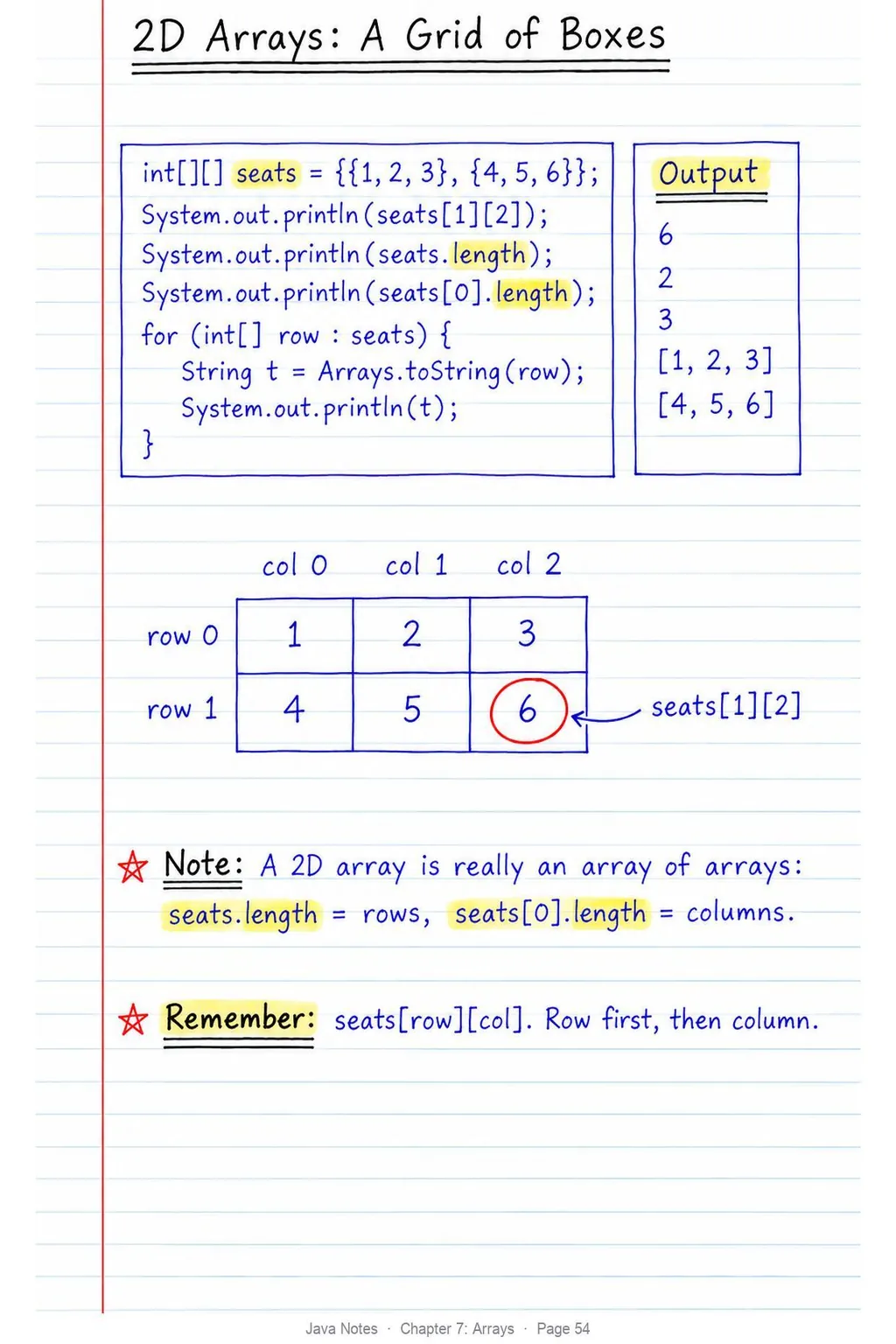
Work with arrays: create them, loop with length, use the Arrays helper class, build 2D arrays, handle default values and out-of-bounds errors, and see how arrays compare with ArrayList.
Master Java strings: immutability and the string pool, == versus equals(), everyday and modern String methods, StringBuilder, text blocks, and formatting with format, formatted and printf.
Model real things with classes and objects: fields and methods, new and the stack versus heap, constructors, this and constructor chaining, static members, and the object lifecycle with garbage collection.
Protect your data with encapsulation: access modifiers, getters and setters with validation, packages and imports, and immutable classes that can never change.
Reuse code through inheritance: extends, super, method overriding with @Override, constructor call order, the Object class, final, and when to choose composition over inheritance.
Make one interface behave many ways: polymorphism and dynamic dispatch, upcasting, downcasting and the instanceof pattern, abstract classes, interfaces with default, static and private methods, and overloading versus overriding.
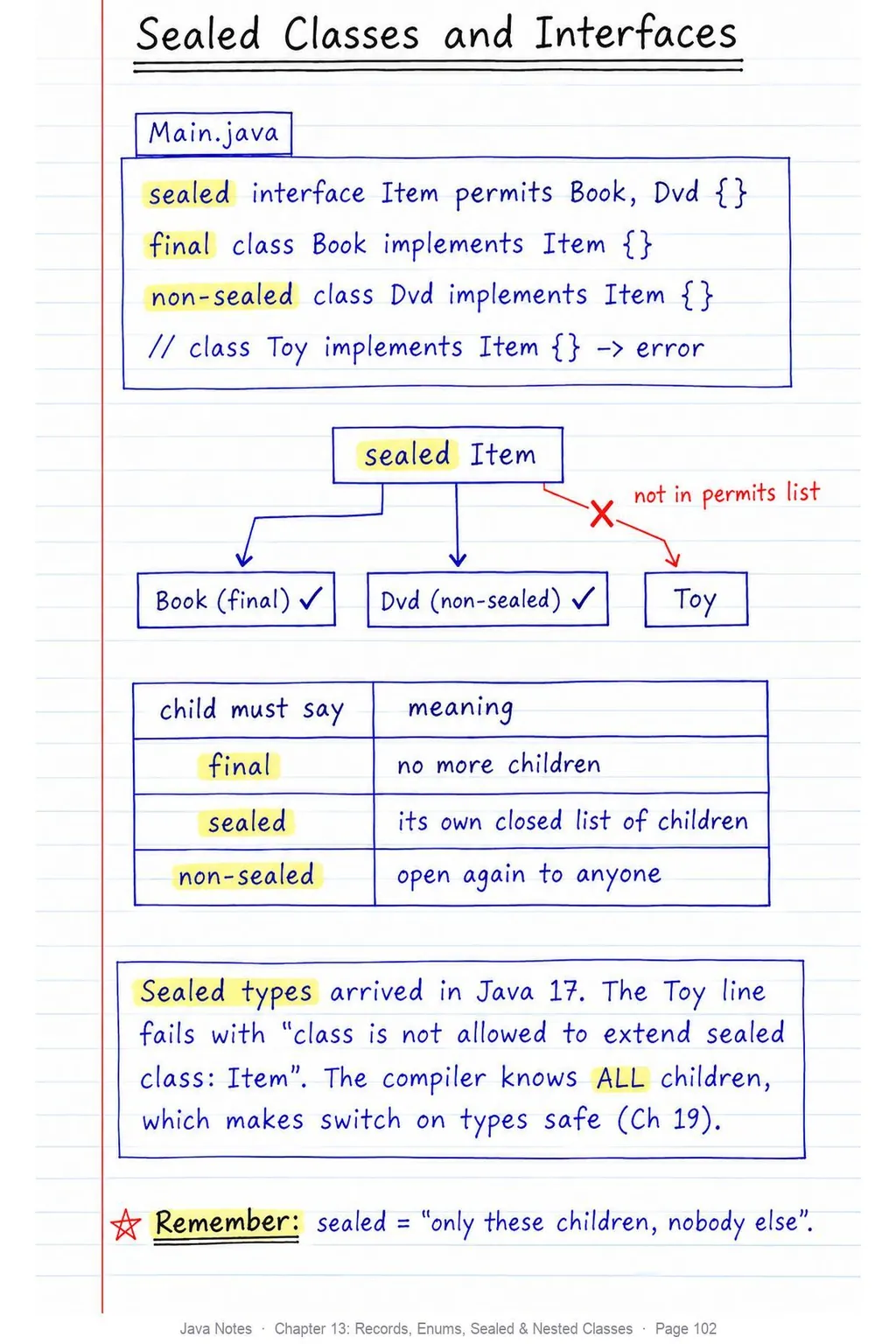
Model data with modern Java types: records and compact constructors, enums with fields, sealed classes and interfaces, static nested versus inner classes, anonymous classes and lambdas, and flexible constructor bodies in Java 25.
Handle errors safely: the exception family tree, try, catch and finally, checked versus unchecked exceptions, throw and throws, custom exceptions, try-with-resources, multi-catch and best practices.
Write type-safe reusable code with generics: why they exist, generic classes and methods, bounded types, wildcards with ? extends and ? super (PECS), and type erasure with its limits.
Learn the Collections Framework: ArrayList and LinkedList, sets, HashMap and how it works inside, LinkedHashMap and TreeMap, queues and PriorityQueue, safe removal while looping, sorting with Comparable and Comparator, immutable collections and sequenced collections.
Write concise functional code: lambda syntax, the core functional interfaces, method references, effectively final captured variables, and using Optional the right way.
Process data with the Stream API: build a pipeline, create streams, filter and map, sort, distinct, limit and skip, reduce and IntStream, collect with toList, joining and toMap, groupingBy, flatMap, laziness and parallel streams.
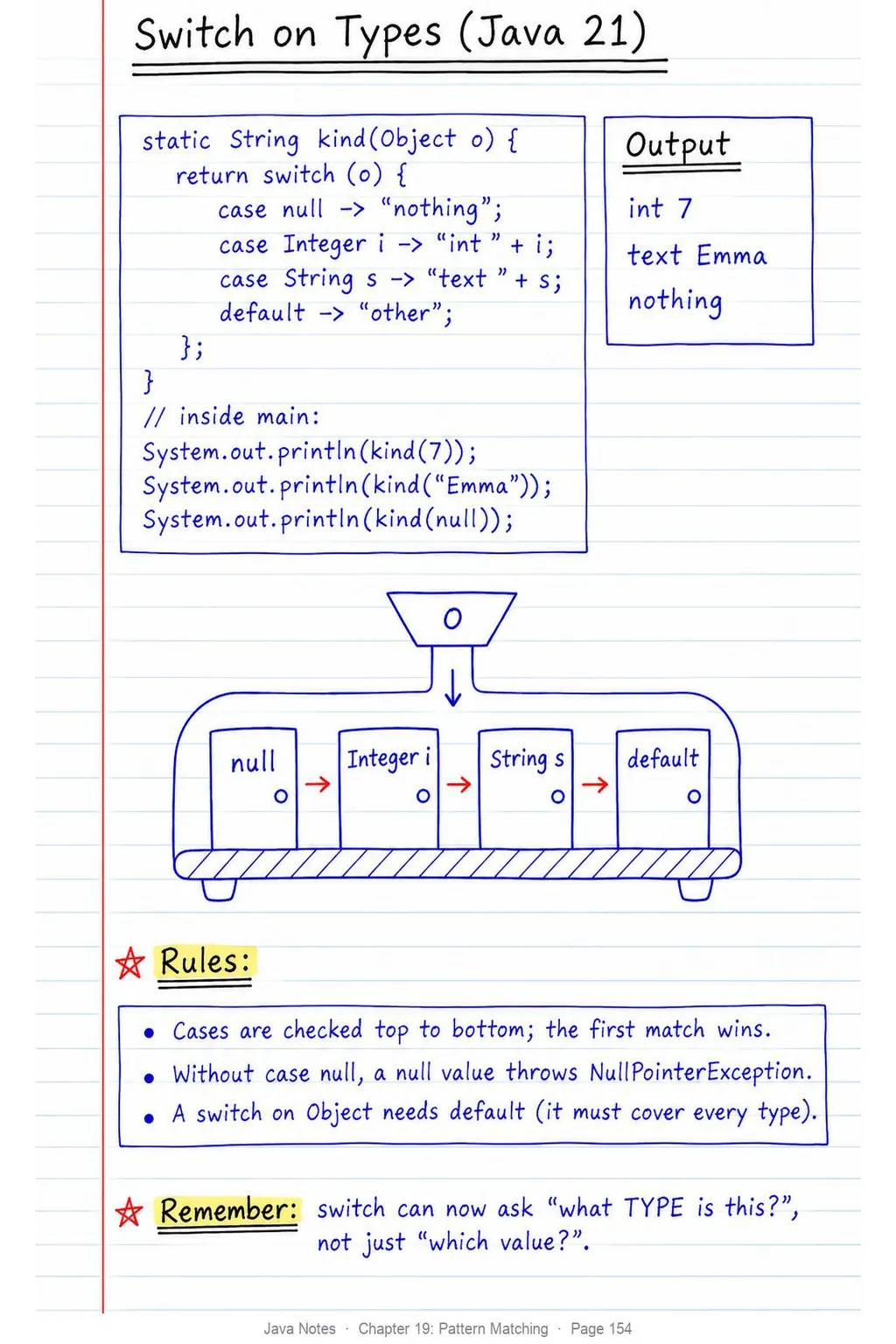
Use pattern matching to simplify type checks: the instanceof pattern, switch on types, record patterns, guards with when and sealed types, and unnamed variables with _.
Work with dates and times using java.time: LocalDate arithmetic, Duration versus Period, formatting, parsing and time zones.
Read and write files: bytes versus characters, Path and Files, readString, readAllLines and lines, writing files, BufferedReader and BufferedWriter, walking folders with Files.walk and saving objects.
Understand threads: processes versus threads, start() versus run(), the thread lifecycle and its states, sleep and join, why count++ causes a race condition, and how synchronized and volatile fix it.
Scale concurrent code with java.util.concurrent: thread pools and ExecutorService, Callable and Future, CompletableFuture, ReentrantLock, AtomicInteger, concurrent collections, CountDownLatch and how deadlock happens.
Use virtual threads for modern concurrency: platform versus virtual threads, creating them in Java 21, running 10,000 tasks at once, when to use them and their pitfalls, structured concurrency and scoped values in Java 25.
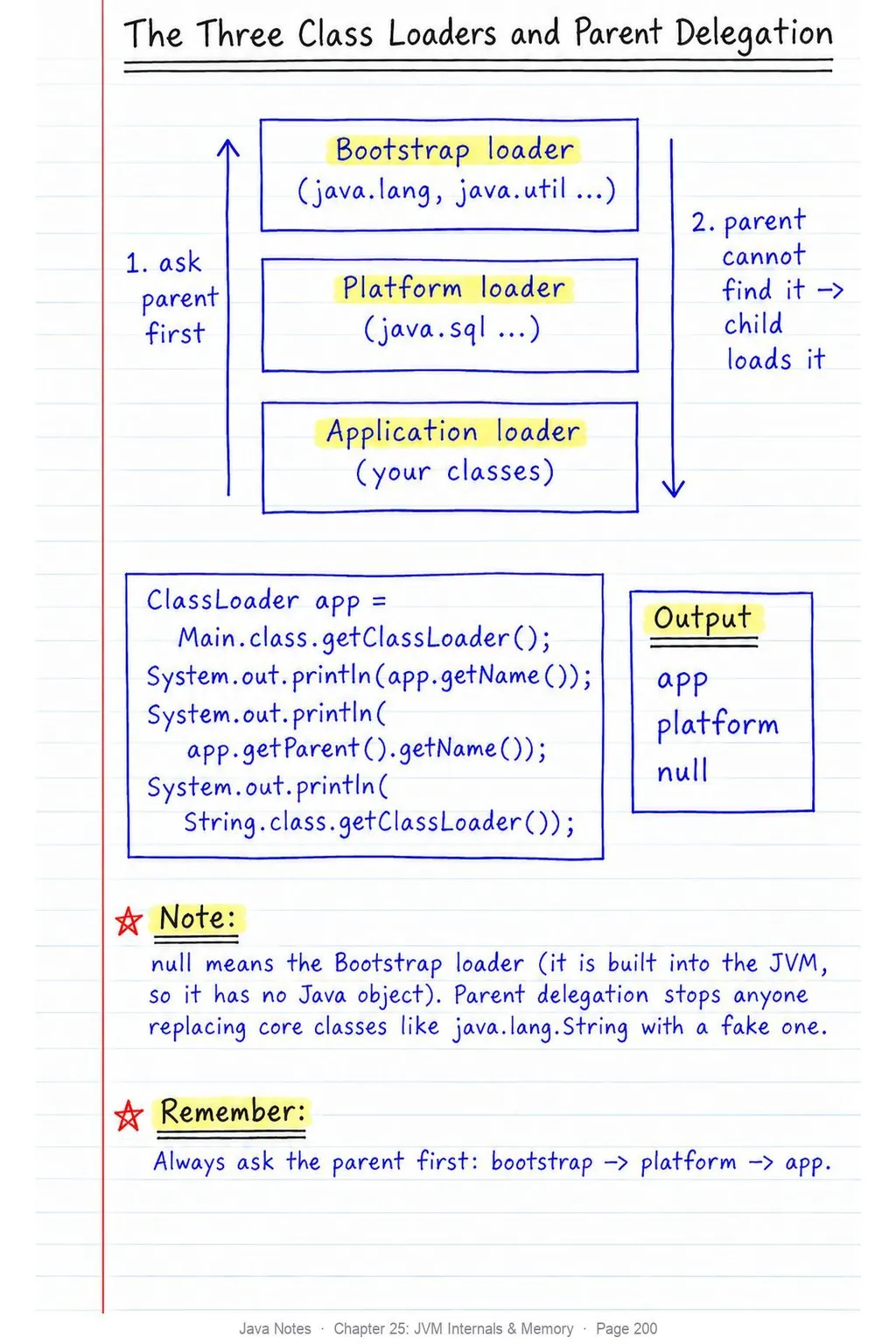
Look inside the JVM: class loading and parent delegation, runtime memory areas, the JIT compiler, generational garbage collection, choosing a collector, memory leaks and OutOfMemoryError, and JVM tools for running apps.
Package and organize Java code: JAR files and the classpath, module-info.java with requires and exports, strong encapsulation, module import declarations in Java 25, and building a small runtime with jlink.
Automate builds with Maven and Gradle: why build tools exist, the standard project layout, pom.xml essentials, the Maven lifecycle, dependencies and scopes, and Maven versus Gradle.
Test your code with JUnit 5 and Mockito: the test pyramid, your first test, assertions, lifecycle annotations, parameterized tests, testing exceptions with assertThrows, and mock, when and verify.
Connect Java to a database with JDBC: connecting, SQL injection and why it is dangerous, PreparedStatement, reading rows with a ResultSet, transactions, and connection pools.
Talk to web services from Java: HTTP and JSON basics, HttpClient GET and POST requests, sendAsync for non-blocking calls, and converting JSON to Java objects with Jackson.
Apply the classic design patterns: Singleton, Factory, Builder, Strategy, Observer, Decorator and Adapter, and learn what each one solves.
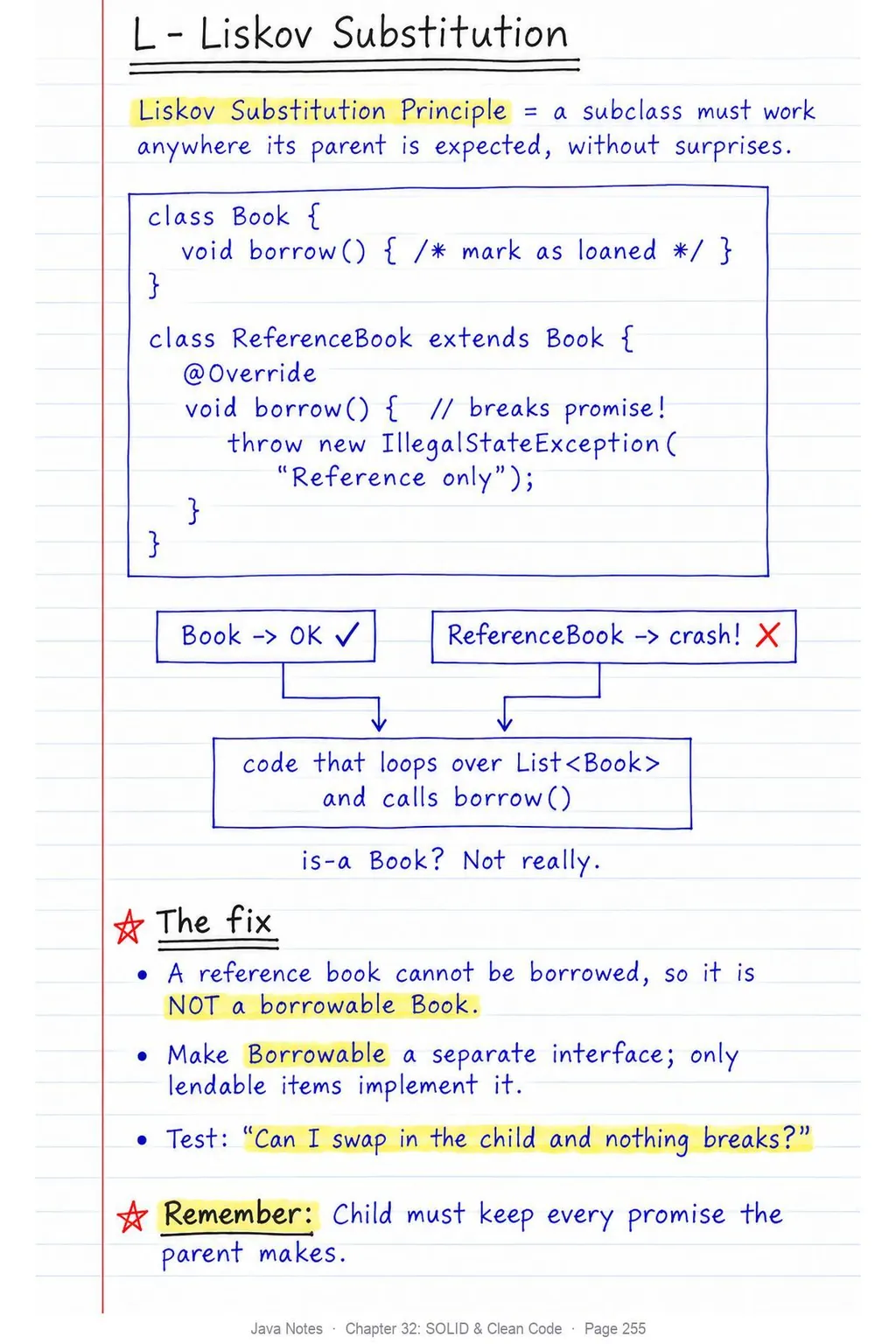
Write cleaner code with the SOLID principles: single responsibility, open and closed, Liskov substitution, interface segregation, dependency inversion, and everyday clean code habits.
Build the LibraryHub console app from scratch: requirements, package layout, records, custom exceptions, a map-based repository, borrow and return rules, stream reports, saving and loading files, a switch-based menu, the main loop and JUnit tests.
Write faster and better Java: measure before optimising, spot hidden costs in strings and boxing, pick the right collection by Big-O, follow top Effective Java habits, and see what changed from Java 8 to 25.
Prepare for interviews and plan what comes next: Q&A on Java basics, collections, streams, OOP, exceptions, modern Java and concurrency, cheat sheets, the top 10 mistakes, a learning roadmap and a Spring Boot preview.
Watch before you buy
Students on All Notes PDF
Real students talking about how they revise with our handwritten notes.
How it works
Get your notes in 3 easy steps
No app, no waiting. The whole thing takes under a minute.
- STEP 110 sec
Choose your notes
One subject, any two, or a full class set.
- STEP 230 sec
Pay with UPI or card
GPay, PhonePe, Paytm or card. Pay once, no subscription.
- STEP 3Instant
Download your PDFs
Tap Download on any chapter. Links never expire.
- Log in
- My library
- Download
What you get
- Format
- Downloadable PDF (not a printed book)
- Chapters
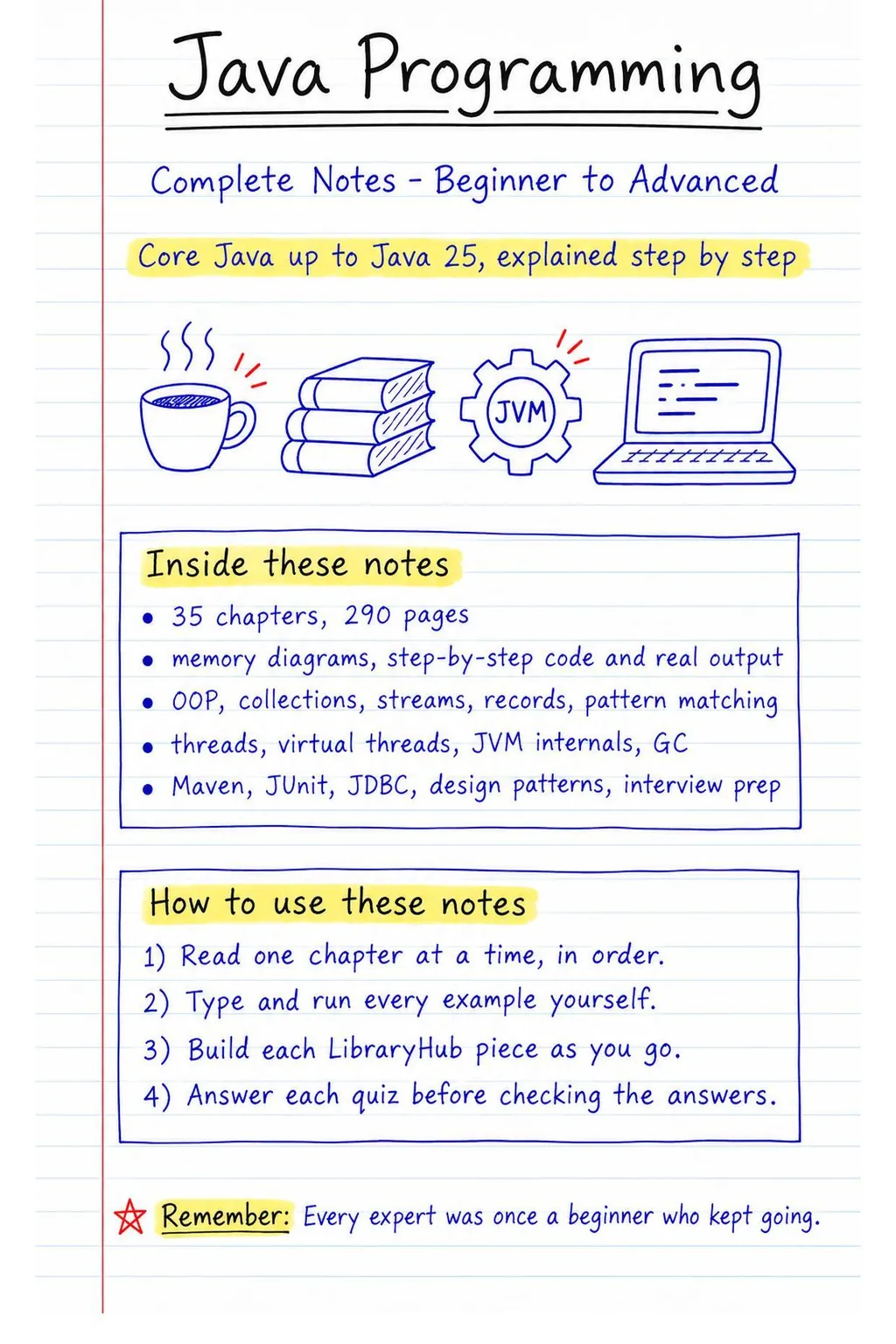
- 35 chapters in one 290 page PDF
- Level
- Java from beginner to advanced. No experience needed
- Style
- Handwritten-style notes with diagrams, code explained line by line, common mistakes and quizzes
- Devices
- Phone, tablet and laptop. Print any chapter if you like
- Access
- Lifetime. Download again anytime from My library
- Instant downloadRight after payment
- Free updatesCorrections added free
- Secure paymentUPI, cards, net banking