Tech · Beginner to Advanced · Handwritten PDF notes
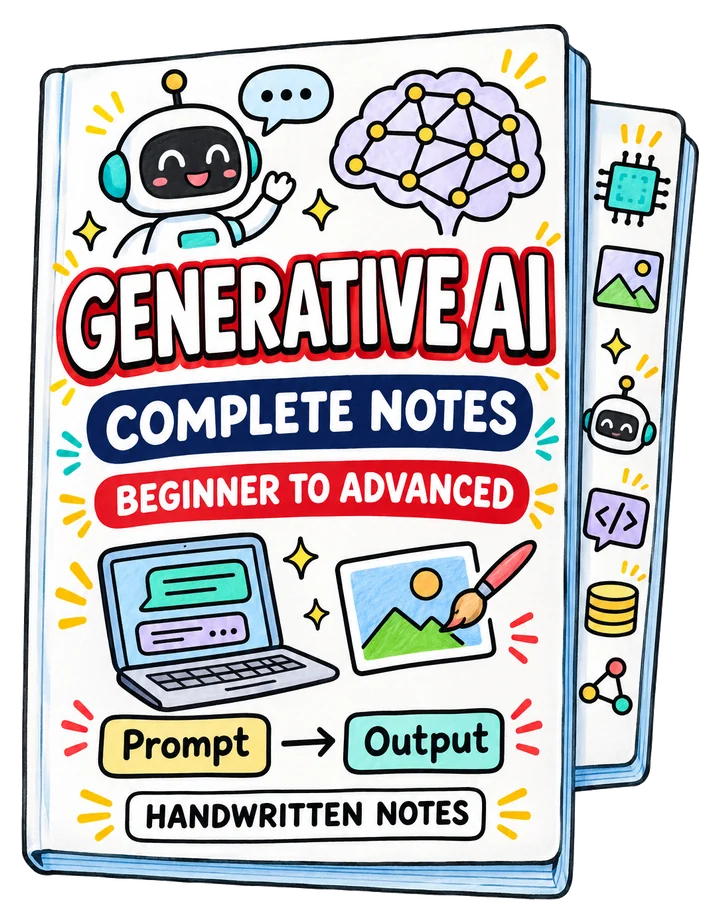
Generative AI Complete Notes
Instant PDF download after payment. Pay once, keep forever.
- Instant download
- Lifetime access
- UPI, GPay, PhonePe, cards
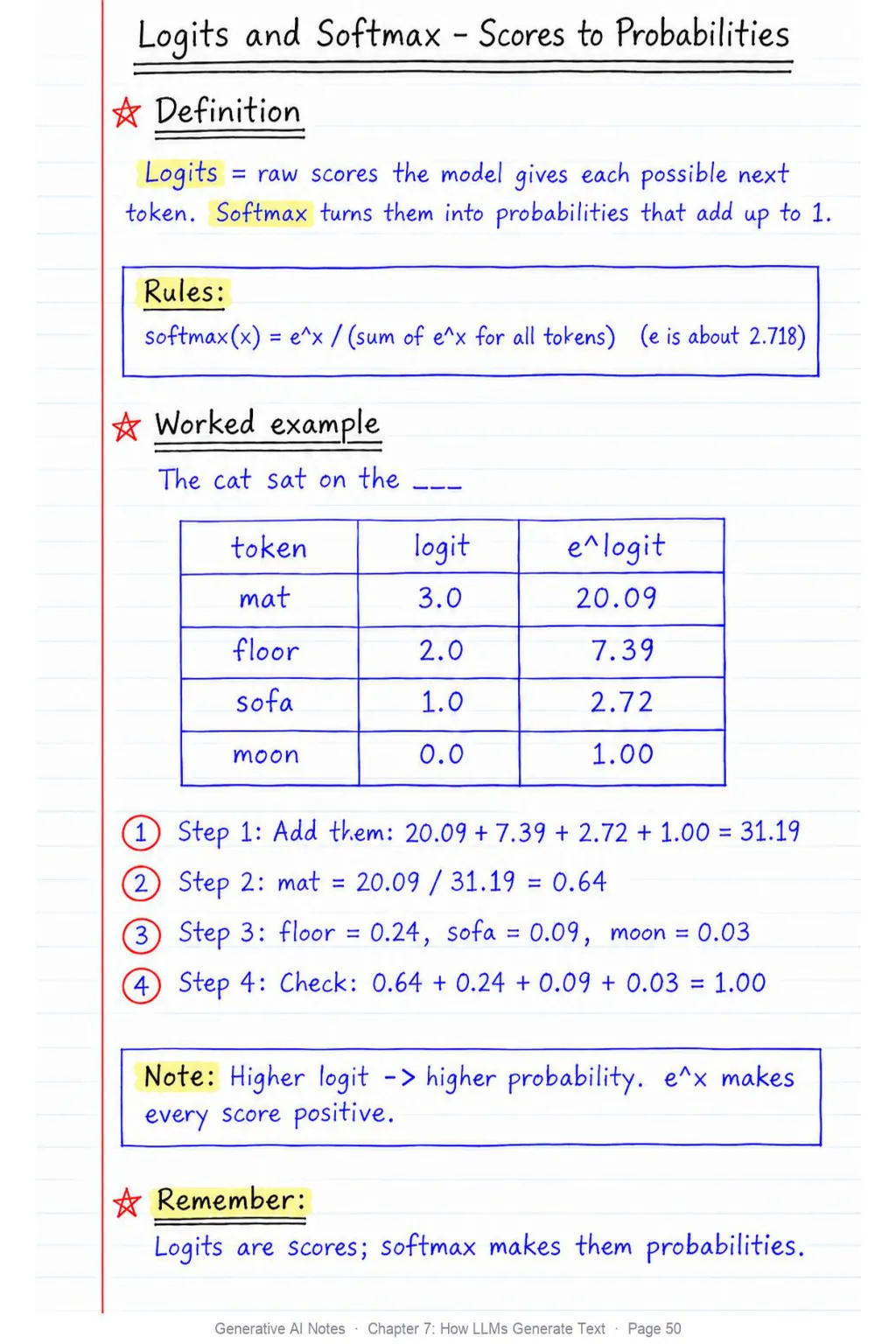
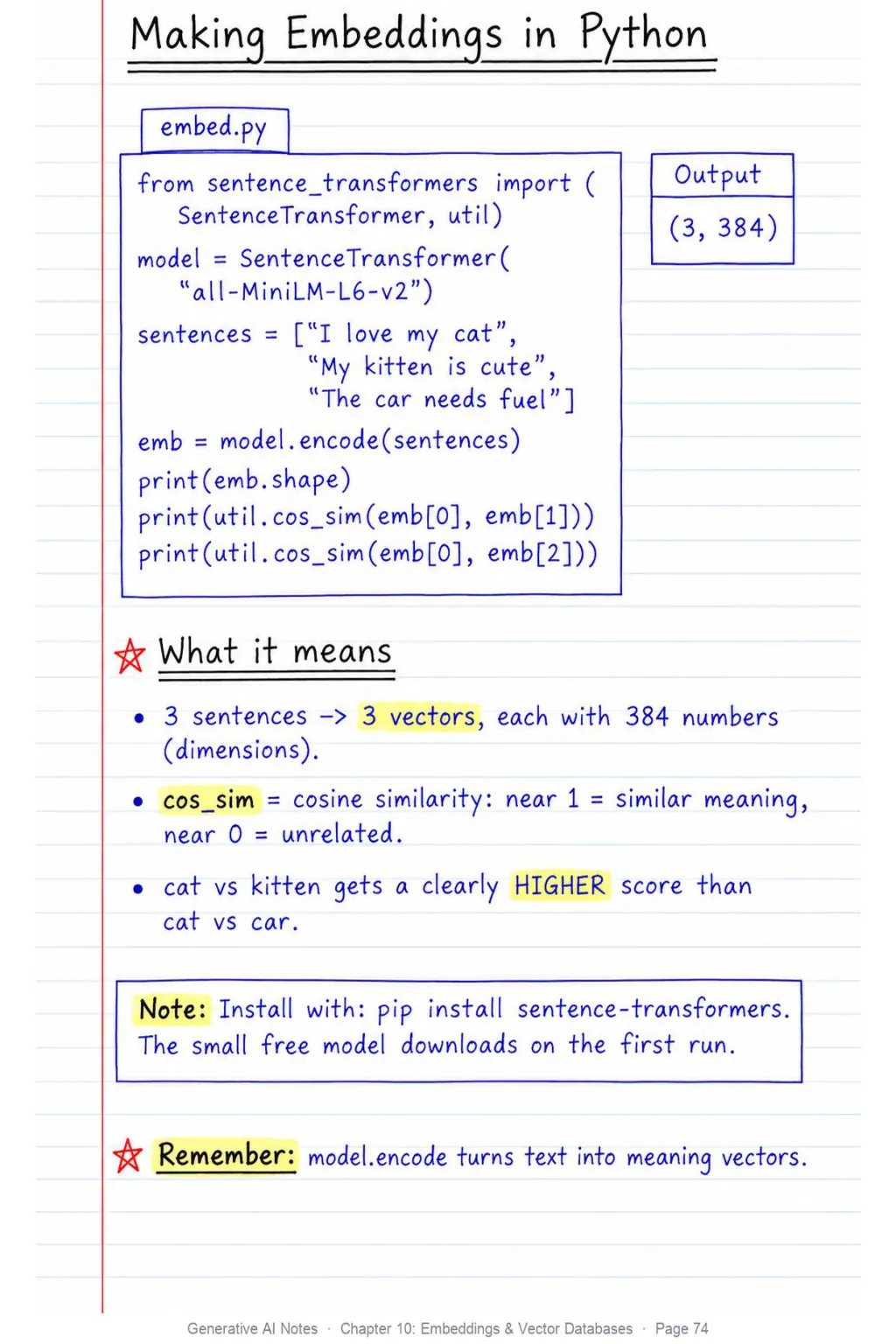
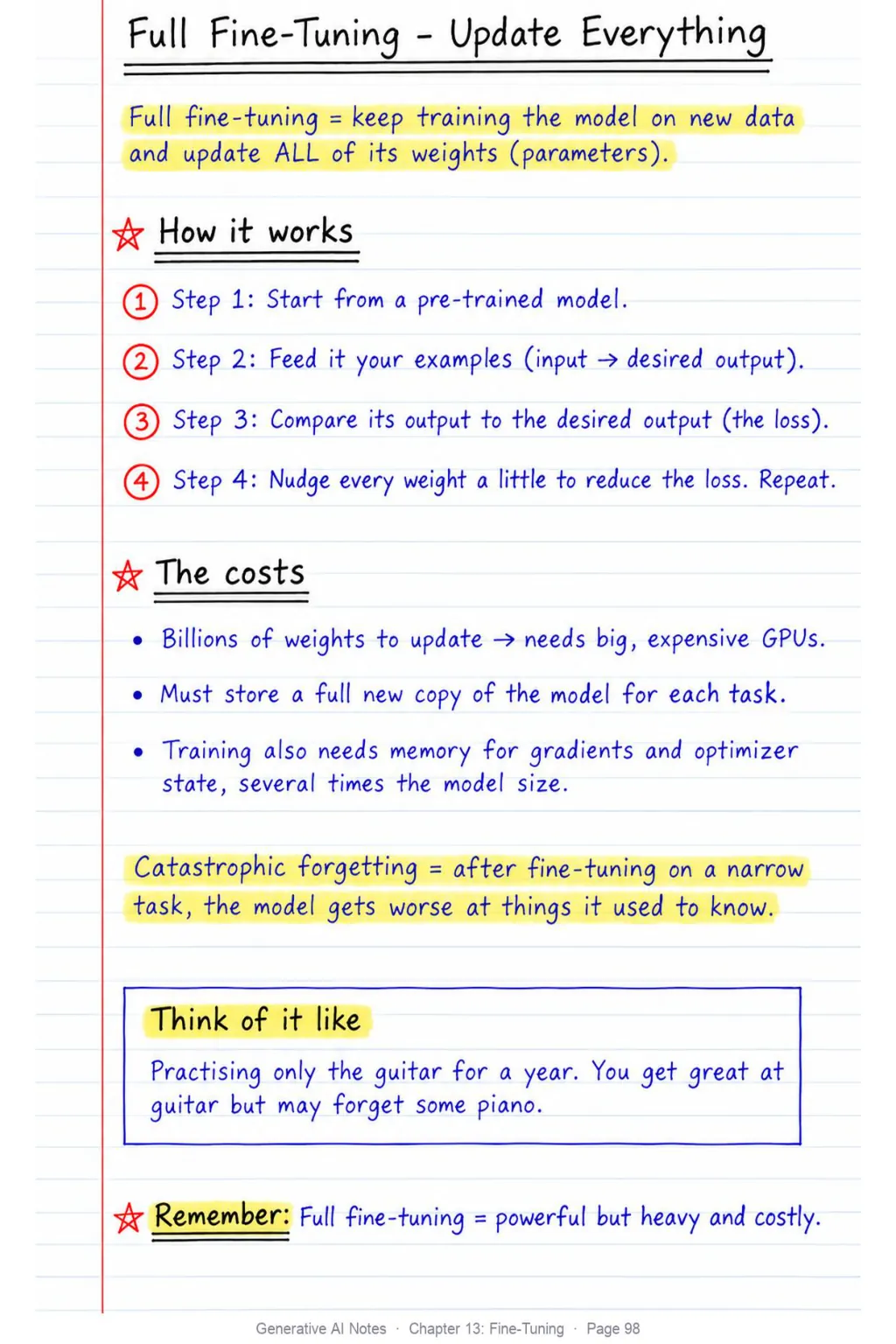
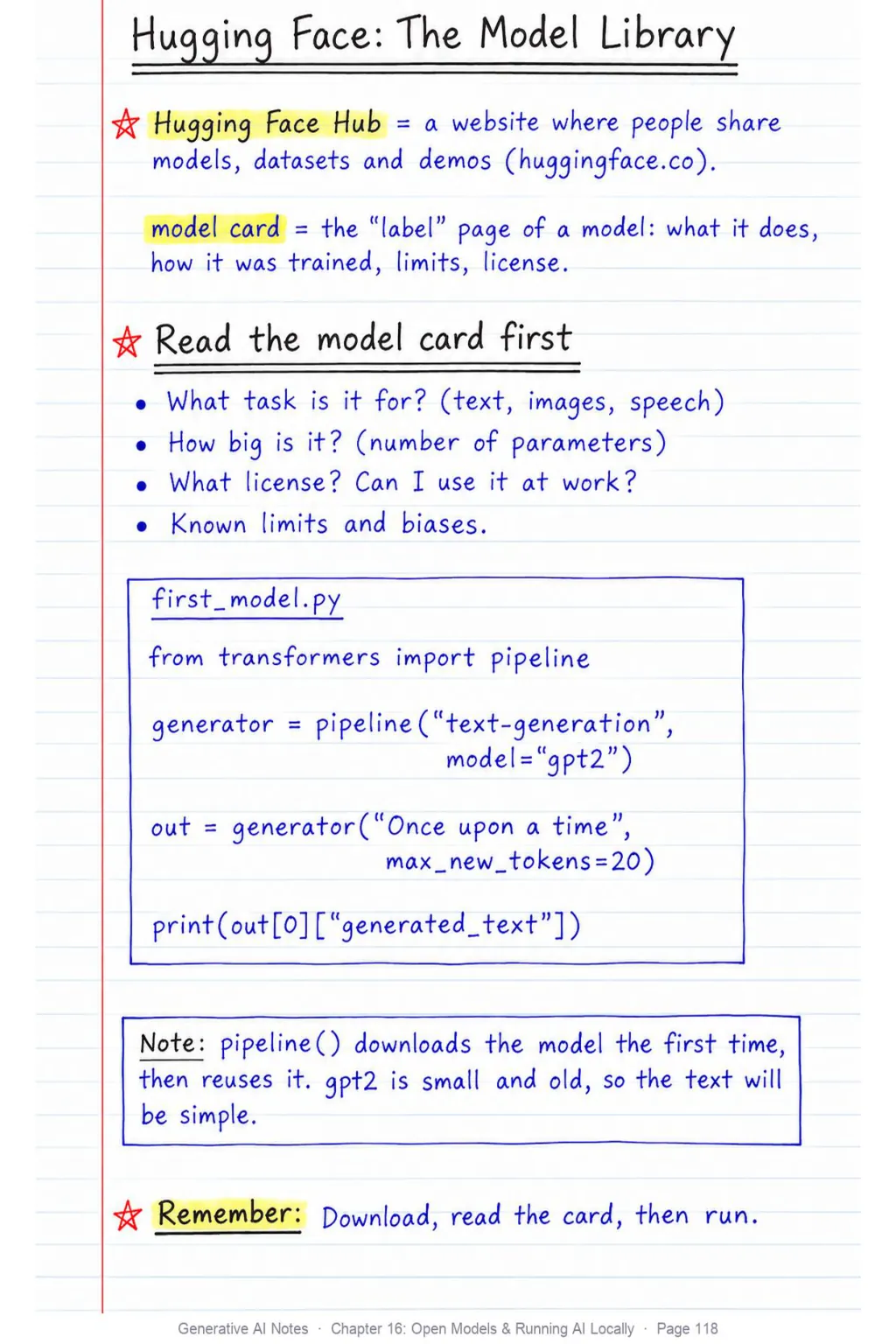
Complete coverage
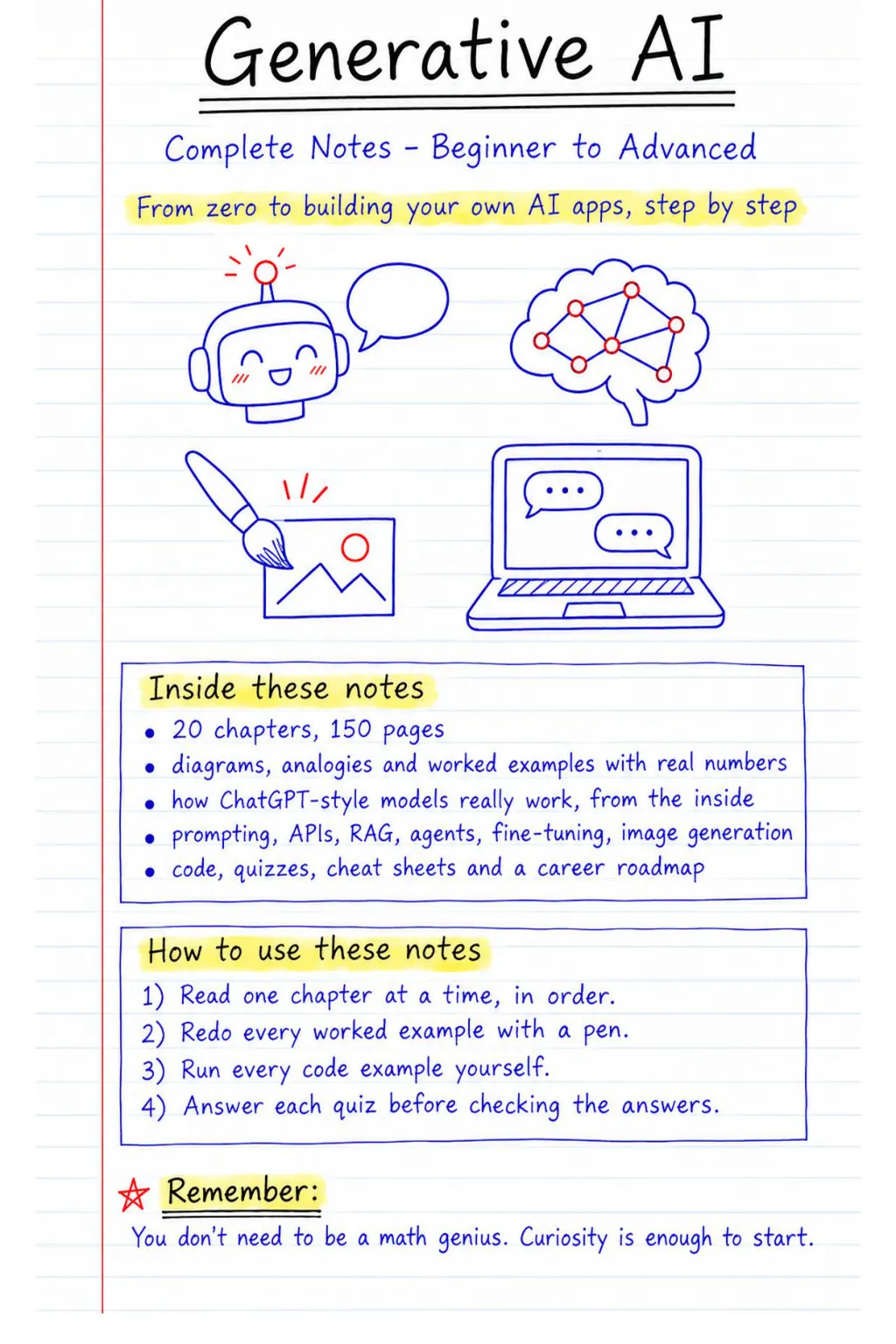
What you learn in all 20 chapters
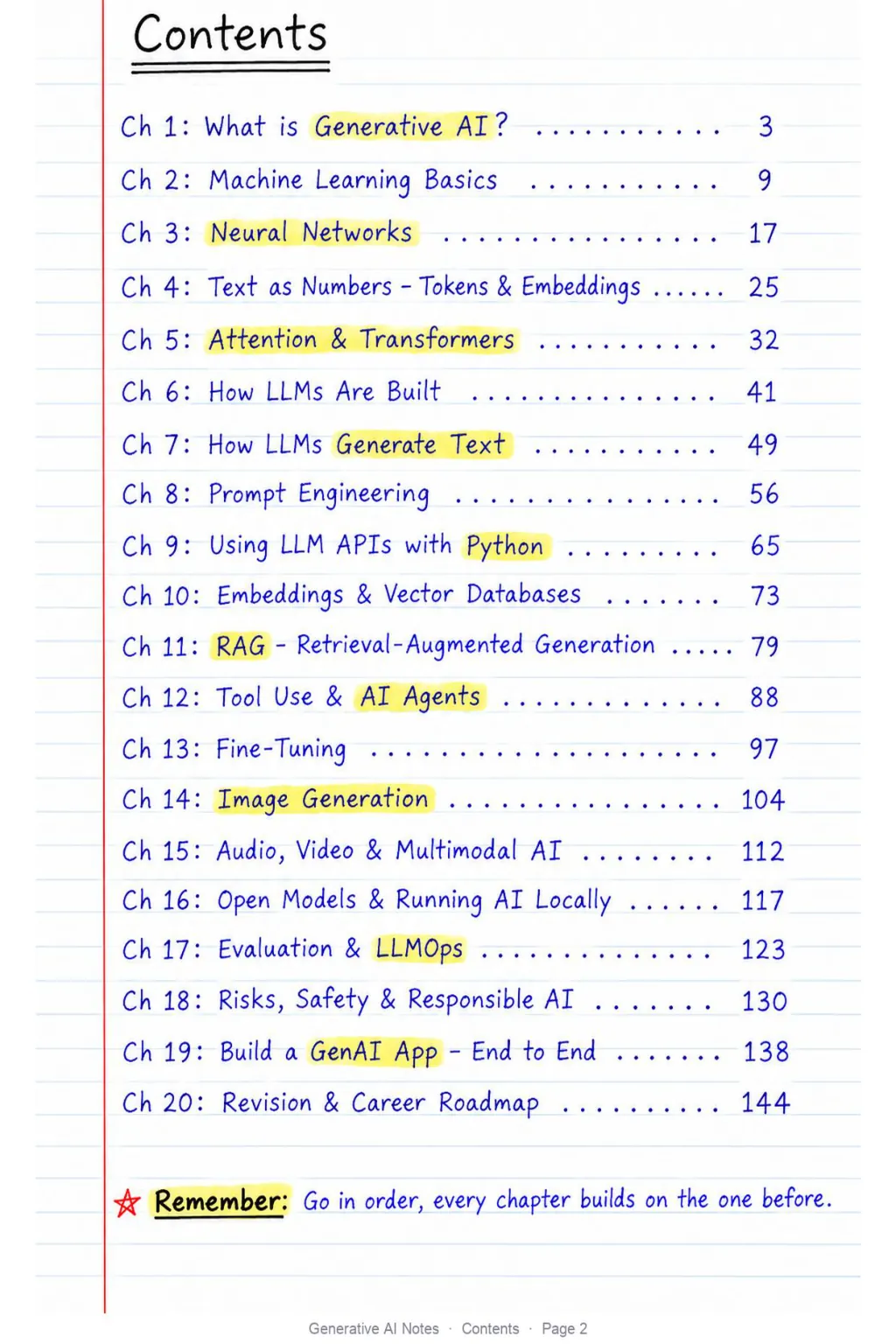
Open any chapter to see every topic it covers and the page it is on.
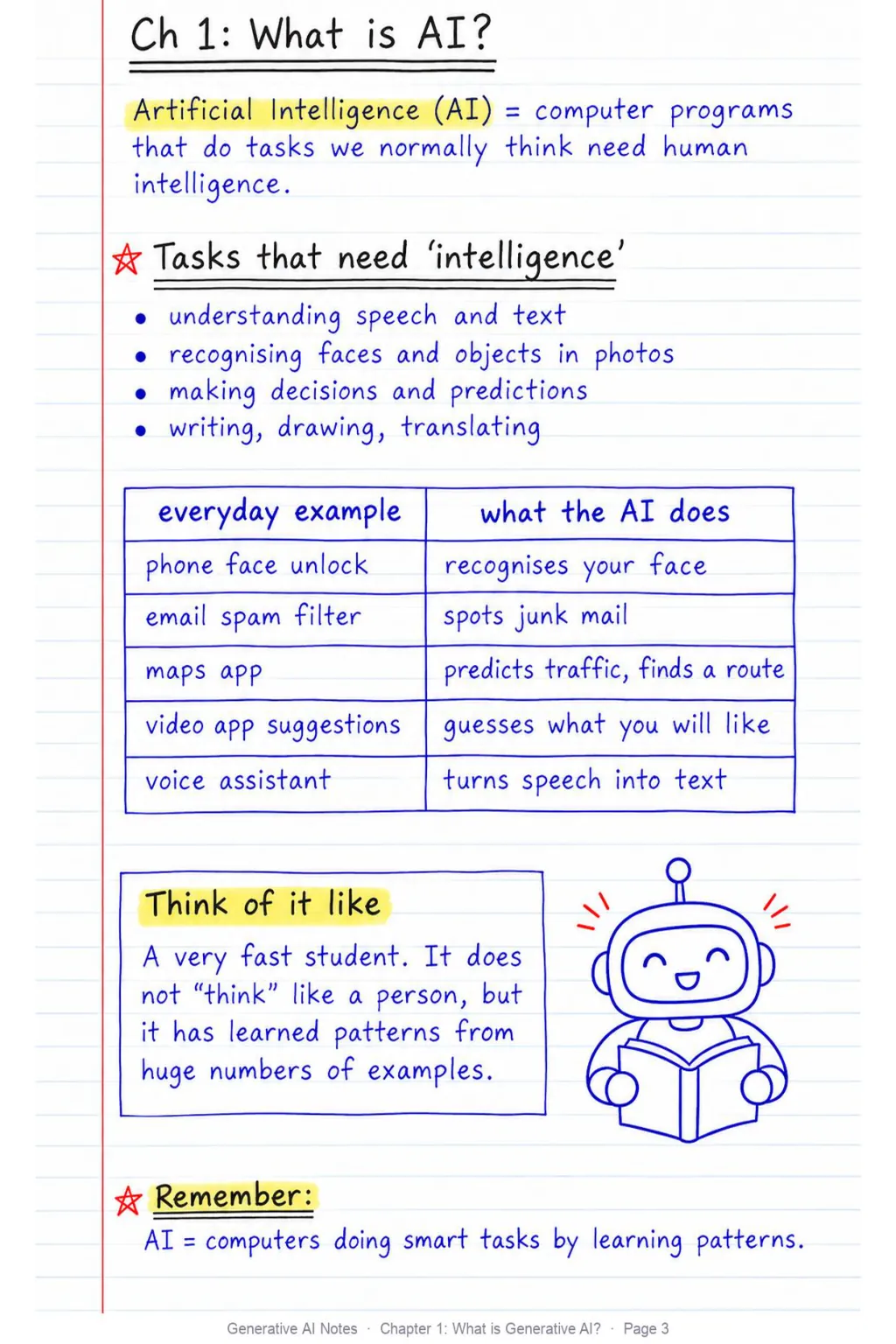
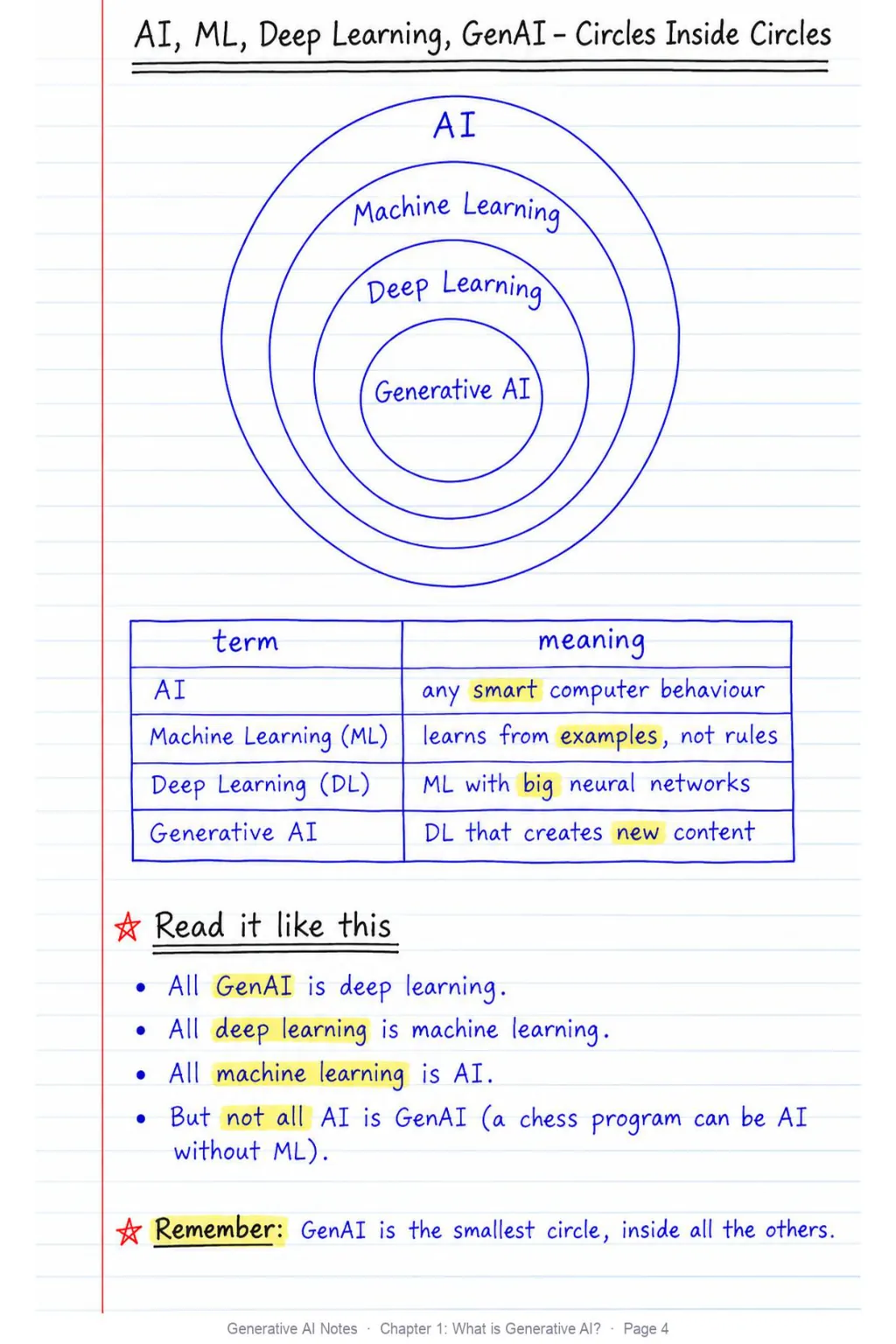
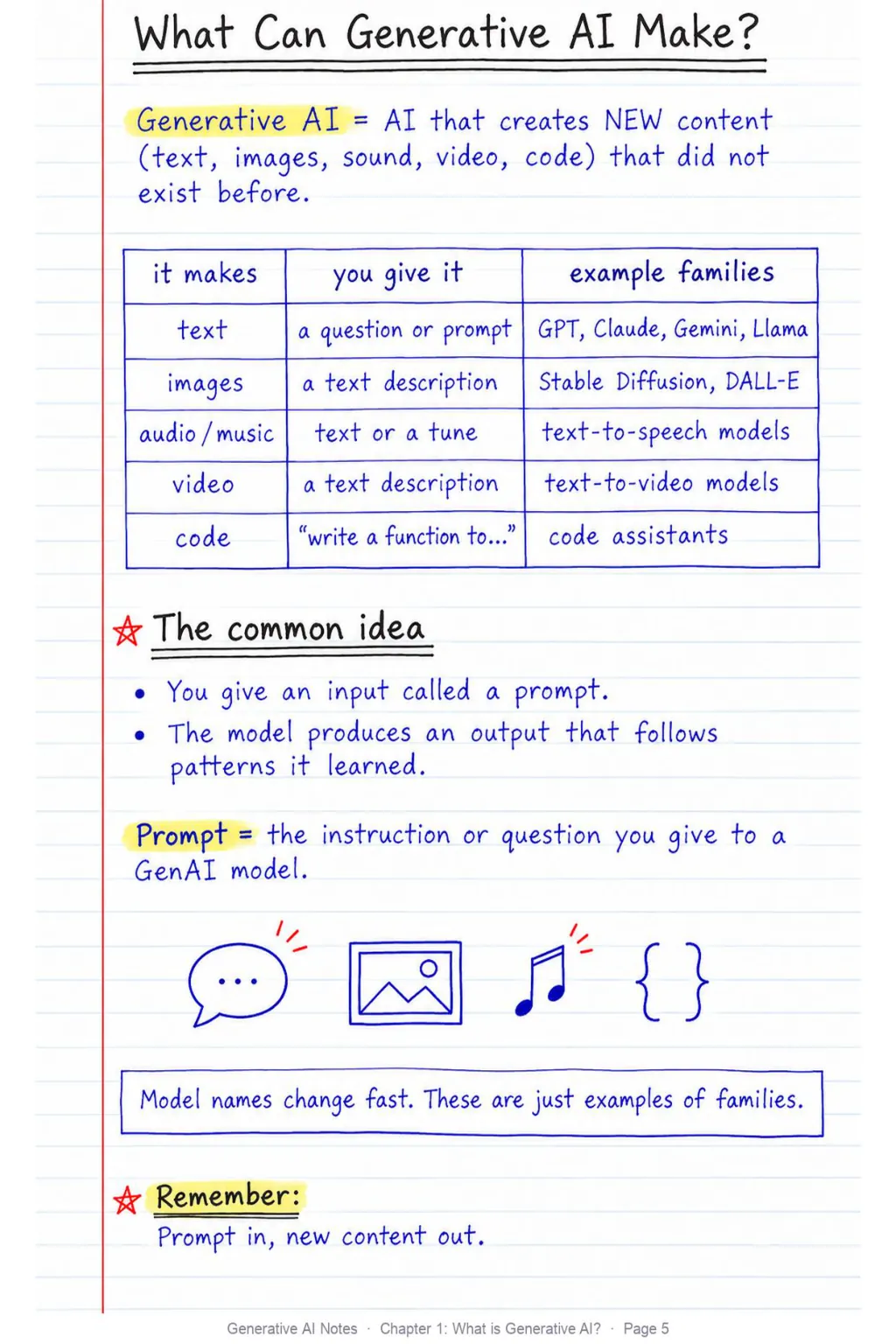
Understand what generative AI is: how AI, machine learning, deep learning and GenAI fit inside each other, what GenAI can create, a short history of AI, and generative versus discriminative models.
Learn the machine learning basics behind every AI model: features and labels, the 4 types of learning, a model as a function with knobs, loss, gradient descent, and overfitting versus underfitting.
See how neural networks work, from one artificial neuron to layers, activation functions, the forward pass and backpropagation, then write a real training loop in PyTorch and meet the main network types.
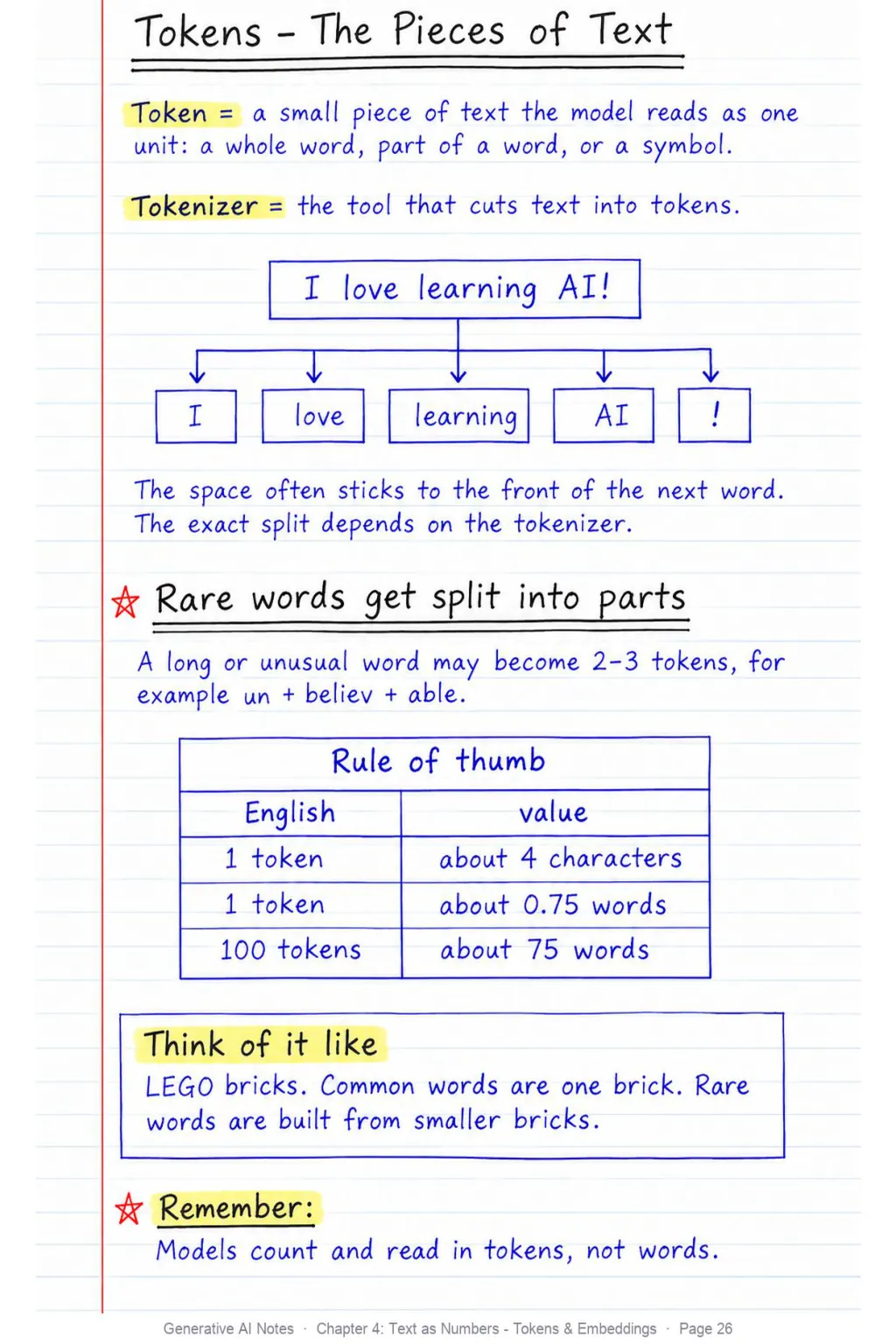
Find out how computers read text: tokens, byte-pair encoding step by step, vocabularies and token IDs, embeddings that store meaning as vectors, and cosine similarity to compare meanings.
Understand the transformer, the engine of every modern LLM: attention, query, key and value, self-attention maths step by step, multi-head attention, positional encoding and encoder versus decoder models.
Learn how large language models are built: pretraining on next-word prediction, data, parameters and GPUs, why scaling works, and how base models become chat assistants with fine-tuning and RLHF.
See how an LLM writes one token at a time: logits and softmax, temperature, greedy, top-k and top-p sampling, the context window, and speed tricks like the KV cache.
Write prompts that work: the anatomy of a great prompt, zero-shot and few-shot prompting, system and user messages, step-by-step thinking, JSON output, delimiters and testing to improve prompts.
Call LLMs from Python: set up an SDK and API key, make your first call, build multi-turn chat, use the key parameters, stream answers as they arrive and estimate token costs.
Search by meaning instead of keywords: create embeddings in Python, learn what a vector database is and how approximate nearest neighbour search works, then build a tiny vector database with Chroma.
Build RAG systems that answer from your own documents: the two-phase pipeline, chunking, indexing with Chroma, retrieve-then-generate, an end-to-end answer function, advanced RAG tricks and how to evaluate it.
Give LLMs tools and turn them into agents: define tools, follow the tool loop, write tool use in code, add memory and planning, and understand multi-agent systems, MCP and the guardrails agents need.
Learn when and how to fine-tune a model: full fine-tuning, LoRA, quantization and QLoRA, preparing a dataset, and training a LoRA adapter in code with Hugging Face PEFT.
Understand how AI makes images: images as numbers, GANs, autoencoders and latent space, diffusion from noise to picture, text-to-image guidance, how Stable Diffusion works, and image controls in code.
Explore AI beyond text: speech to text, text to speech, voice cloning and music, the basics of video generation, and multimodal models that can see and read.
Run AI on your own machine: open versus closed models, the Hugging Face model library, how much memory a model needs, quantization with GGUF and llama.cpp, and running an LLM locally with Ollama.
Measure and run AI in production: why testing AI is hard, simple answer metrics, benchmarks, LLM-as-a-judge and human review, building your own eval set, and LLMOps.
Use AI safely and responsibly: hallucinations, bias, prompt injection and jailbreaks, privacy and security, copyright, deepfakes and watermarks, guardrails, and the EU AI Act.
Build a complete GenAI app, Ask My Documents: plan the architecture, write the backend with FastAPI and the frontend with Streamlit, then deploy it with a checklist.
Revise the whole journey on one page with cheat sheets on key terms and which technique to use when, practise interview questions on fundamentals and building with LLMs, and follow your learning roadmap.
Watch before you buy
Students on All Notes PDF
Real students talking about how they revise with our handwritten notes.
How it works
Get your notes in 3 easy steps
No app, no waiting. The whole thing takes under a minute.
- STEP 110 sec
Choose your notes
One subject, any two, or a full class set.
- STEP 230 sec
Pay with UPI or card
GPay, PhonePe, Paytm or card. Pay once, no subscription.
- STEP 3Instant
Download your PDFs
Tap Download on any chapter. Links never expire.
- Log in
- My library
- Download
What you get
- Format
- Downloadable PDF (not a printed book)
- Chapters
- 20 chapters in one 150 page PDF
- Level
- Generative AI from beginner to advanced. No experience needed
- Style
- Handwritten-style notes with diagrams, code explained line by line, common mistakes and quizzes
- Devices
- Phone, tablet and laptop. Print any chapter if you like
- Access
- Lifetime. Download again anytime from My library
- Instant downloadRight after payment
- Free updatesCorrections added free
- Secure paymentUPI, cards, net banking