
Tech · Beginner to Advanced · Handwritten PDF notes
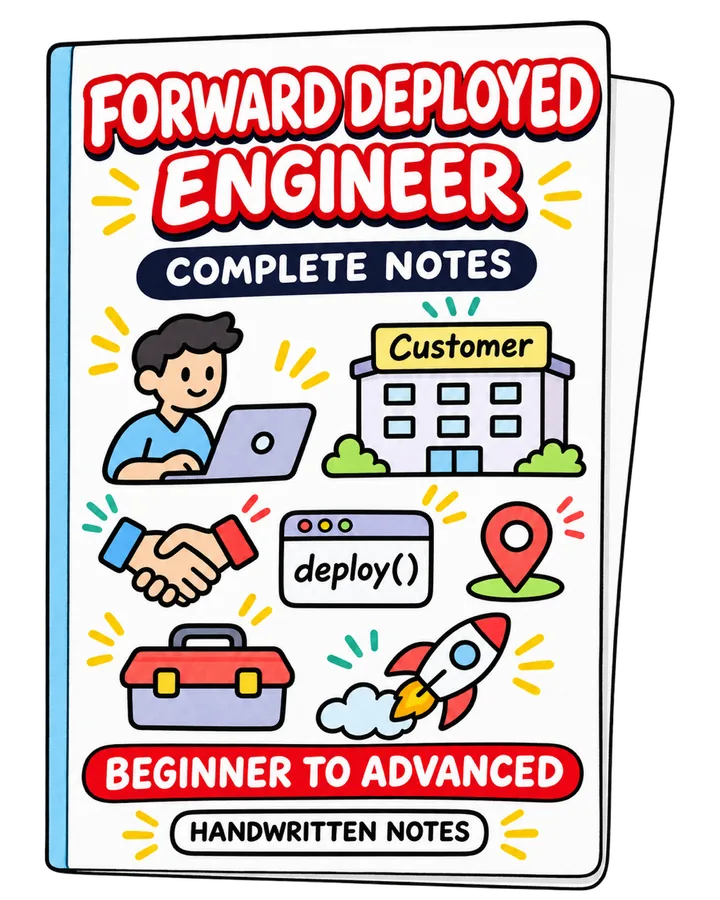
Forward Deployed Engineer Complete Notes
Instant PDF download after payment. Pay once, keep forever.
- Instant download
- Lifetime access
- UPI, GPay, PhonePe, cards
Complete coverage
What you learn in all 24 chapters
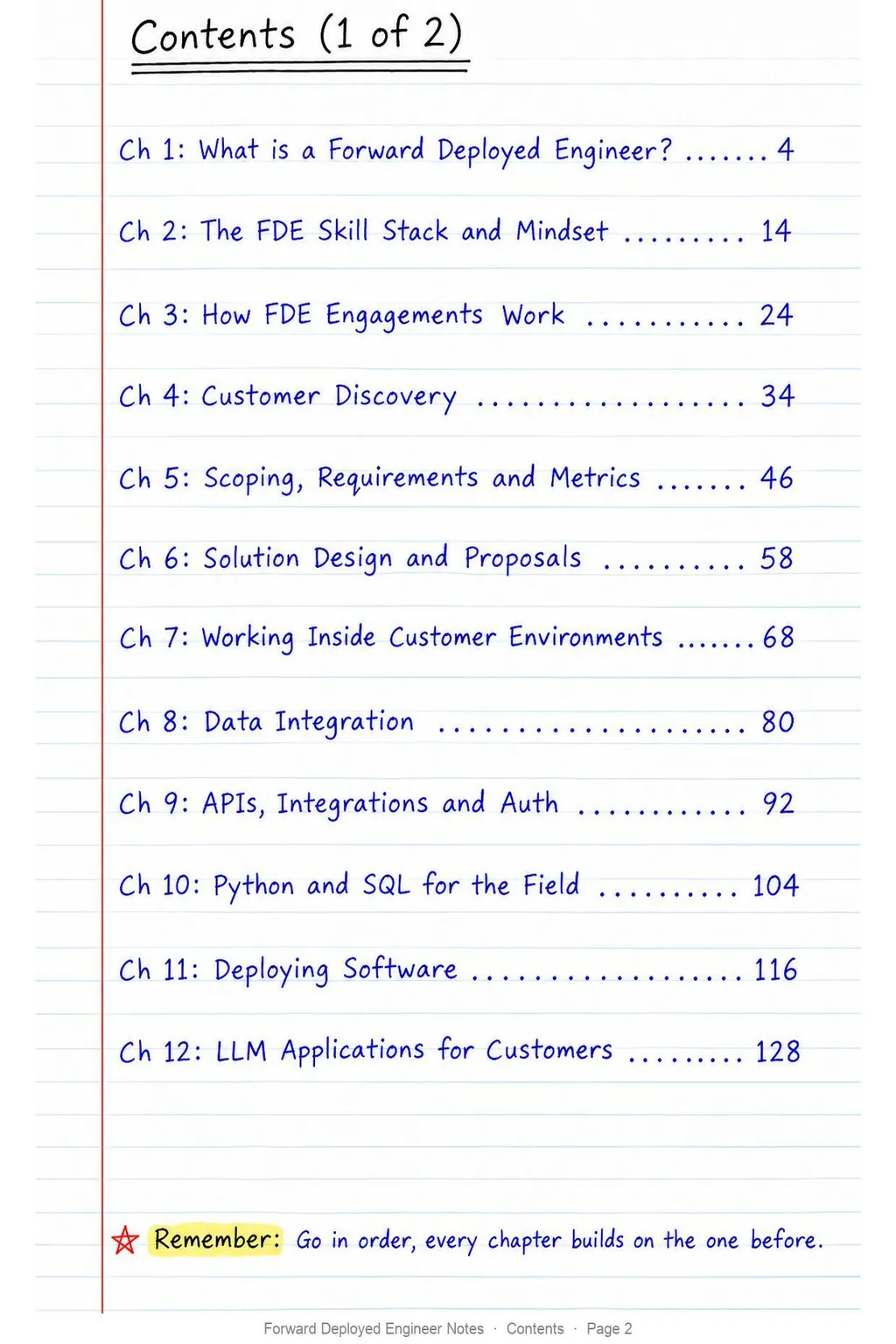
Open any chapter to see every topic it covers and the page it is on.
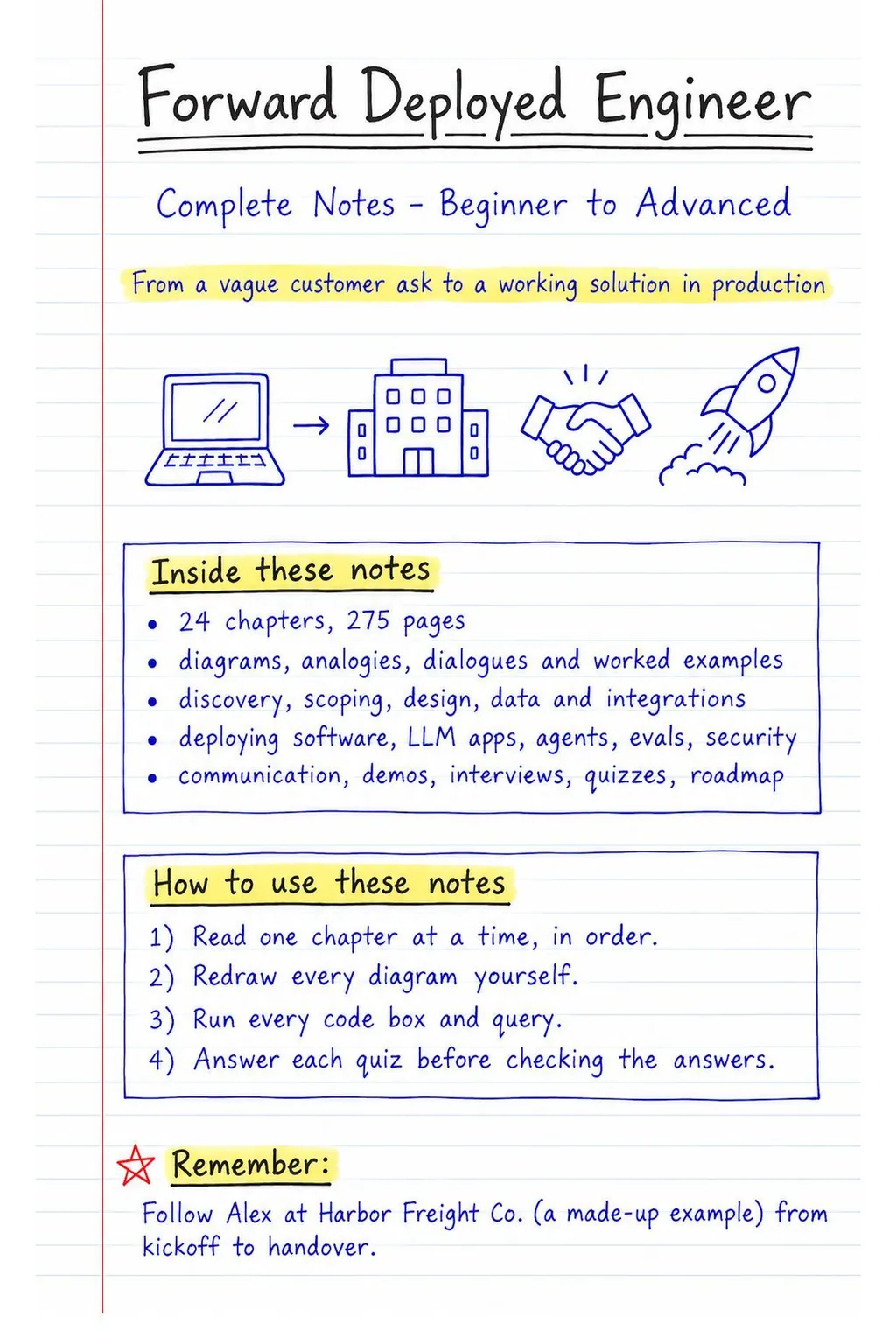
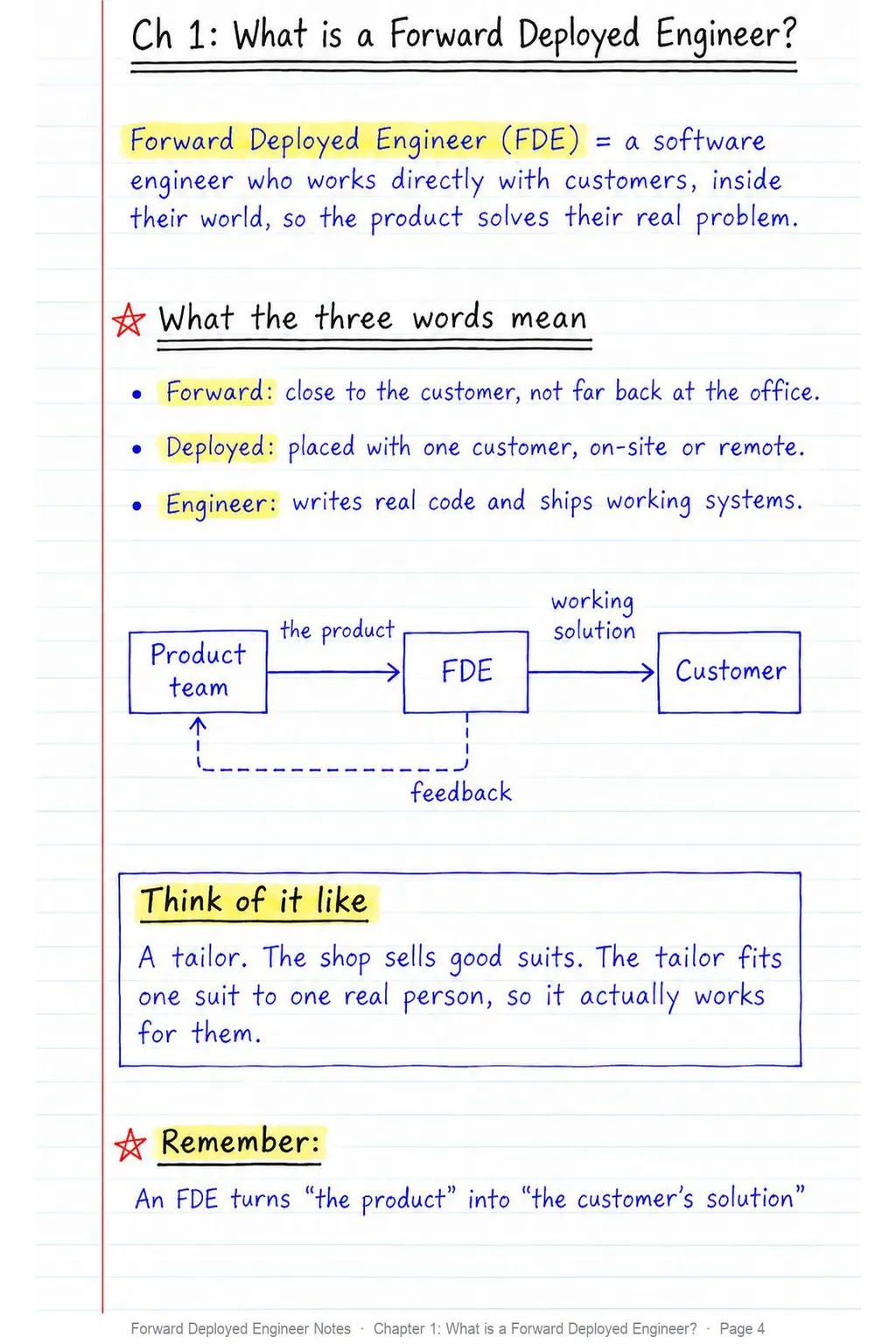
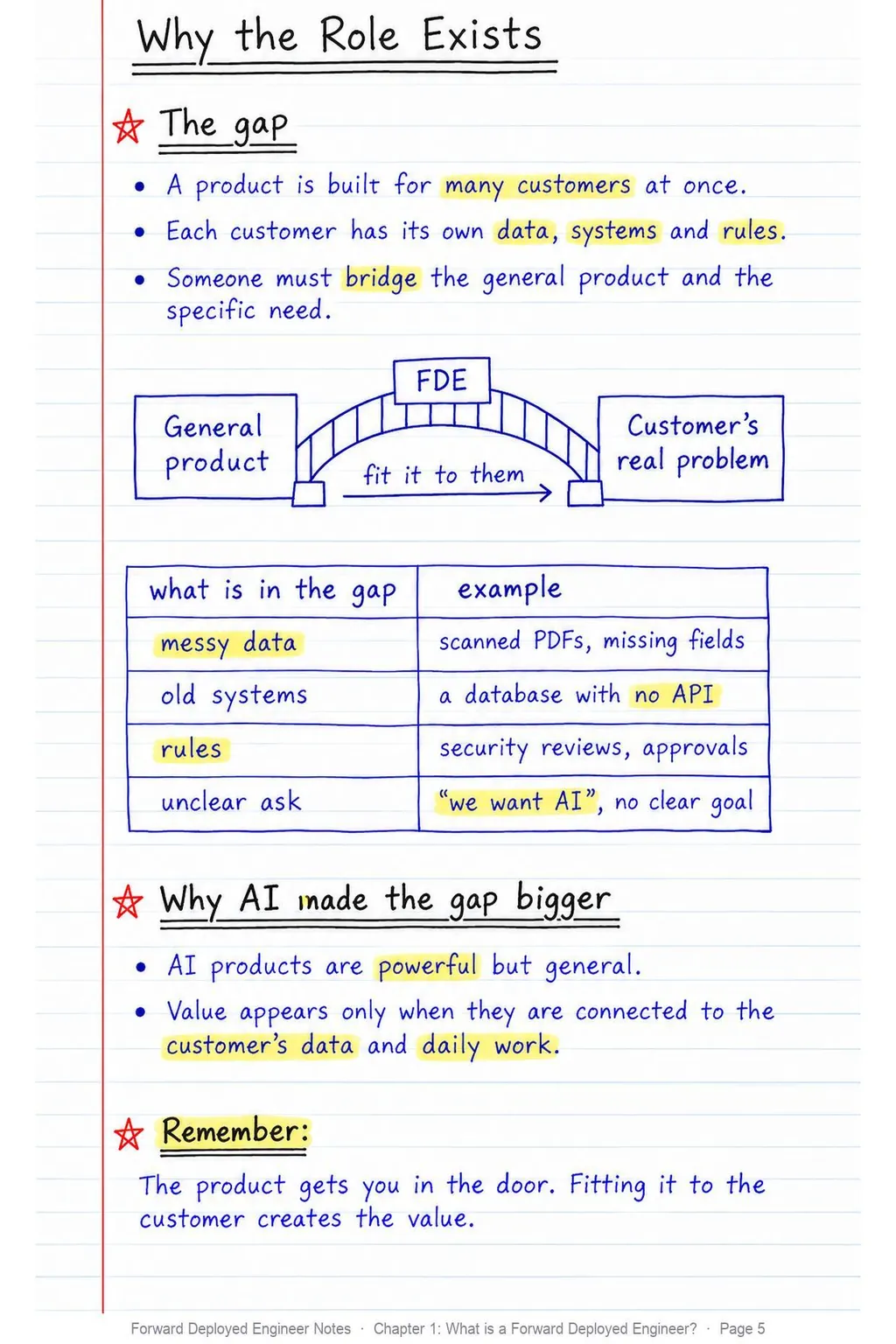
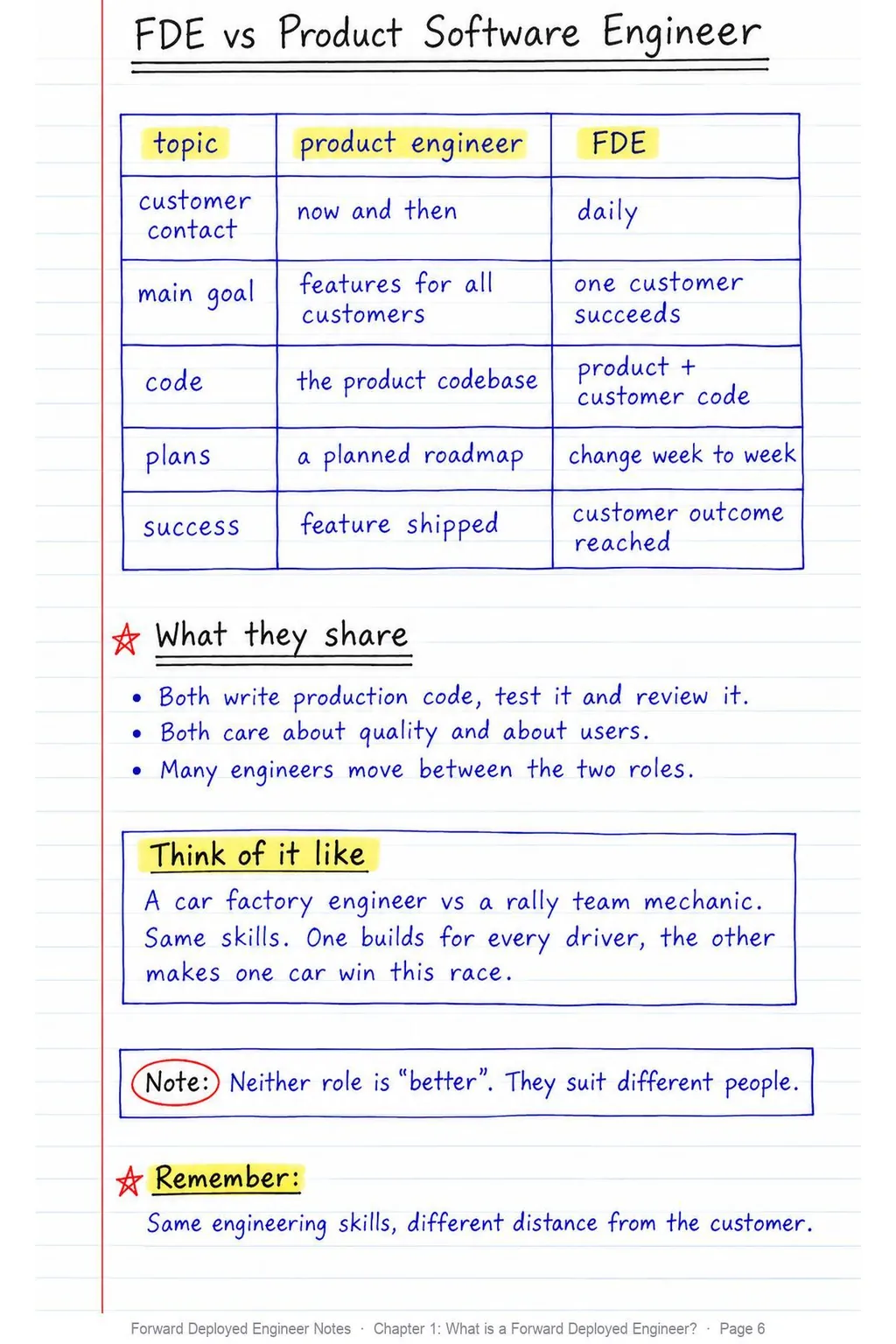
Understand the role: what a Forward Deployed Engineer is, why it exists, how it differs from product engineers, sales engineers, architects and consultants, where the title comes from, a day in the life, what an FDE ships and who the role suits.
Build the FDE skill stack and mindset: T-shaped skills, people skills, ownership, bias to action, thriving in ambiguity, learning a new domain fast, hack-versus-build judgment, and a skill self-check with a 90-day growth plan.
Run an engagement from start to finish: the lifecycle, proof of concept versus pilot versus production, team roles, champion and sponsor, the kickoff meeting, working cadence, on-site versus remote, and a one-page Harbor engagement plan.
Uncover the real problem before building: the ask versus the need versus the root cause, good discovery questions, five whys, shadowing, as-is process maps, finding pain, data discovery, stakeholder maps, discovery notes and common mistakes.
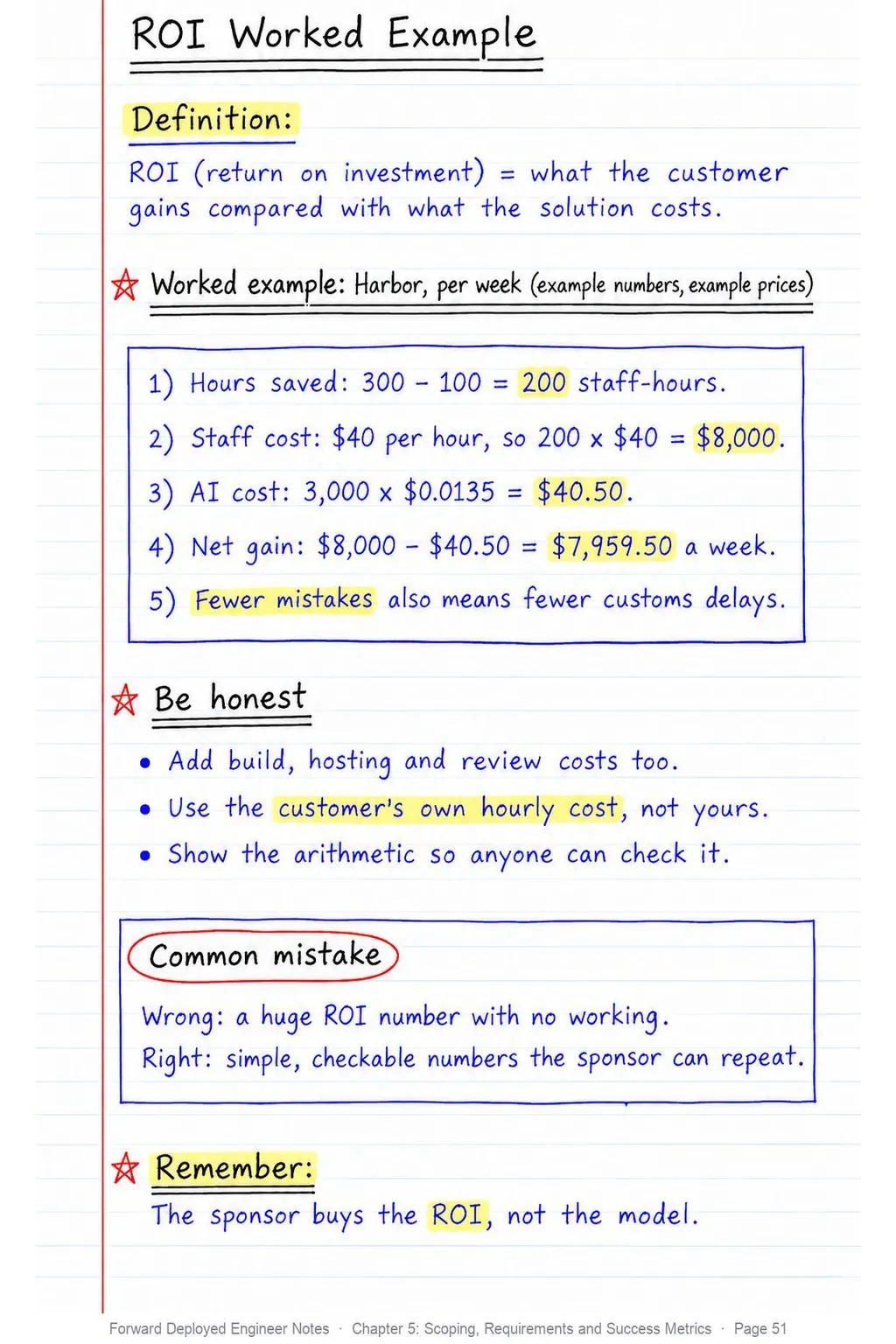
Turn a vague request into a scope: a one-sentence problem statement, must/should/could/won't priorities, user stories, success metrics with baselines, ROI, non-goals, constraints, risks, pilot scoping and a scope document template.
Design a solution and propose it: offer two or three options, choose configure versus extend versus custom build, sketch the architecture, write a design doc, estimate with ranges and buffers, set milestones with demos and get the design reviewed.
Work safely inside a customer's systems: getting access with least privilege, dev, staging and production, cloud versus on-prem, network basics, keeping secrets out of code, change management, a laptop checklist and what to do when access is blocked.
Move and clean customer data: data sources, ETL versus ELT, profiling, cleaning, joining on shared keys, mapping fields to your schema, batch versus streaming, incremental loads with a watermark and quality checks that fail loudly.
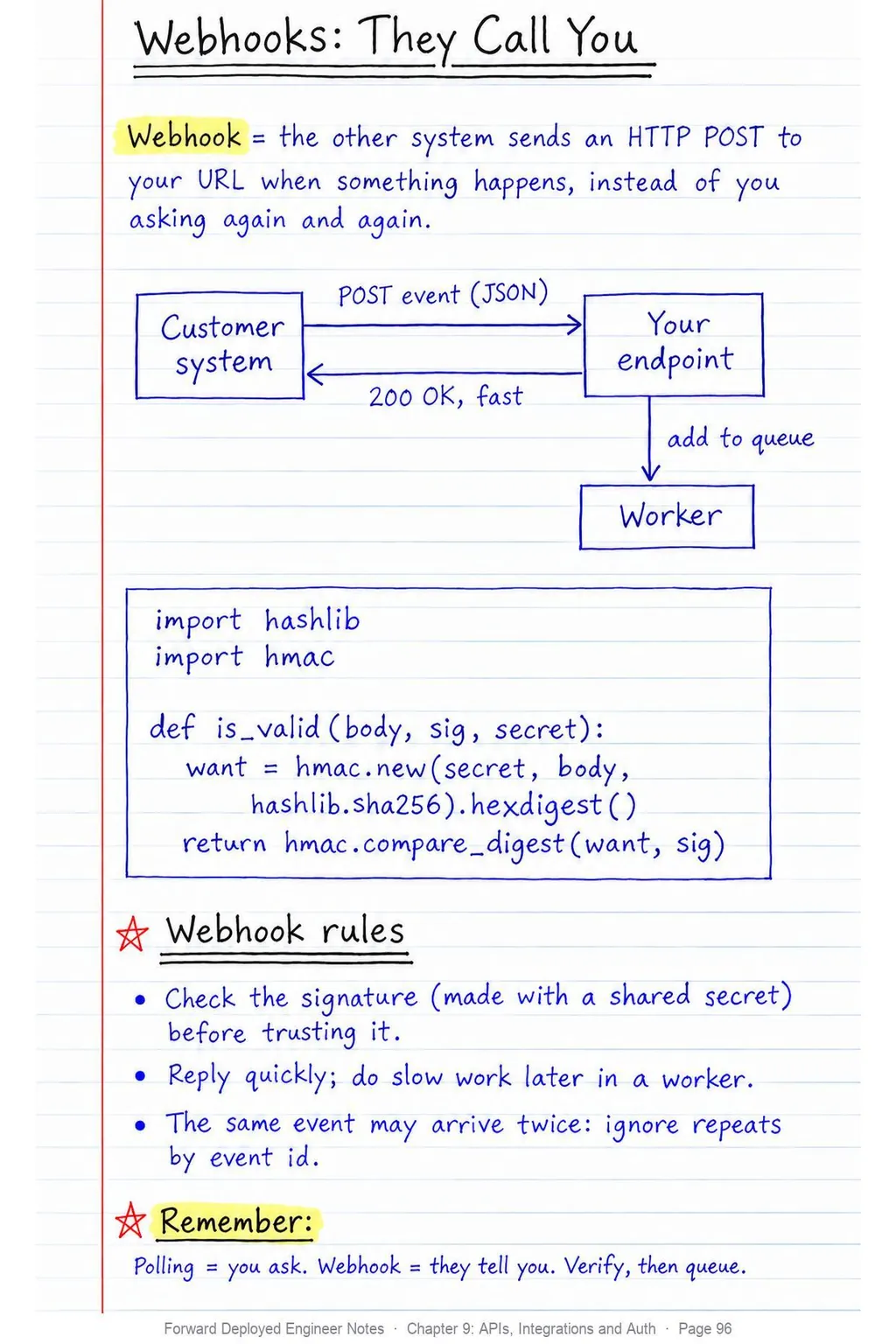
Connect systems through APIs: REST basics, calling an API in Python, pagination and rate limits, retries with backoff, idempotency, webhooks, API keys versus OAuth 2.0, SSO, legacy systems like SFTP and the adapter pattern.
Write practical Python and SQL for field work: throwaway scripts versus maintained code, argparse CLIs, pandas, GROUP BY and window functions, logging, environment config, pytest, notebooks, reading unfamiliar code and clean Git habits.
Ship software to production: Docker images and Dockerfiles, docker compose, Kubernetes in one page, CI/CD, Terraform, one build with config per environment, rollouts and rollbacks, and health checks, logs, metrics and alerts.
Build LLM applications for customers: prompting for business tasks, pulling JSON from documents, invoice extraction, RAG and chunking, choosing a model, estimating cost, human review for uncertain results and failure modes customers notice.
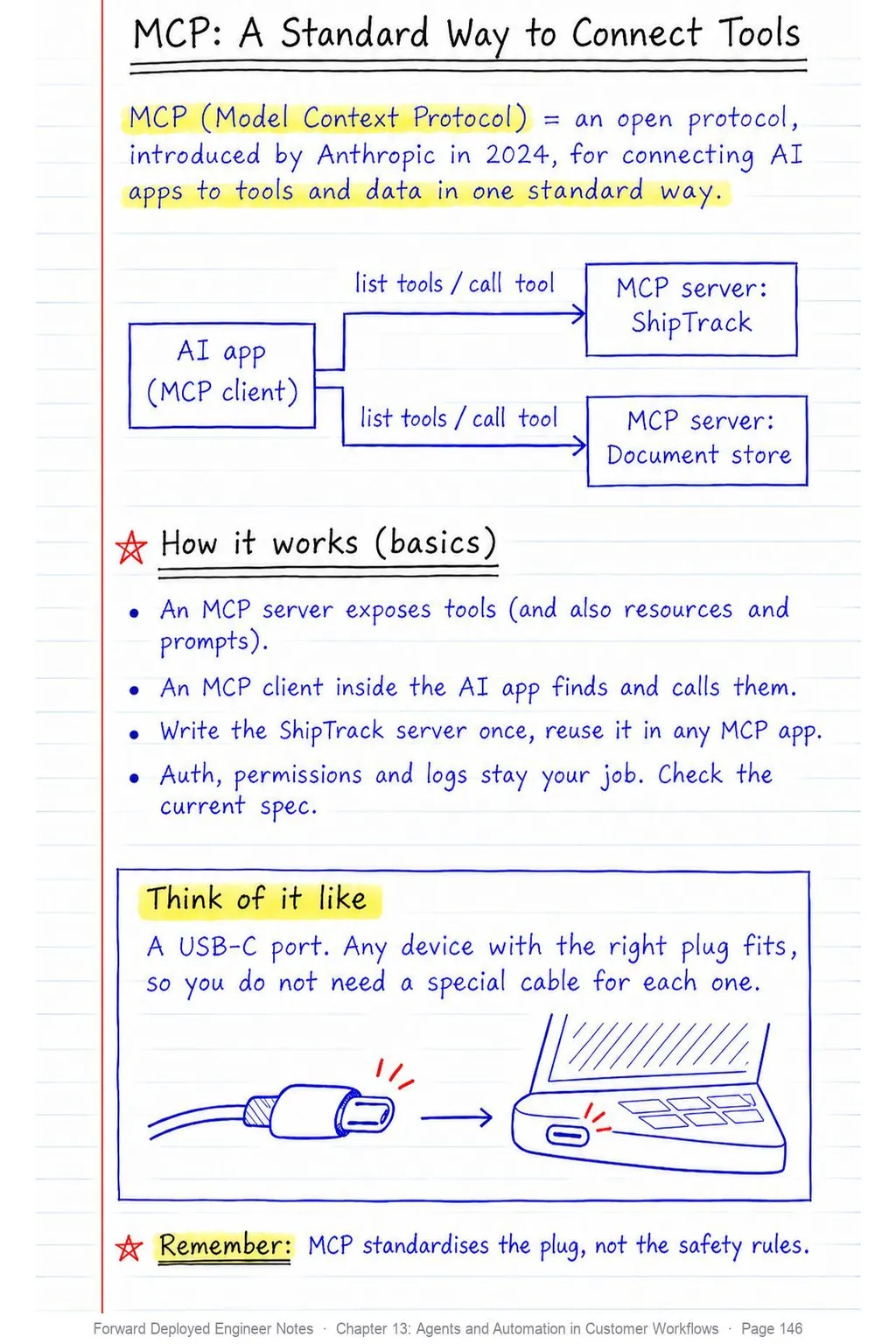
Automate customer workflows with agents: the automation ladder, fixed workflow versus agent, turning systems into tools, the agent loop, approval steps, MCP, user permissions, audit logs, human fallbacks and getting users to adopt automation.
Prove value with evals: build a golden set, measure accuracy, precision and recall, write a small eval script, use LLM-as-judge, run error analysis, improve one thing at a time, run shadow mode and A/B tests, and write a value report.
Earn the right to deploy: security reviews, data classification, handling PII, residency and retention, encryption, RBAC, prompt injection in customer documents, common AI data questions, compliance terms and a security checklist.
Move from prototype to production: the production checklist, error handling and retries, scaling, queues, logs, metrics and traces, SLOs, runbooks, a staged launch plan and the go/no-go meeting.
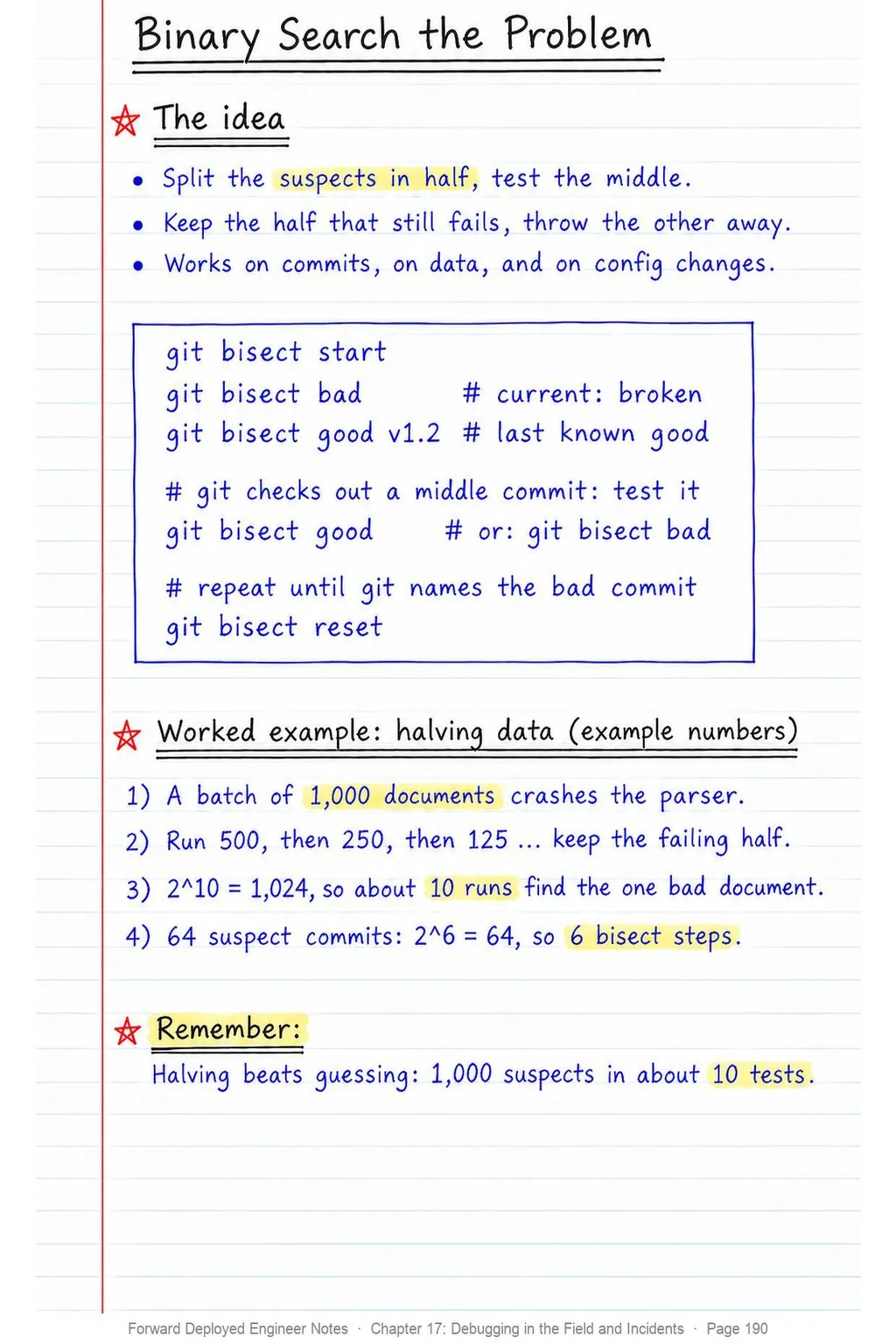
Debug in the field and handle incidents: reproduce, isolate, fix and verify, reading logs, binary search, environment differences, data bugs, debugging AI outputs, incident roles, customer communication, blameless postmortems and preventing repeats.
Hand over a finished project: plan from day one, the four essential docs, a good README, training end users and admins, the support model, ownership after go-live, exit criteria and a handover checklist.
Feed field learning back to product: spot patterns across customers, write feedback with problem, evidence and impact, decide between one-off fixes and features, build reusable components, influence the roadmap, file bug reports and write playbooks.
Communicate with every stakeholder: tailor news to the audience, lead with the bottom line, write weekly status updates, deliver bad news early, say no with an alternative, manage AI expectations, handle sceptics, run meetings, escalate and build trust.
Present and write clearly: build a demo as a story, prepare scripts and backup plans, recover when a live demo fails, make a five-slide executive deck, whiteboard architecture, write technical docs and emails, and handle hard questions.
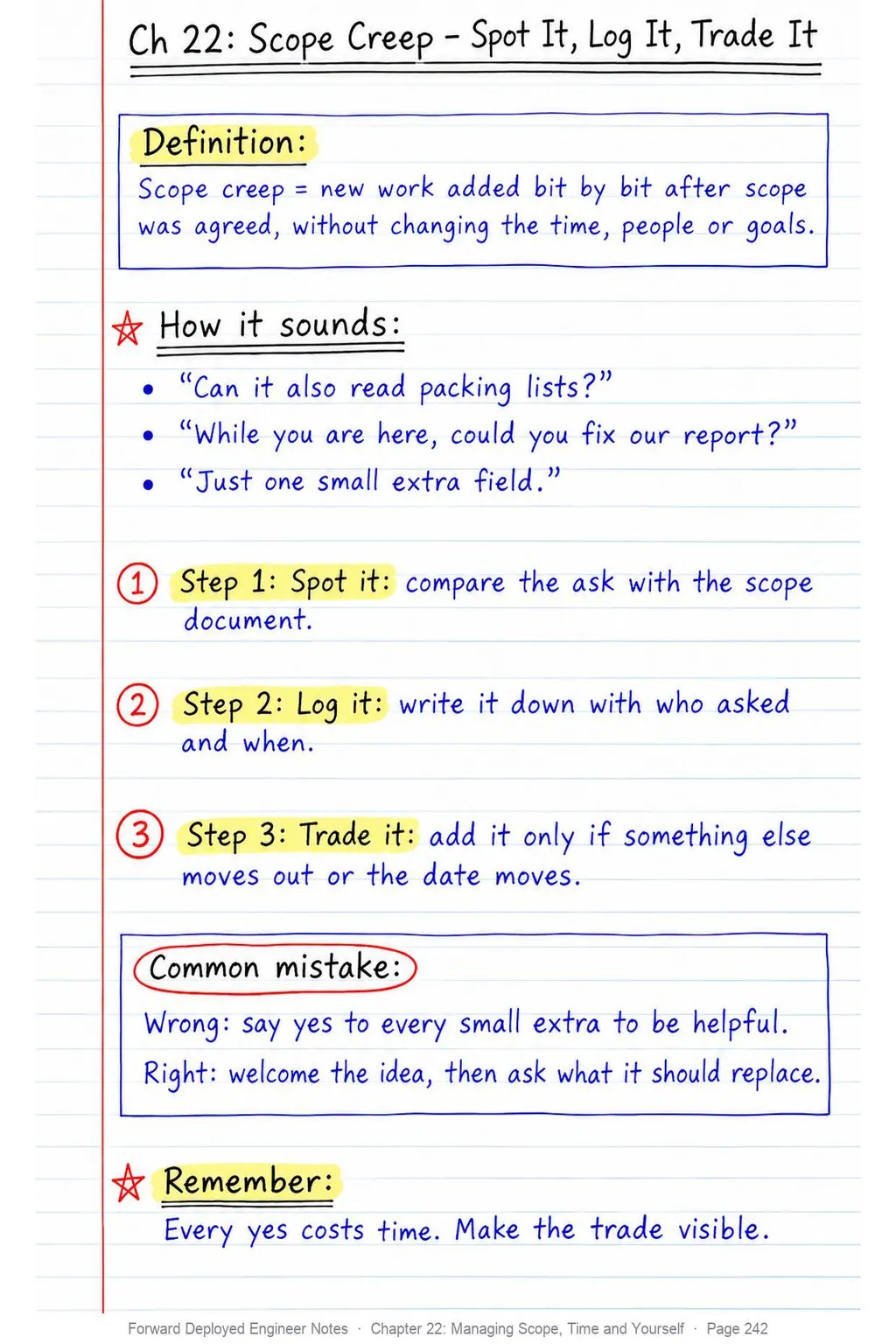
Manage scope, time and yourself: spot, log and trade scope creep, write change requests, prioritise by impact versus effort, juggle customers, protect deep work, handle travel, avoid burnout, seek feedback and keep a weekly review habit.
Put it all together in the Harbor capstone: discovery, scope and metrics, design, data pipeline, AI checker and ops assistant, evals and pilot results, launch, handover and product feedback, plus lessons, a checklist and a cheat sheet.
Prepare for FDE interviews and plan your career: the interview loop, practical coding rounds, decomposition and case interviews, system design, STAR behavioural answers, customer role-play, portfolio projects, career paths and a 12-week roadmap.
Watch before you buy
Students on All Notes PDF
Real students talking about how they revise with our handwritten notes.
How it works
Get your notes in 3 easy steps
No app, no waiting. The whole thing takes under a minute.
- STEP 110 sec
Choose your notes
One subject, any two, or a full class set.
- STEP 230 sec
Pay with UPI or card
GPay, PhonePe, Paytm or card. Pay once, no subscription.
- STEP 3Instant
Download your PDFs
Tap Download on any chapter. Links never expire.
- Log in
- My library
- Download
What you get
- Format
- Downloadable PDF (not a printed book)
- Chapters
- 24 chapters in one 275 page PDF
- Level
- Forward Deployed Engineer from beginner to advanced. No experience needed
- Style
- Handwritten-style notes with diagrams, code explained line by line, common mistakes and quizzes
- Devices
- Phone, tablet and laptop. Print any chapter if you like
- Access
- Lifetime. Download again anytime from My library
- Instant downloadRight after payment
- Free updatesCorrections added free
- Secure paymentUPI, cards, net banking