Tech · Beginner to Advanced · Handwritten PDF notes
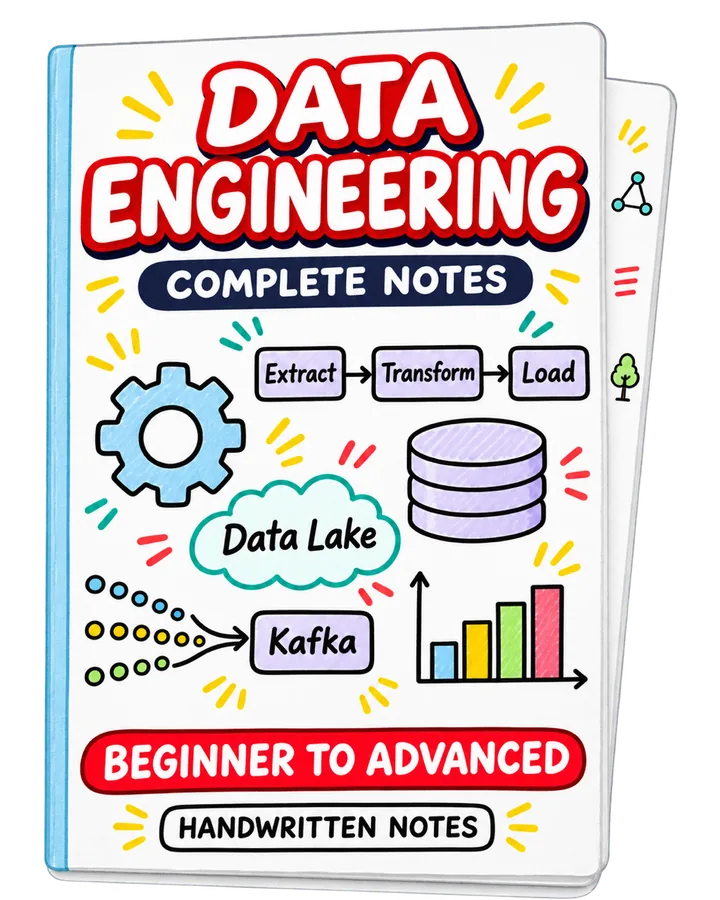
Data Engineering Complete Notes
Instant PDF download after payment. Pay once, keep forever.
- Instant download
- Lifetime access
- UPI, GPay, PhonePe, cards
Complete coverage
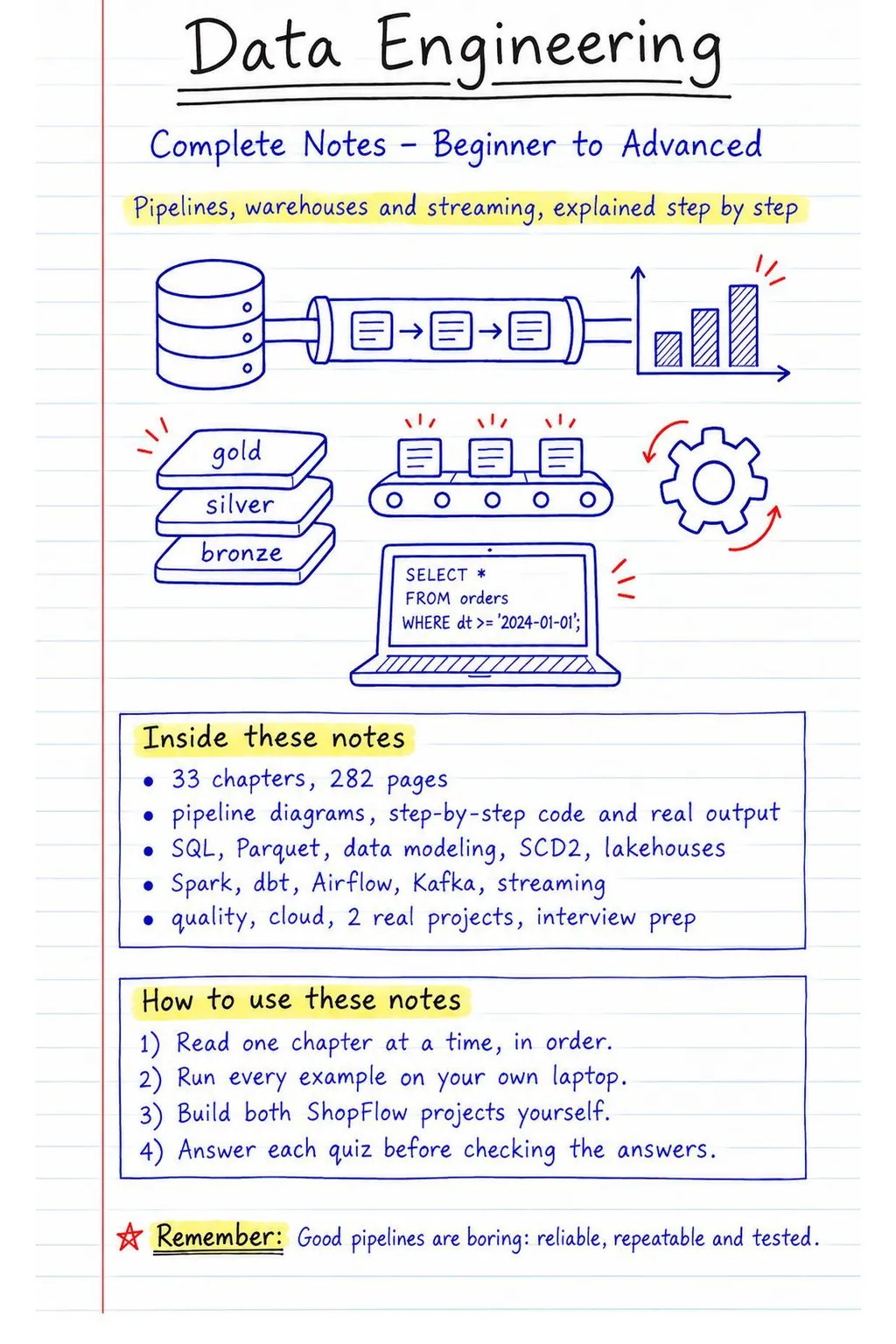
What you learn in all 33 chapters
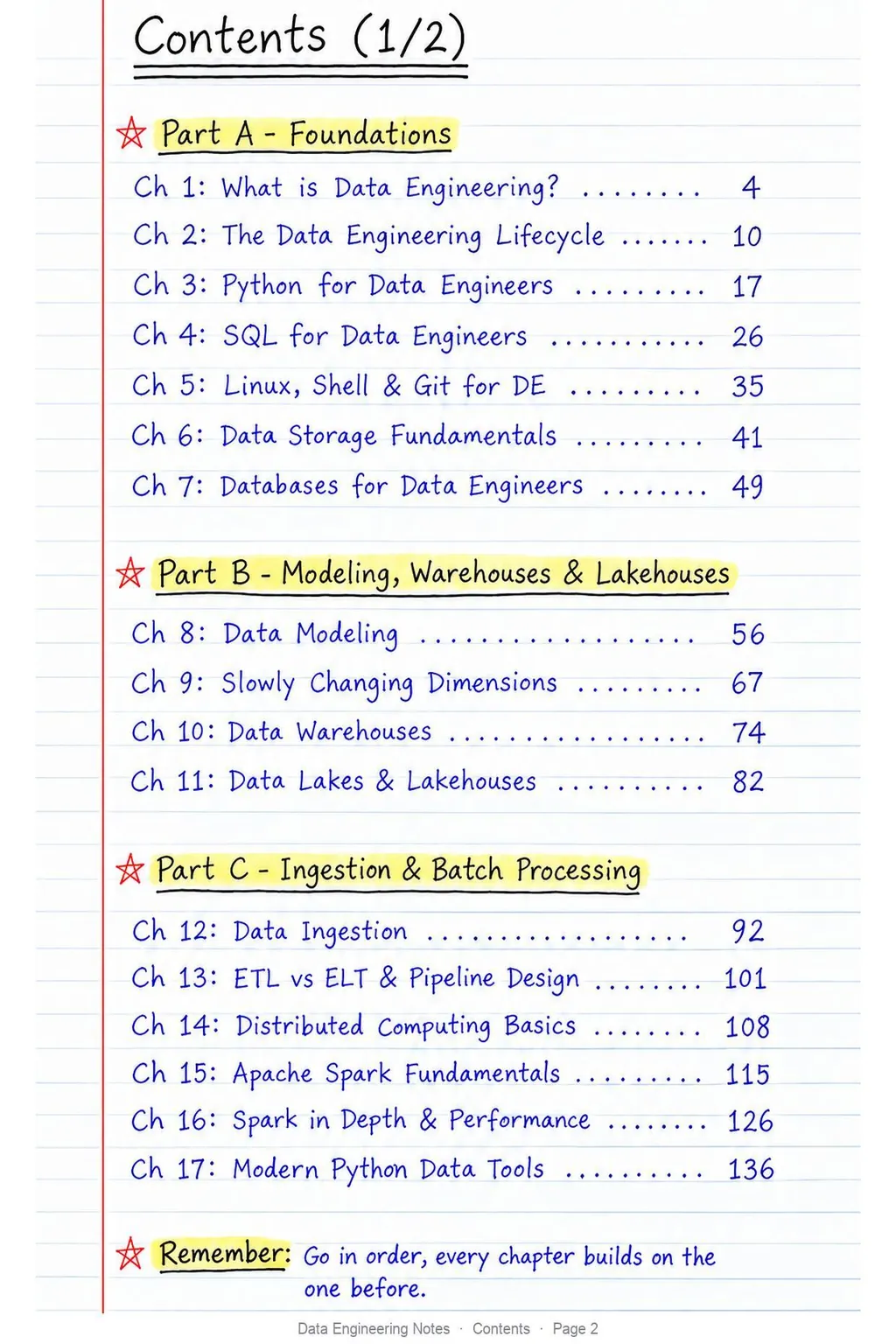
Open any chapter to see every topic it covers and the page it is on.
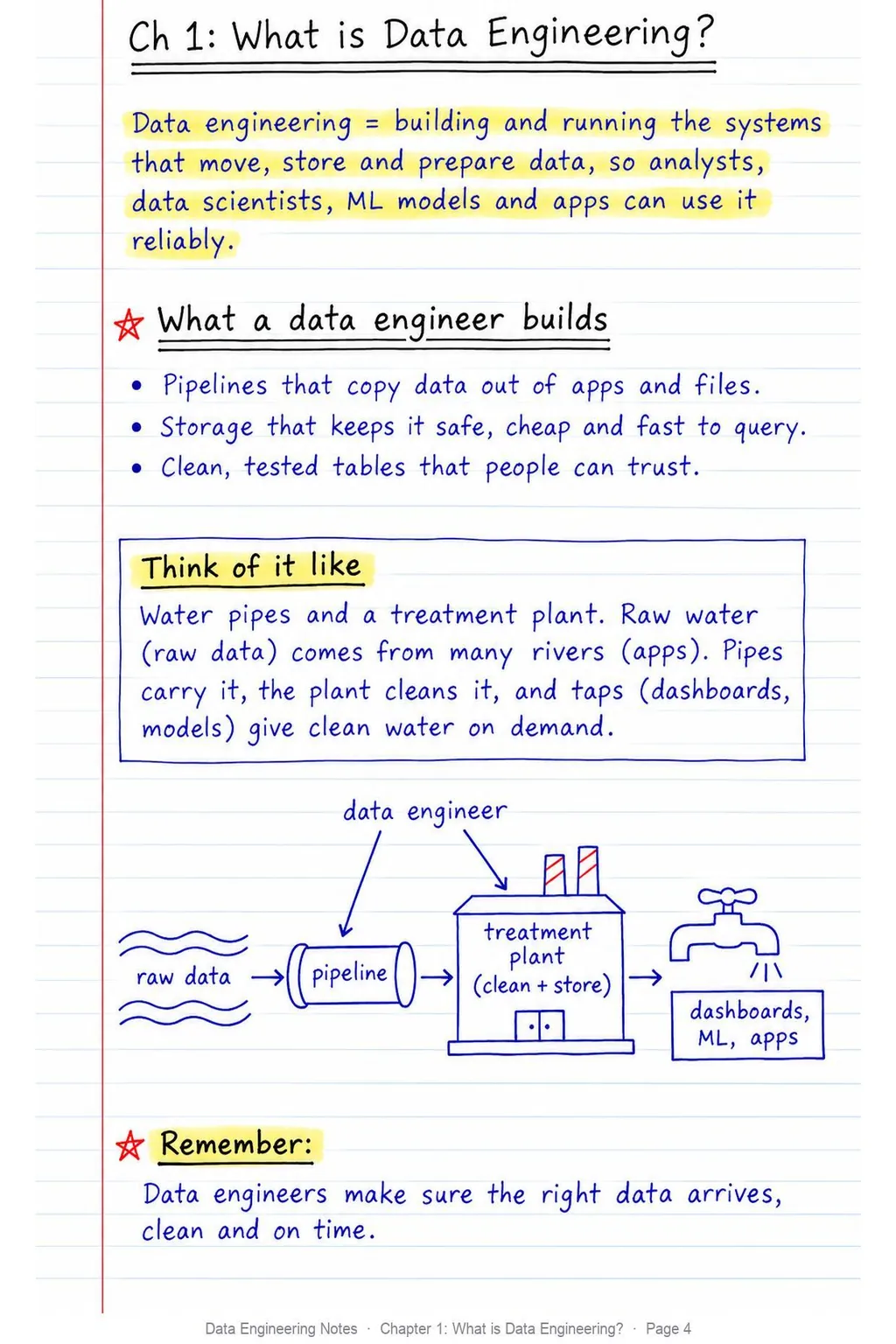
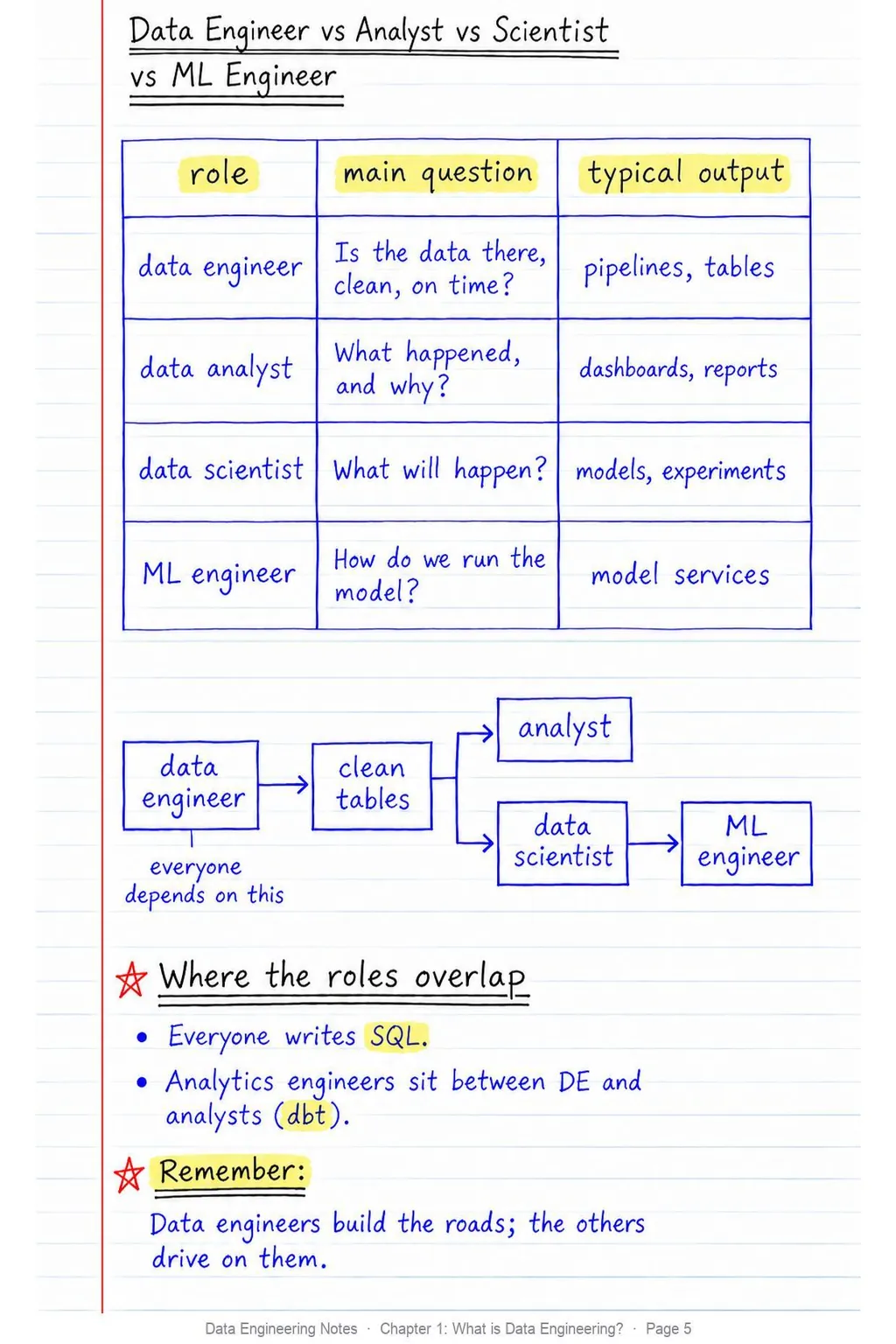
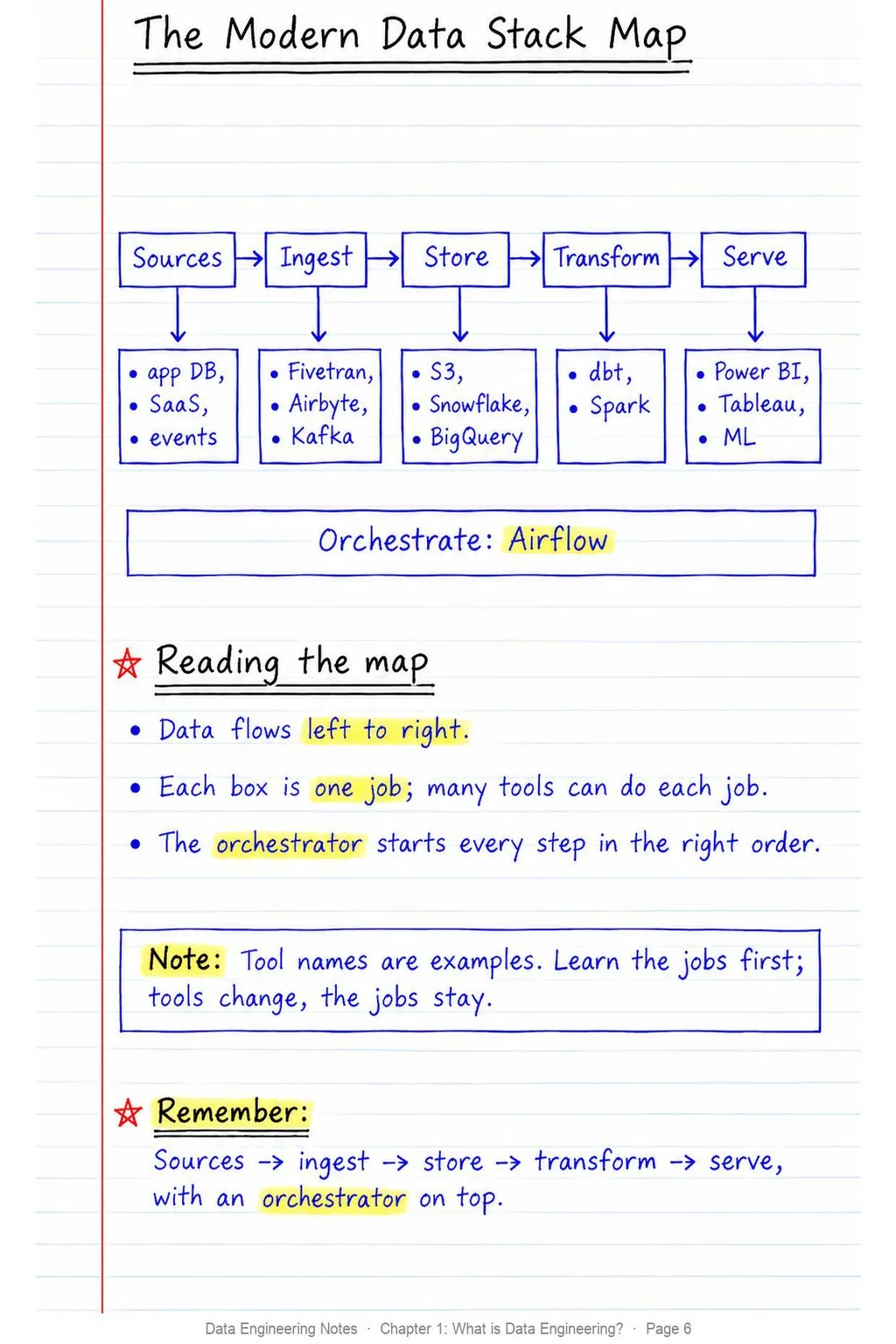
Get the big picture of the field: what data engineering is, how data engineers differ from analysts, scientists and ML engineers, the modern data stack, core skills and the ShopFlow running example.
Follow data from source to consumer: the five lifecycle stages from generation to serving, the undercurrents, batch versus streaming and OLTP versus OLAP.
Write Python the way pipelines need it: generators for big files, CSV and JSON Lines, paginated API calls, retries with exponential backoff, logging, dataclasses with type hints, and virtual environments.
Use SQL as the main pipeline tool: DuckDB, CTEs, deduplication with ROW_NUMBER, MERGE upserts, incremental loads with a watermark, date functions and a date dimension, and reading EXPLAIN plans.
Work comfortably in the terminal: shell basics for data, cron schedules, environment variables and secrets, a Git workflow for pipelines and Docker in one page.
Understand how data is stored: row versus column storage, file formats compared, the inside of a Parquet file, reading and writing Parquet, compression codecs, partitioning by date, and the small-files problem on object storage.
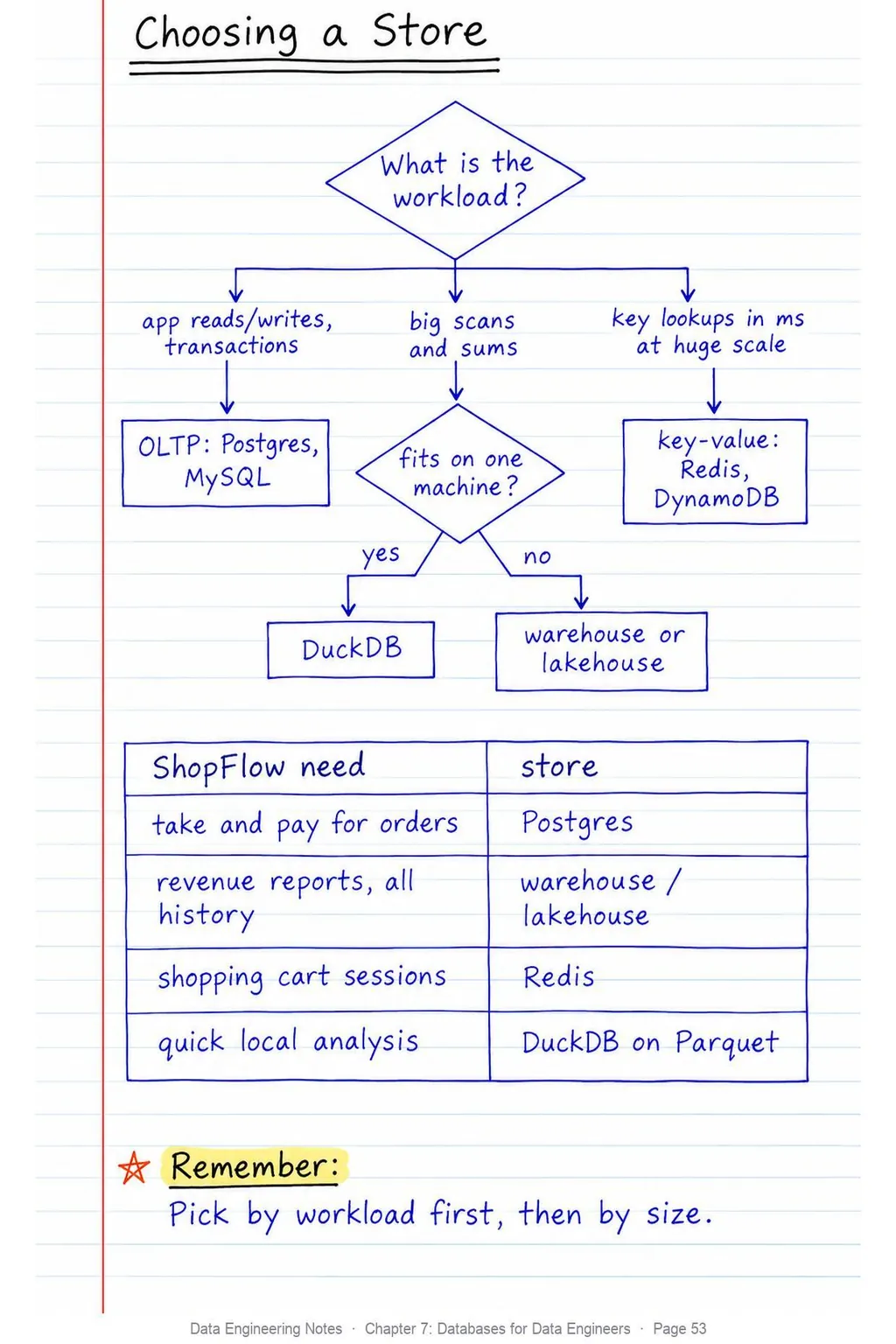
Pick the right database for the job: Postgres for OLTP, columnar OLAP engines, NoSQL families, indexes versus partitions versus clustering, how to choose a store, and connecting from Python.
Design analytics-ready models: conceptual, logical and physical levels, normalization versus denormalization, facts and dimensions, the grain, star and snowflake schemas, fact table types, and Kimball versus Inmon versus Data Vault.
Track changes in dimensions over time: SCD types 0, 1, 2 and 3, building SCD2 by closing changed rows and inserting new versions, plus surrogate keys and conformed dimensions.
Learn how warehouses work: separate storage and compute, the big cloud warehouses, partitioning and clustering, materialized views, how warehouses charge, and loading with COPY versus external tables.
Build lakes that stay usable: the data swamp problem, lakehouse table formats (Delta Lake, Iceberg, Hudi), how ACID works on files through a log, time travel, schema evolution, medallion architecture, and catalogs.
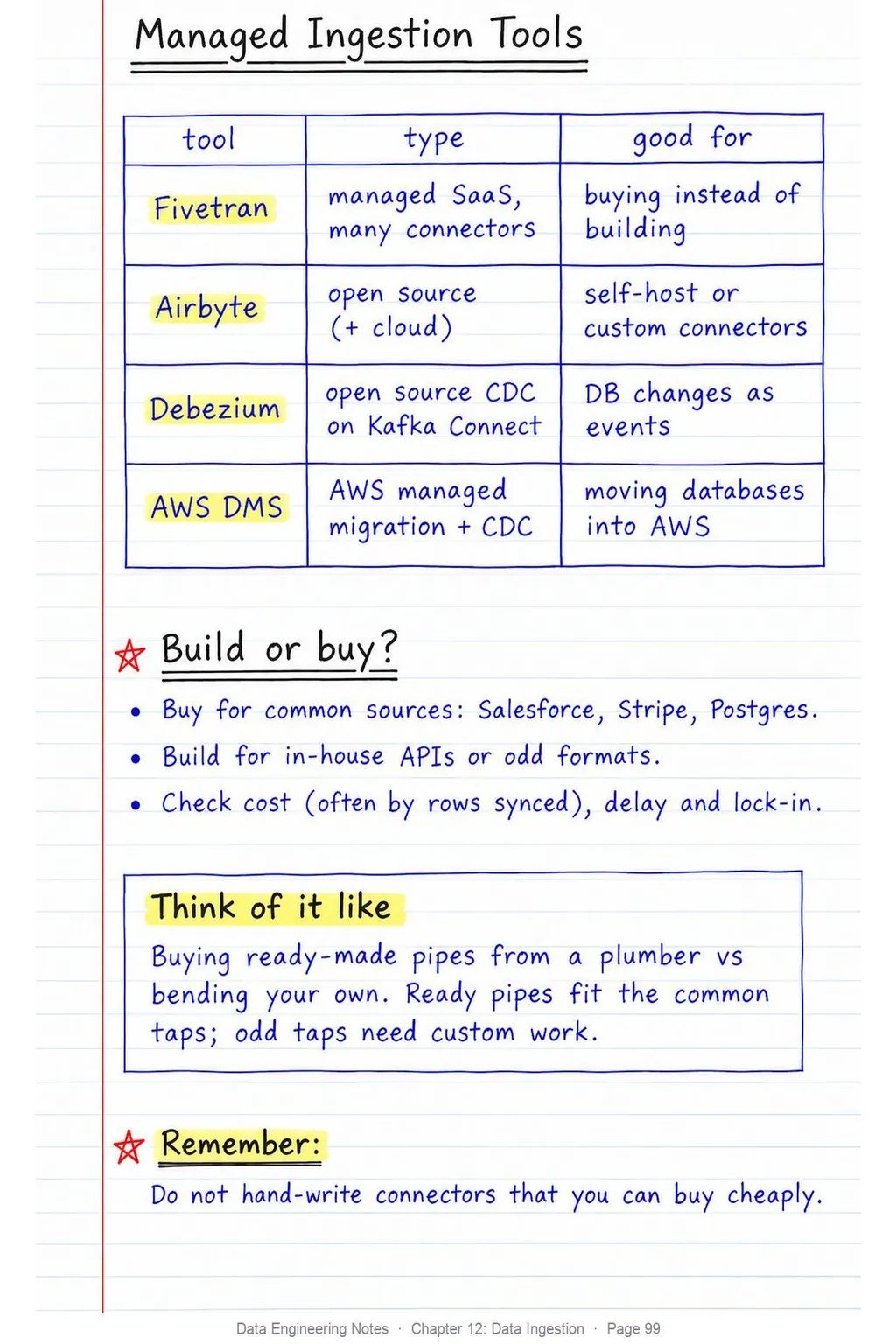
Get data in reliably: ingestion patterns, full versus incremental loads, API ingestion with saved state, database extraction, change data capture and its c, u, d events, idempotent loads, and managed ingestion tools.
Design pipelines that are safe to run again: ETL versus ELT, raw to staging to intermediate to marts layers, idempotency and determinism, backfills, late-arriving data, and a pipeline design checklist.
See why one machine is not enough: MapReduce word count, HDFS, why the shuffle is expensive, partitions and parallelism, and the path from Hadoop to Spark.
Start working with Spark: its architecture of driver and executors, SparkSession, reading CSV and Parquet with schemas, transformations versus actions, select, filter, groupBy, joins, Spark SQL and writing partitioned Parquet.
Make Spark jobs fast: jobs, stages and tasks, narrow versus wide transformations, repartition versus coalesce, broadcast joins, skew and salting, cache and persist, AQE, reading explain(), and Python UDFs versus built-in functions.
Reach for the right modern tool: where pandas hits its limits, Polars and its lazy API, DuckDB on Parquet files, Apache Arrow, one question answered three ways, and which tool to use when.
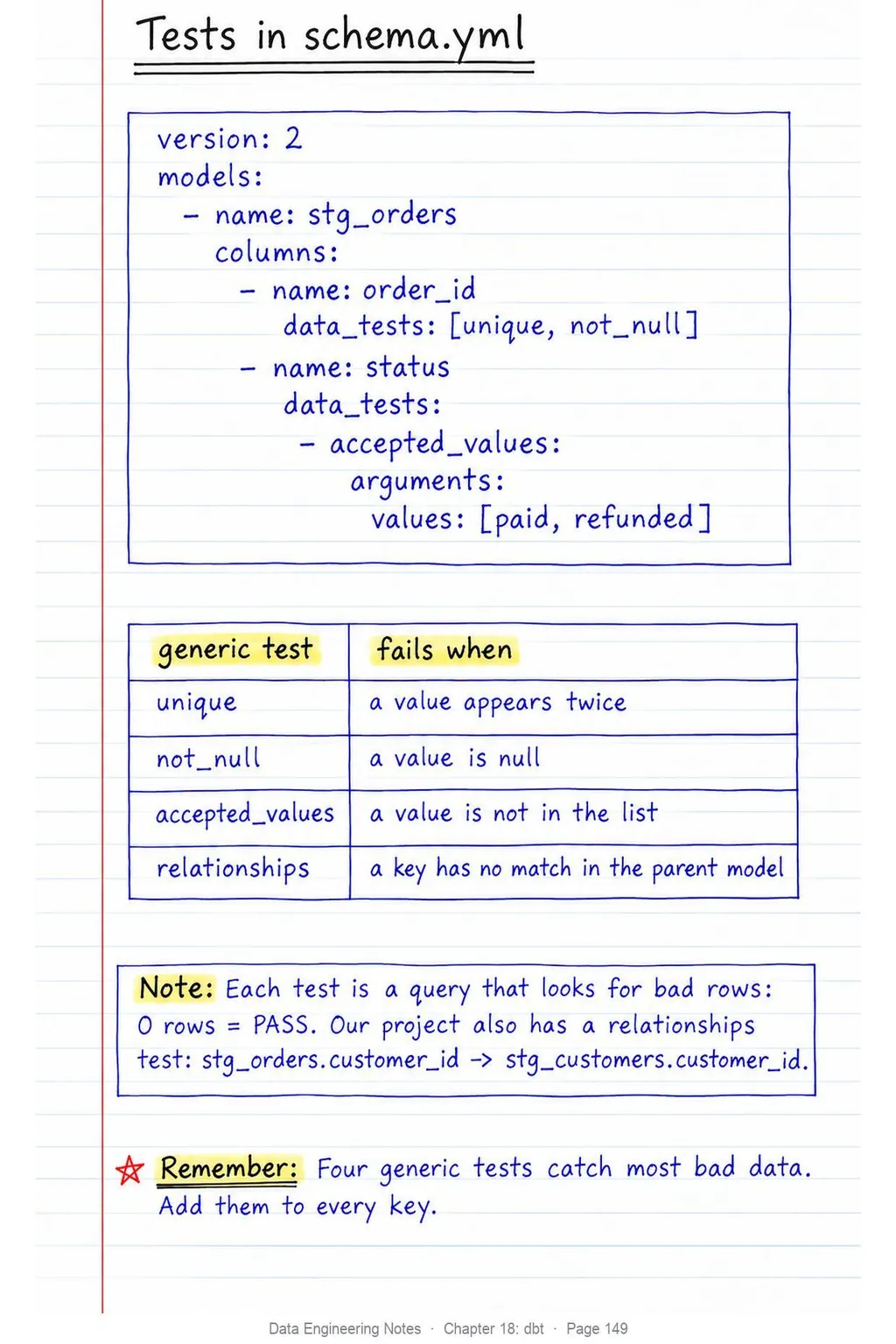
Transform data with dbt: project layout, models and ref(), sources, materializations, incremental models, tests in schema.yml, dbt build, docs and the lineage graph, snapshots and Jinja macros.
Schedule and manage pipelines with Airflow: DAGs, architecture, TaskFlow, operators and sensors, dependencies and branching, schedule and catchup, backfills, retries and alerts, and XComs for small data.
Think in streams: events and event streams, event time versus processing time, tumbling, sliding and session windows, watermarks and late data, delivery semantics, stateful processing, and Lambda versus Kappa.
Learn Kafka end to end: topics, partitions and offsets, brokers and replication, producers and keys, consumers and groups with Python code, ordering and delivery guarantees, retention, log compaction, Kafka Connect and Schema Registry.
Process streams in practice: stream processing engines, the Structured Streaming model, a first query on a files source, windowed revenue with a watermark, output modes, reading from Kafka in Spark, and Apache Flink.
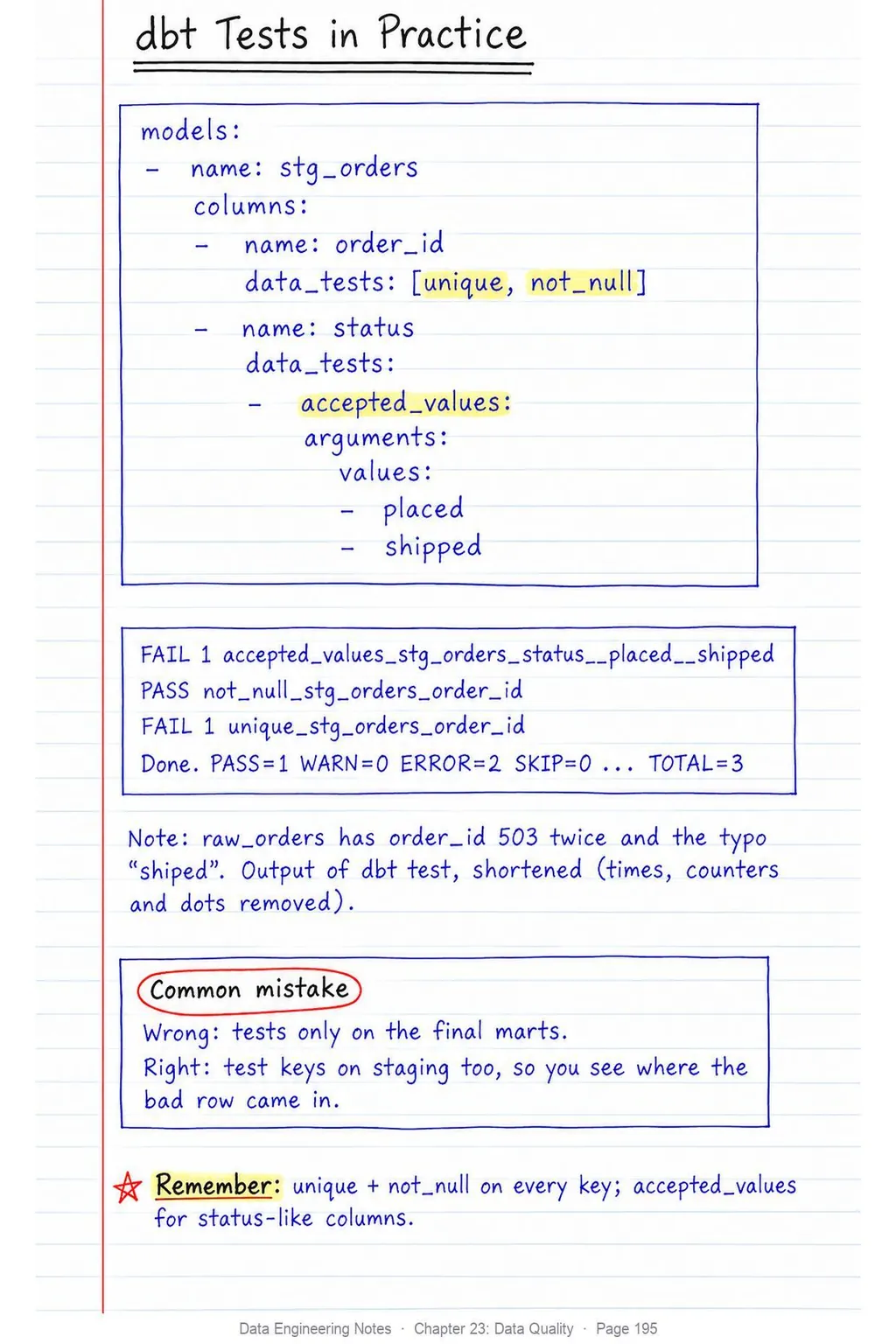
Keep bad data out: why it hurts, the six quality dimensions, where to test in a pipeline, dbt tests, pandera checks in Python, data contracts, and the five pillars of data observability.
Protect and govern data: who, what and how of governance, catalogs, metadata and lineage, PII masking, hashing and tokenization, RBAC with row and column access, encryption and secrets, and GDPR deletes.
Ship data code with confidence: the DataOps idea, unit testing transformations with pytest, dev, staging and prod environments, a CI pipeline for data, Terraform for infrastructure as code, and monitoring and alerting.
Map the cloud data landscape: AWS, Google Cloud and Azure data services, Databricks and Snowflake, a service map across clouds, and serverless versus managed versus self-hosted.
Cut run time and cost: partition pruning, predicate pushdown, file sizing and compaction, clustering and Z-ordering, avoiding shuffles and SELECT *, and a cost habits checklist.
Deliver data to the people and systems that use it: BI and the semantic layer, reverse ETL, serving apps through APIs and caches, and SLAs and freshness.
Prepare data for AI and ML: feature pipelines and feature stores, unstructured data pipelines, RAG ingestion from chunk to embed to upsert, and vector databases and freshness.
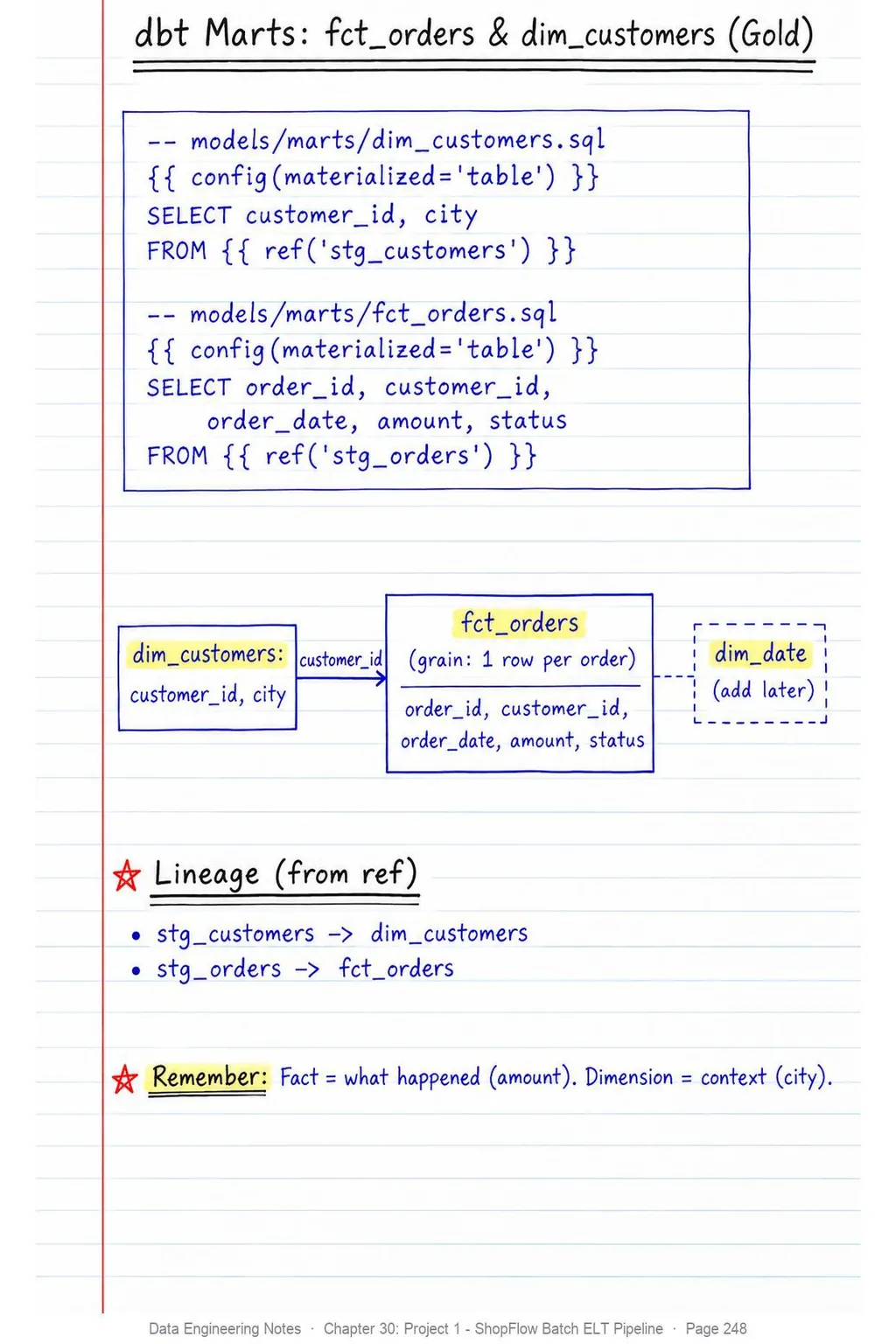
Build a complete batch ELT pipeline for ShopFlow: generate and ingest data, load Bronze into DuckDB, build Silver and Gold models in dbt with tests, orchestrate with an Airflow DAG, query the results, and follow a run checklist.
Build a complete streaming pipeline for ShopFlow: start Kafka, write a producer for order events, read the topic in Spark, compute windowed revenue, write to console and Parquet sinks, and see what production would add.
Design a data system from scratch: gather requirements and estimates, work through a clickstream analytics example for ShopFlow, weigh batch versus streaming trade-offs, and plan for failure handling and backfills.
Prepare for interviews and plan what comes next: Q&A on pipelines, modeling, lakehouse, Spark, Kafka and orchestration, SQL interview patterns, a tools-by-stage cheat sheet, common mistakes, and a learning roadmap.
Watch before you buy
Students on All Notes PDF
Real students talking about how they revise with our handwritten notes.
How it works
Get your notes in 3 easy steps
No app, no waiting. The whole thing takes under a minute.
- STEP 110 sec
Choose your notes
One subject, any two, or a full class set.
- STEP 230 sec
Pay with UPI or card
GPay, PhonePe, Paytm or card. Pay once, no subscription.
- STEP 3Instant
Download your PDFs
Tap Download on any chapter. Links never expire.
- Log in
- My library
- Download
What you get
- Format
- Downloadable PDF (not a printed book)
- Chapters
- 33 chapters in one 282 page PDF
- Level
- Data Engineering from beginner to advanced. No experience needed
- Style
- Handwritten-style notes with diagrams, code explained line by line, common mistakes and quizzes
- Devices
- Phone, tablet and laptop. Print any chapter if you like
- Access
- Lifetime. Download again anytime from My library
- Instant downloadRight after payment
- Free updatesCorrections added free
- Secure paymentUPI, cards, net banking