Tech · Beginner to Advanced · Handwritten PDF notes
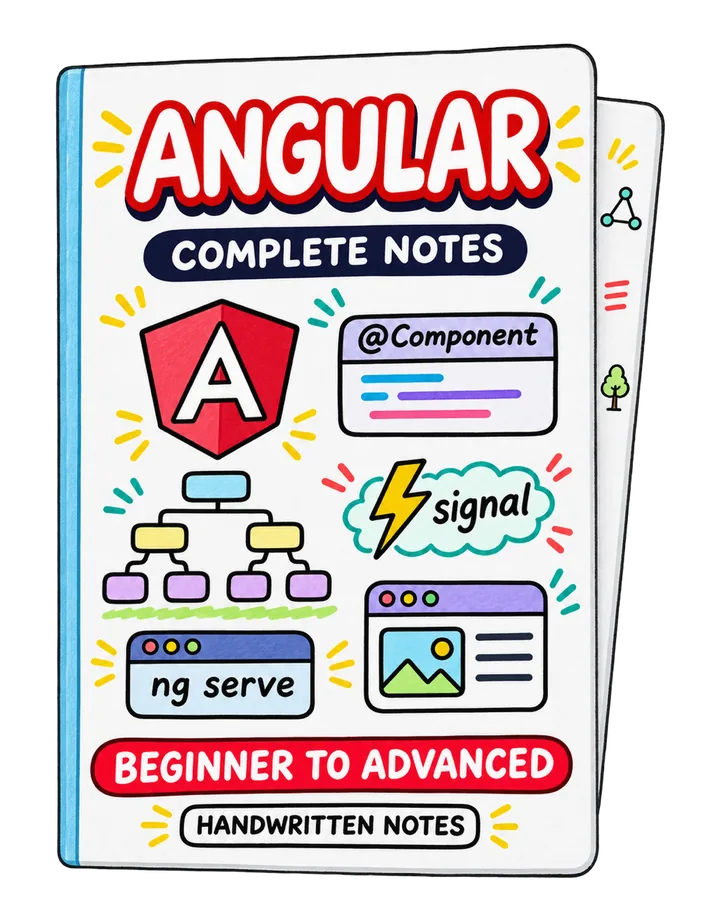
Angular Complete Notes
Instant PDF download after payment. Pay once, keep forever.
- Instant download
- Lifetime access
- UPI, GPay, PhonePe, cards
Complete coverage
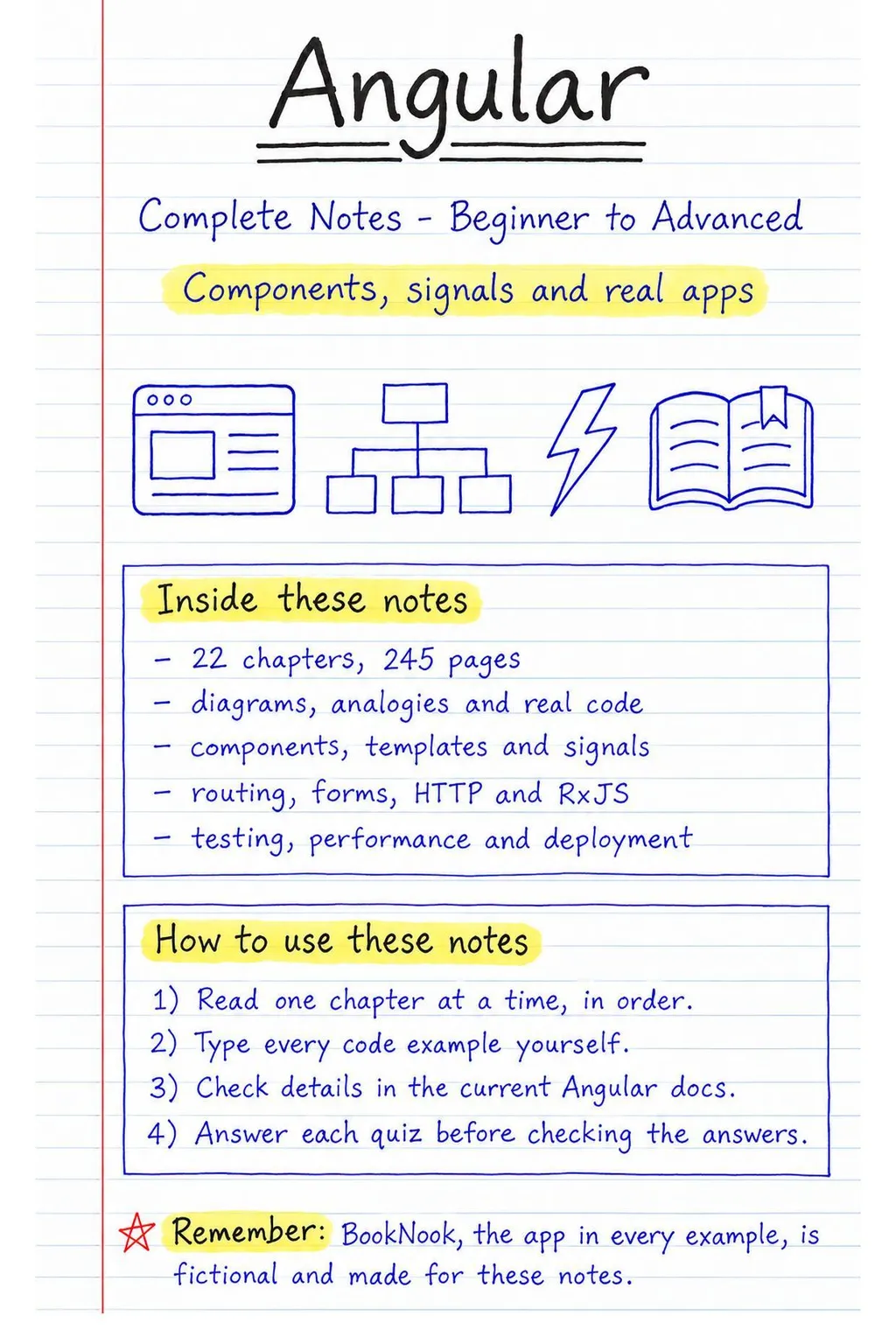
What you learn in all 22 chapters
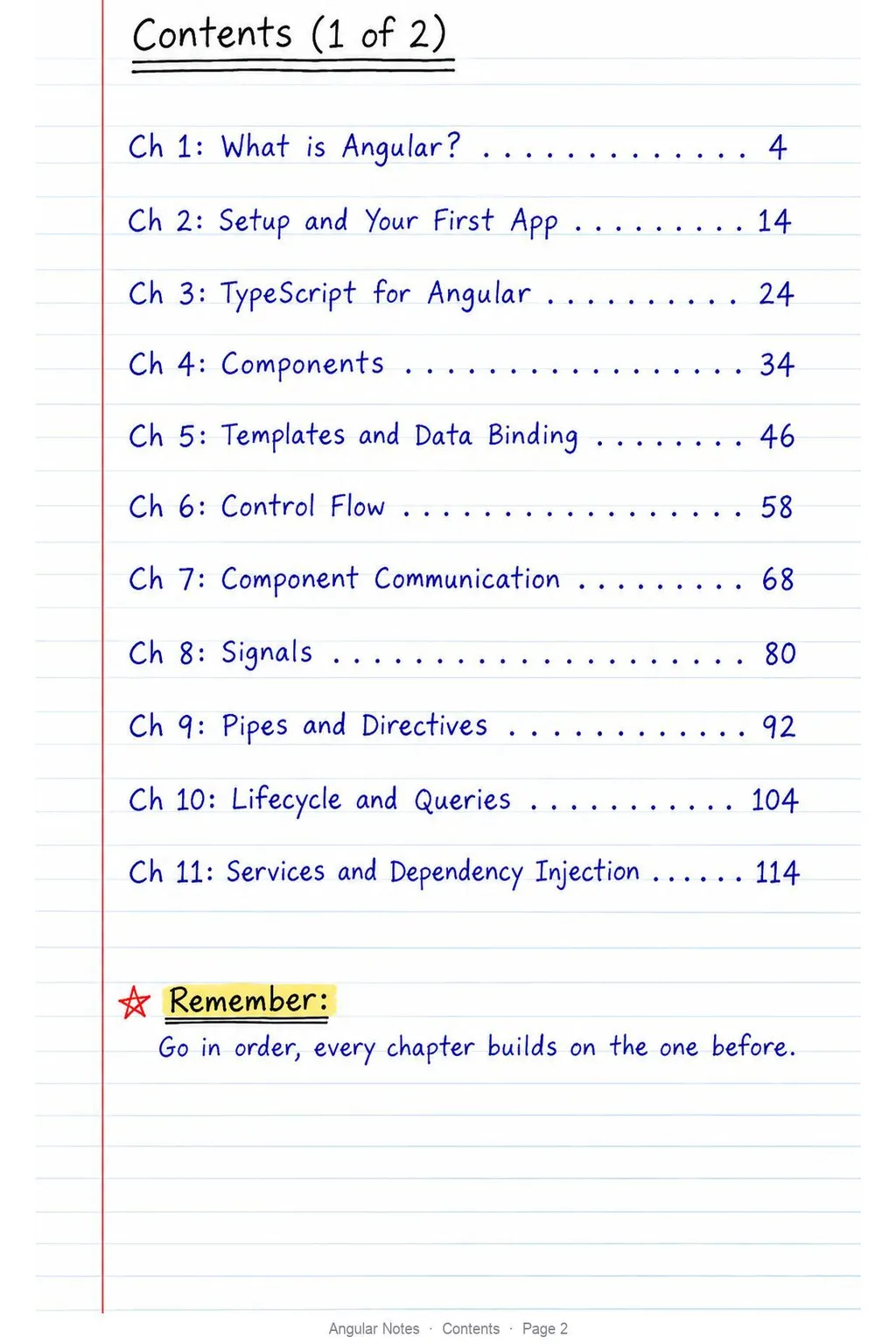
Open any chapter to see every topic it covers and the page it is on.
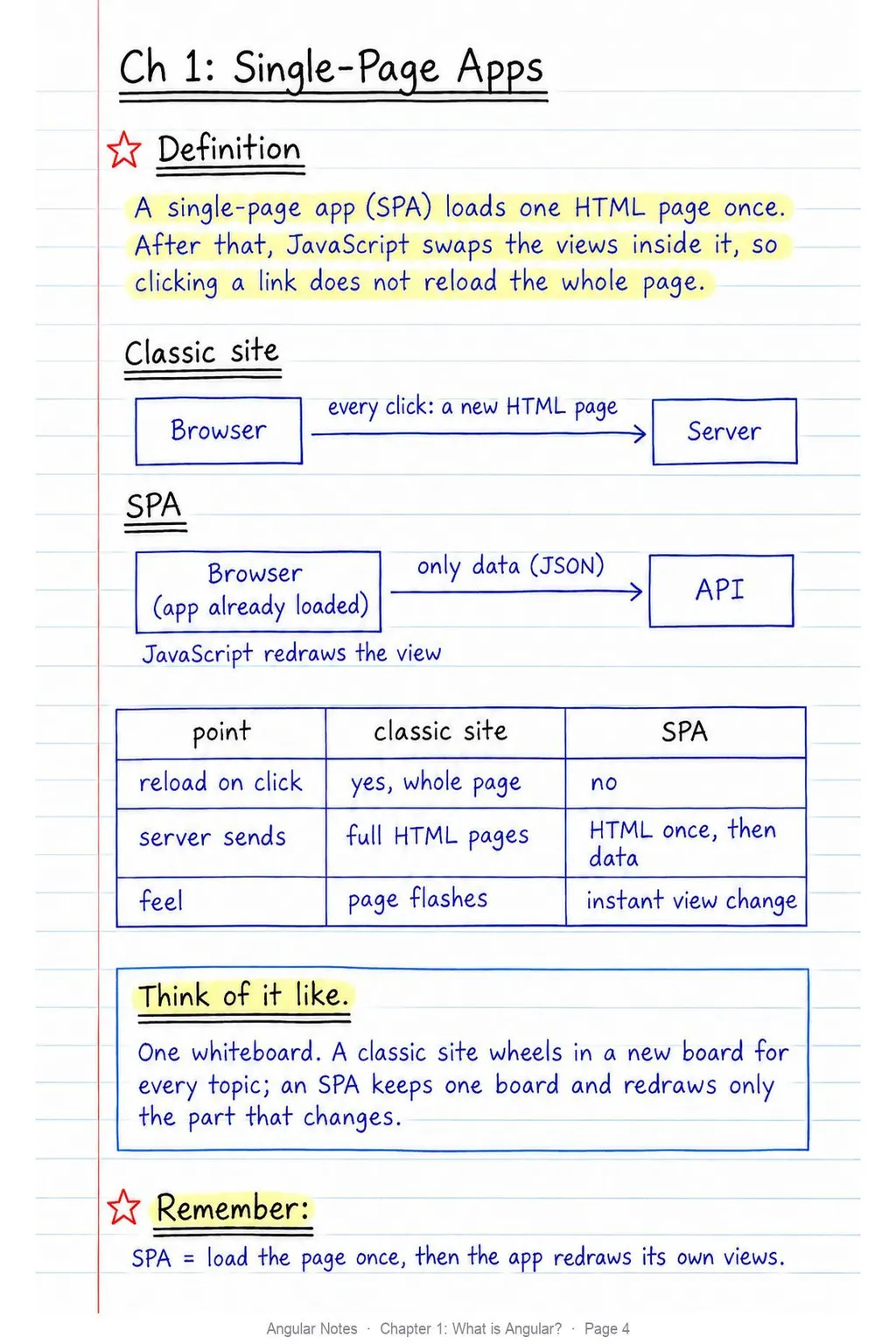
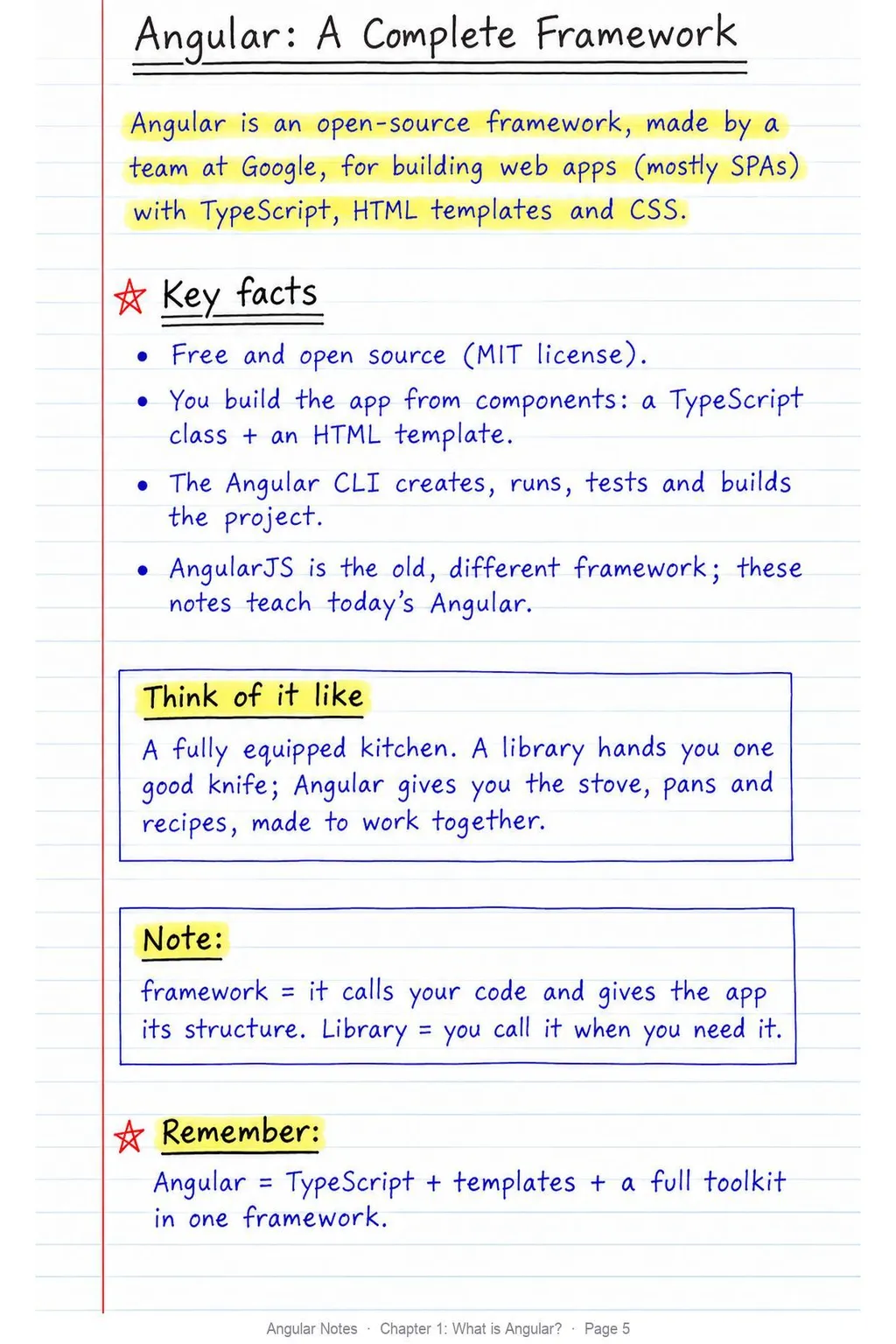
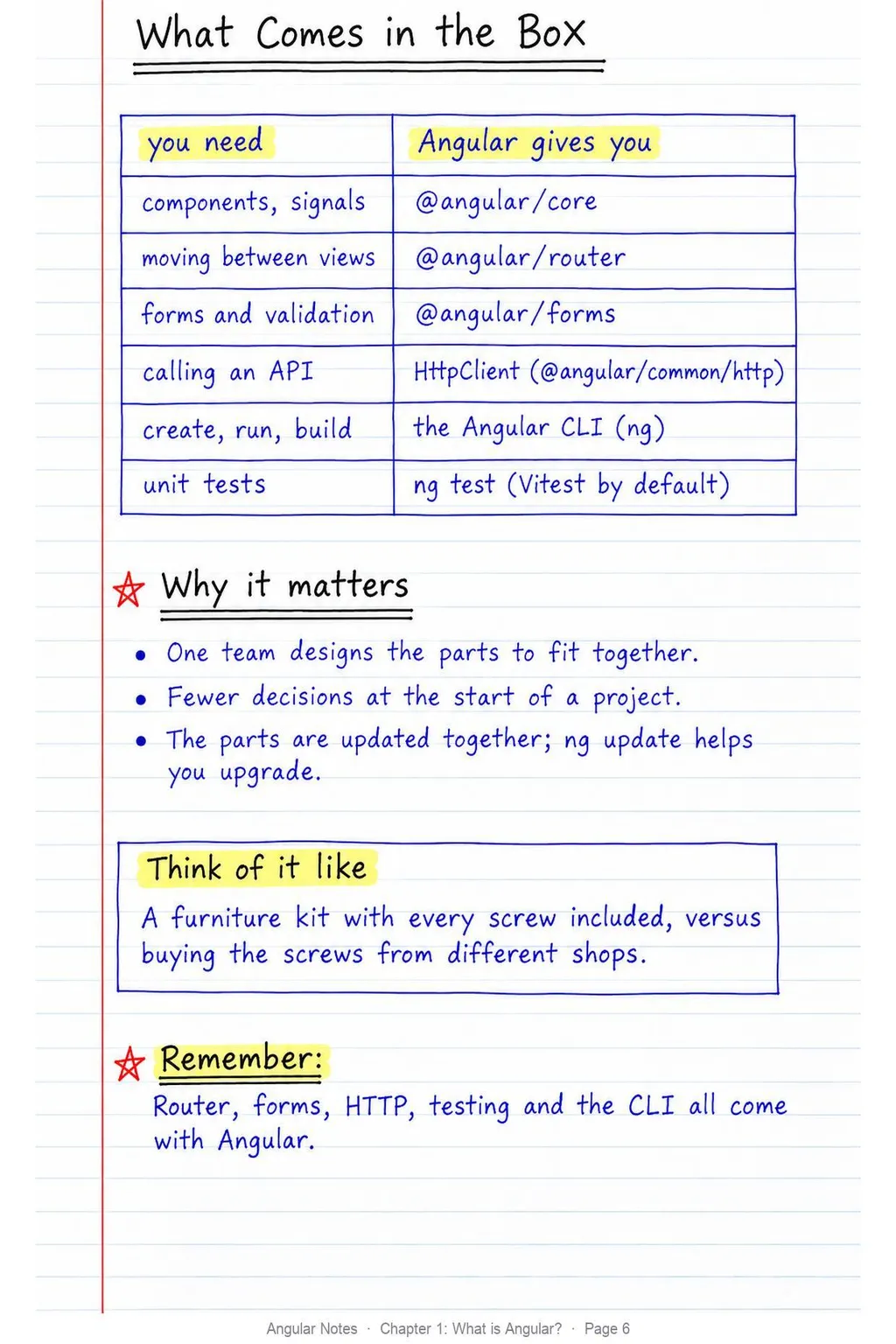
Understand what Angular is: single-page apps, a complete framework and what comes in the box, apps as trees of components, template plus class becoming DOM, Angular versus React and Vue, modern Angular, when it fits and the BookNook example.
Set up your first app: install Node.js and the Angular CLI, answer the ng new booknook questions, read the project layout, use ng serve with live reload, main.ts, app.config.ts, edit the root template and try Angular DevTools.
Write the TypeScript Angular relies on: basic types, arrays and inference, interfaces for the Book model, classes with readonly, access modifiers, optional fields with ?. and ??, generics, decorators and strict mode.
Build components from a class, template and styles: @Component options, ng generate component, the imports array, standalone components, scoped styles, :host, BookNook's component tree, container versus presentational components and naming conventions.
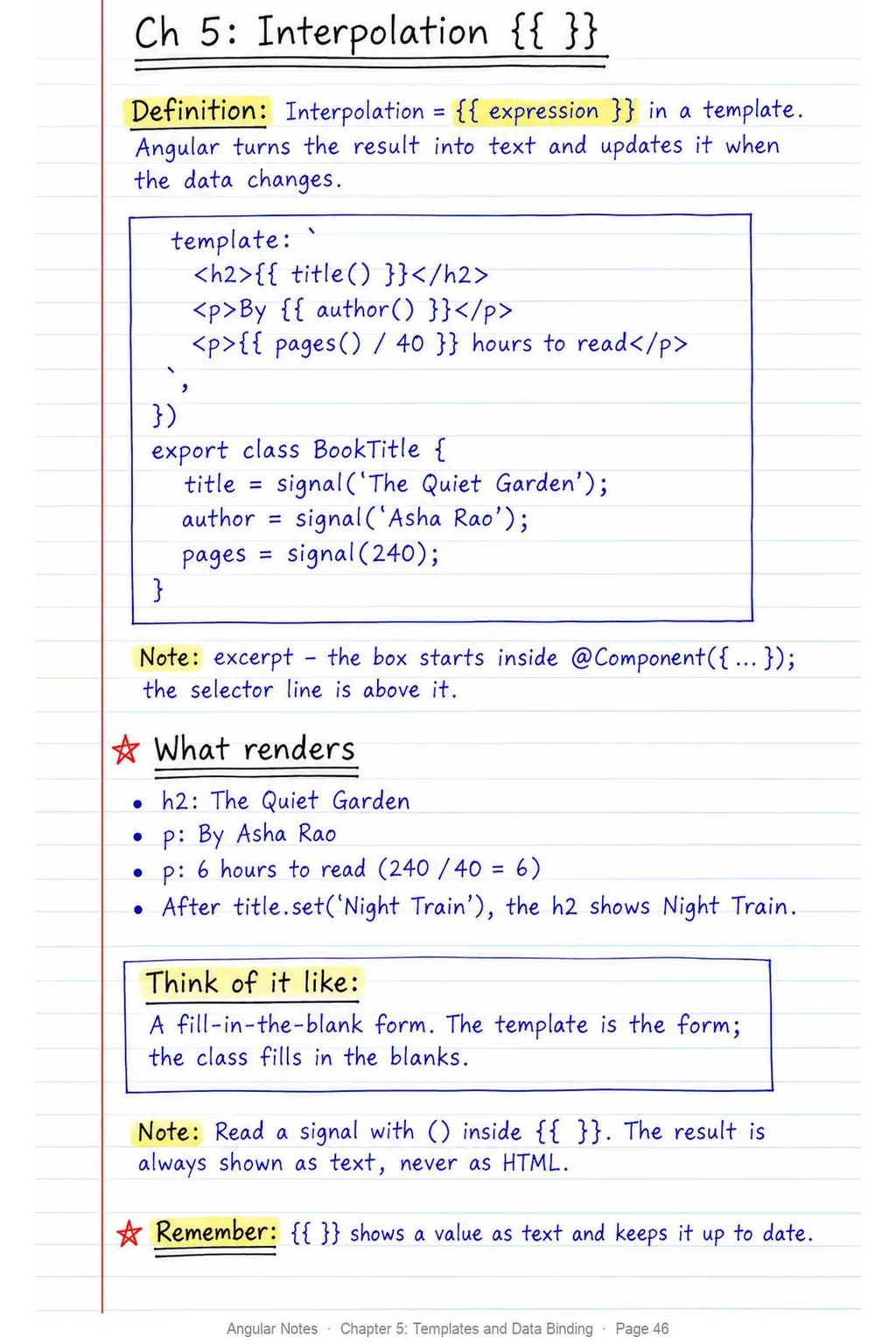
Bind data to templates: interpolation, property, attribute, class and style bindings, event binding with $event and key events, two-way [(ngModel)], template reference variables, @let and the rule of keeping logic in the class.
Control what the template shows: @if and @else, @for with track and why it matters, @empty, $index, @switch, and @defer with its triggers, @placeholder and @loading, ending with the BookNook book list.
Pass data between components: signal inputs with input() and input.required(), input transforms, output() and emit(), model() for two-way binding, BookCard, ng-content and multi-slot projection, shared services for siblings and common pitfalls.
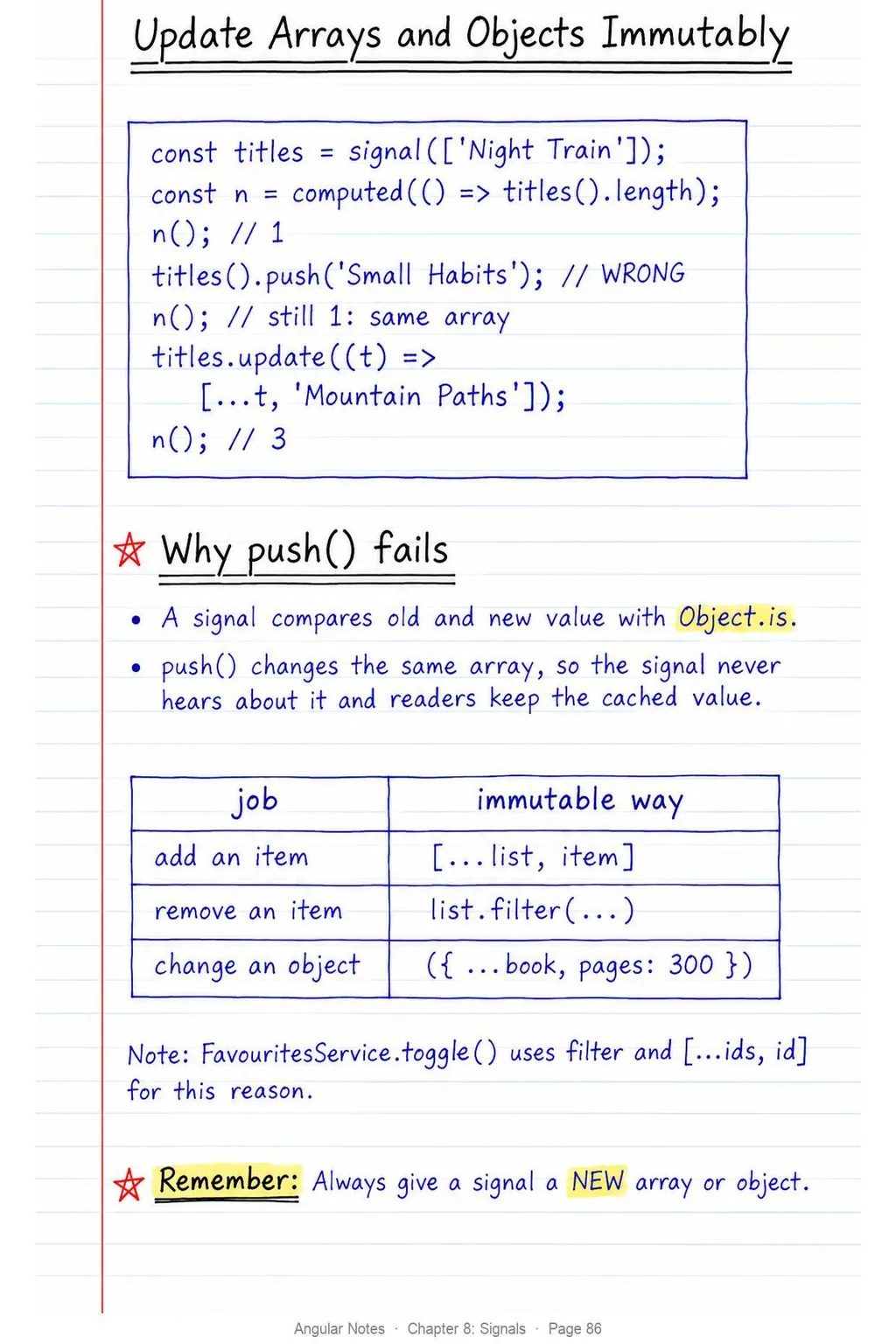
Master signals: signal(), set() and update(), reading with count(), computed() values, how dependencies are tracked, effect(), immutable updates, linkedSignal(), untracked(), BookNook search and when to choose signals or RxJS.
Format and extend templates: built-in pipes, pipe arguments and chaining, a custom readingTime pipe, pure pipes, attribute directives like appHighlight, host bindings, directive inputs, NgClass and NgStyle versus [class] and ng-template with ngTemplateOutlet.
Hook into the component lifecycle: constructor versus ngOnInit, ngOnChanges, ngOnDestroy and DestroyRef, afterNextRender and afterEveryRender, viewChild() and contentChild() queries, ElementRef for DOM access and which hook fits which job.
Share logic with services and dependency injection: @Injectable with providedIn root, inject(), the injector tree, useClass, useValue and useFactory providers, InjectionToken, component-level providers, FavouritesService, testing and swapping, and common DI errors.
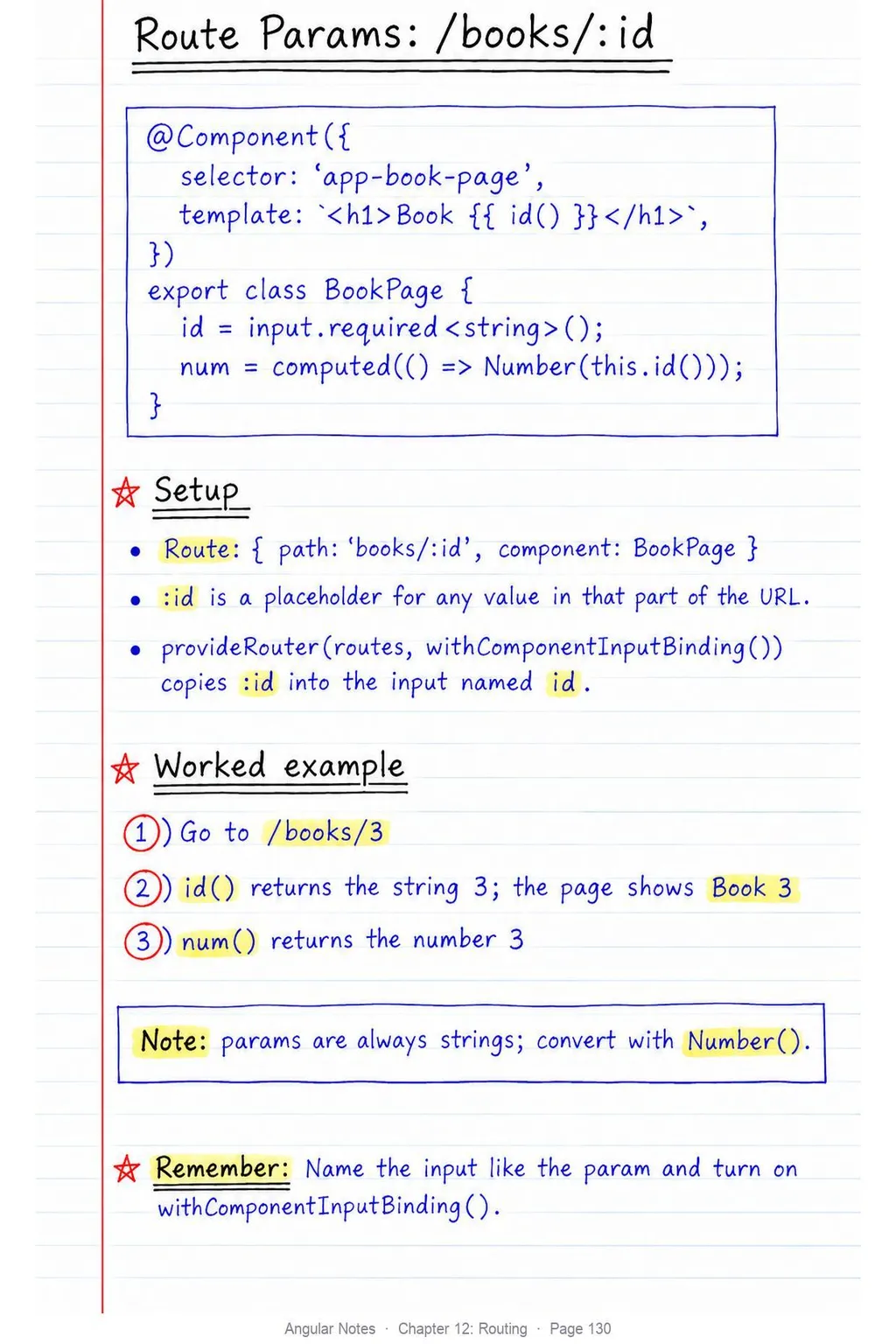
Navigate between pages with the router: app.routes.ts and provideRouter, router-outlet and routerLink, route params, navigating in code, child routes, lazy loading, canActivate guards, resolvers, redirects and the not-found route.
Build forms in Angular: template-driven and reactive forms, FormControl, FormGroup, FormBuilder and typed forms, built-in and custom validators, showing errors after touched, submitting, FormArray, signal forms and the BookNook add-book form.
Load data over HTTP: provideHttpClient, typed GET, POST, PUT and DELETE calls, keeping calls in a service, subscribe versus async pipe versus toSignal, catchError, loading and error states, interceptors, httpResource and a dev proxy.
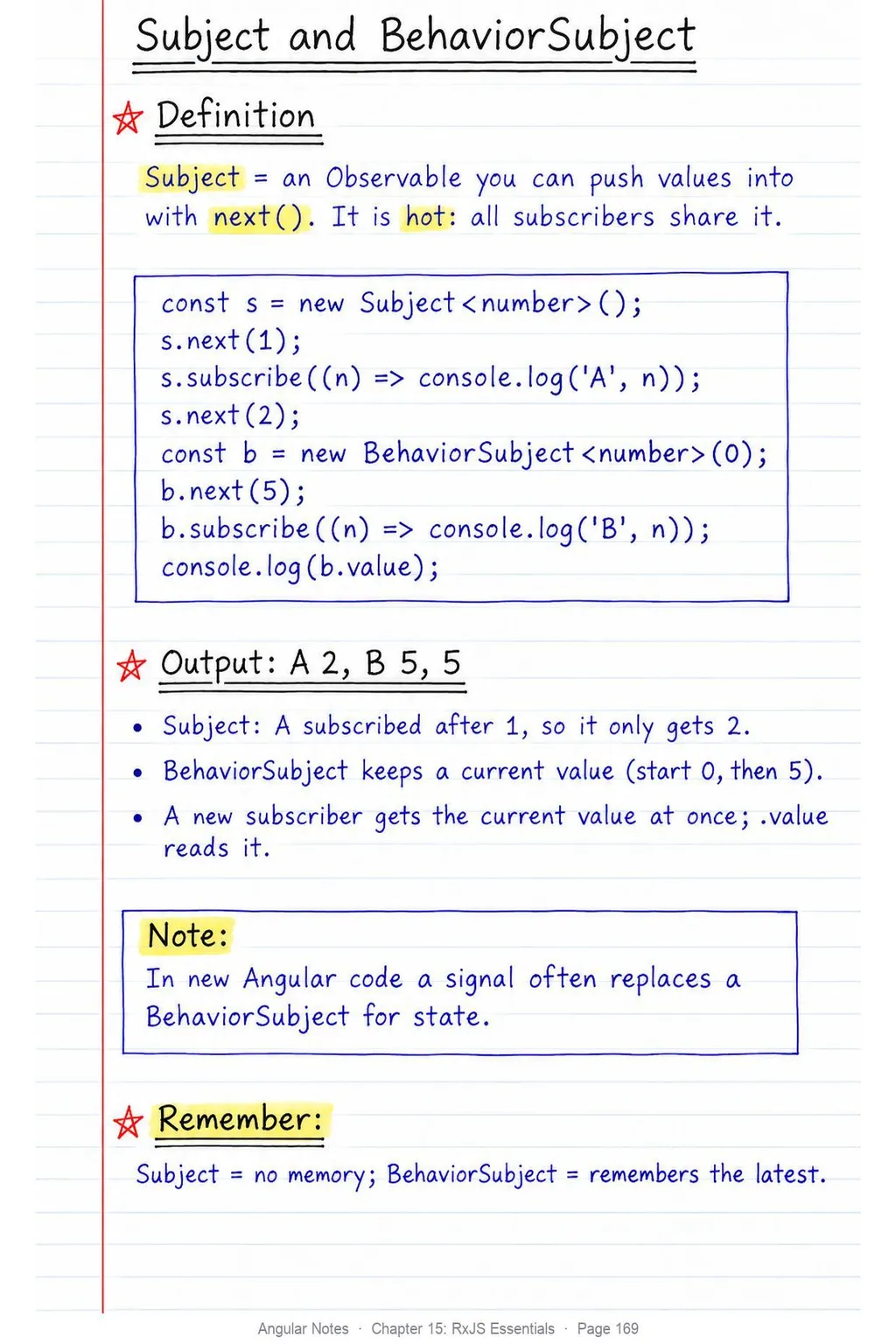
Learn the RxJS essentials: observables as values over time, subscribe, cold versus hot, pipe with map, filter and tap, switchMap, debounceTime, combineLatest and forkJoin, Subject and BehaviorSubject, takeUntilDestroyed and toSignal.
Manage state in Angular: the kinds of state and where each should live, a signal-based store service, read-only signals with asReadonly, methods as actions, derived state, persisting favourites with effect, NgRx and when you need a library.
Keep apps fast: change detection, Zone.js versus zoneless, OnPush, how signals tell Angular what changed, track in @for, lazy routes and @defer, NgOptimizedImage, bundle size and budgets, and a performance checklist.
Test Angular apps: what to test, ng test with Vitest, writing specs with describe, it and expect, TestBed, querying the DOM, inputs and outputs, services, fake dependencies, HttpTestingController, testing signals and end-to-end tests.
Style, open up and translate your app: global versus component styles, SCSS, view encapsulation, CSS transitions with class bindings, Angular Material and the CDK, accessibility basics, accessible forms, i18n and locale-aware pipes.
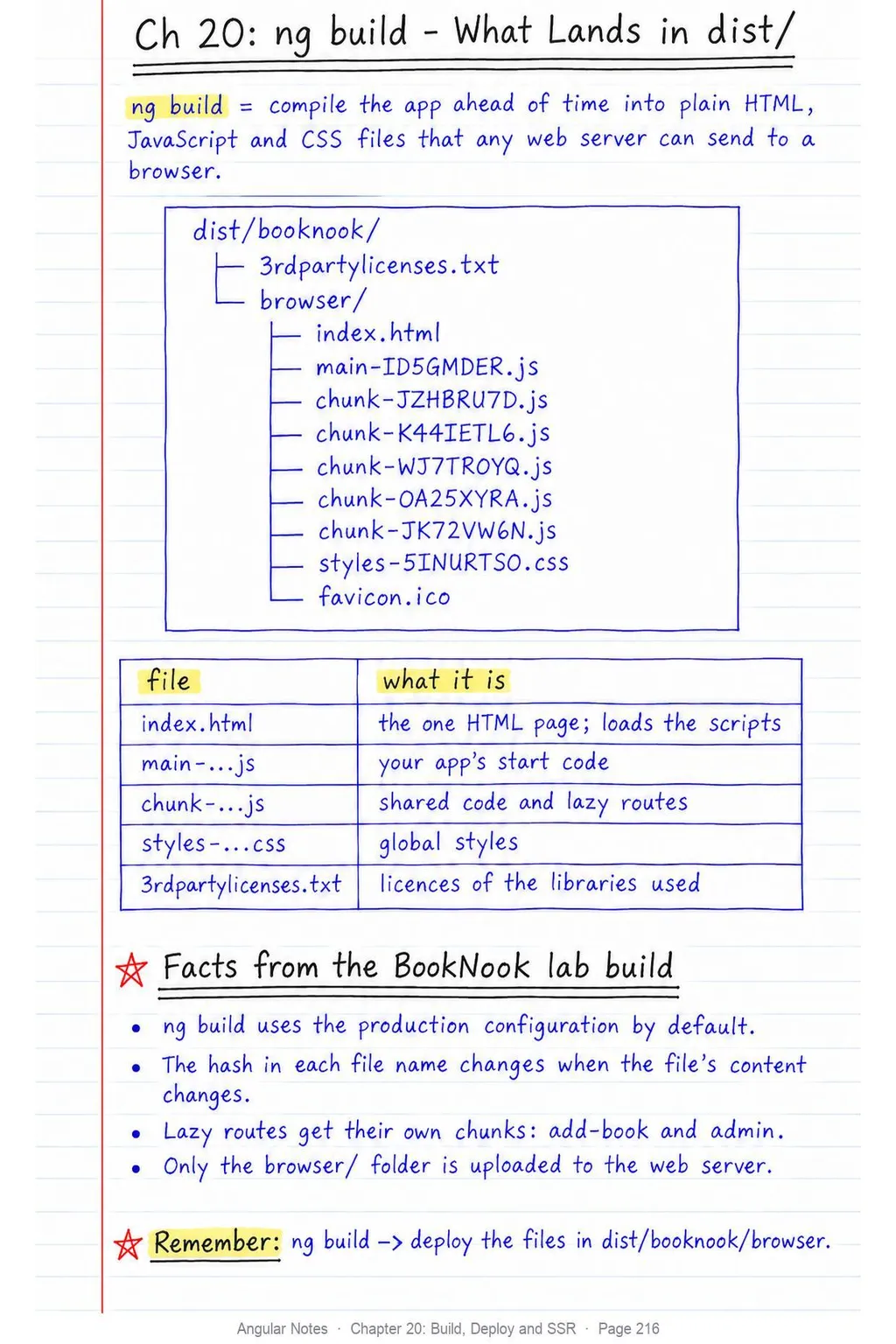
Build and ship your app: what ng build puts in dist, environment files and configurations, dev versus production builds, deploying a static SPA, server-side rendering, hydration, prerendering, built-in sanitization and ng update.
Read older Angular code: NgModules with declarations, imports and exports, *ngIf and *ngFor versus @if and @for, @Input and @Output versus input() and output(), constructor injection versus inject(), migration schematics and why AngularJS is different.
Pull it all together with the BookNook capstone: plan, folder structure and routes, API service and store, list, detail, add and admin pages, tests, deploy, cheat sheets, top mistakes, interview questions and a learning roadmap.
Watch before you buy
Students on All Notes PDF
Real students talking about how they revise with our handwritten notes.
How it works
Get your notes in 3 easy steps
No app, no waiting. The whole thing takes under a minute.
- STEP 110 sec
Choose your notes
One subject, any two, or a full class set.
- STEP 230 sec
Pay with UPI or card
GPay, PhonePe, Paytm or card. Pay once, no subscription.
- STEP 3Instant
Download your PDFs
Tap Download on any chapter. Links never expire.
- Log in
- My library
- Download
What you get
- Format
- Downloadable PDF (not a printed book)
- Chapters
- 22 chapters in one 245 page PDF
- Level
- Angular from beginner to advanced. No experience needed
- Style
- Handwritten-style notes with diagrams, code explained line by line, common mistakes and quizzes
- Devices
- Phone, tablet and laptop. Print any chapter if you like
- Access
- Lifetime. Download again anytime from My library
- Instant downloadRight after payment
- Free updatesCorrections added free
- Secure paymentUPI, cards, net banking