
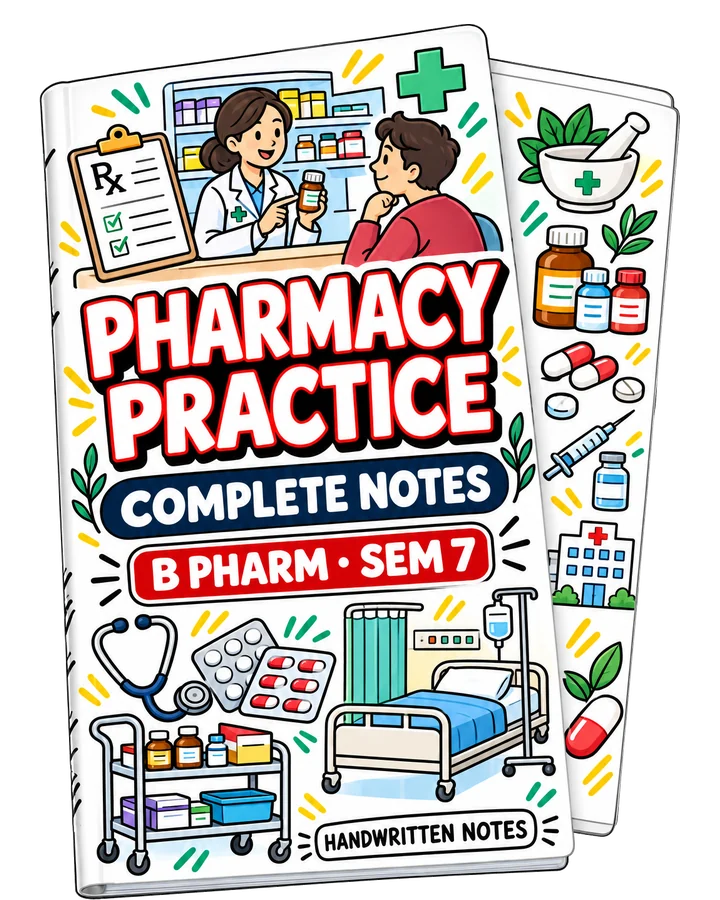
B Pharm · PCI syllabus · Handwritten PDF notes
B Pharm Semester 7Pharmacy Practice Notes
Instant PDF download after payment. Pay once, keep forever.
- Instant download
- Lifetime access
- UPI, GPay, PhonePe, cards
Watch before you buy
Students on All Notes PDF
Real students talking about how they revise with our handwritten notes.
How it works
Get your notes in 3 easy steps
No app, no waiting. The whole thing takes under a minute.
- STEP 110 sec
Choose your notes
One subject, any two, or a full class set.
- STEP 230 sec
Pay with UPI or card
GPay, PhonePe, Paytm or card. Pay once, no subscription.
- STEP 3Instant
Download your PDFs
Tap Download on any chapter. Links never expire.
- Log in
- My library
- Download
Complete coverage
All 17 chapters, one PDF each
See every downloadable PDF included with B Pharm Semester 7 Pharmacy Practice, organised chapter by chapter.
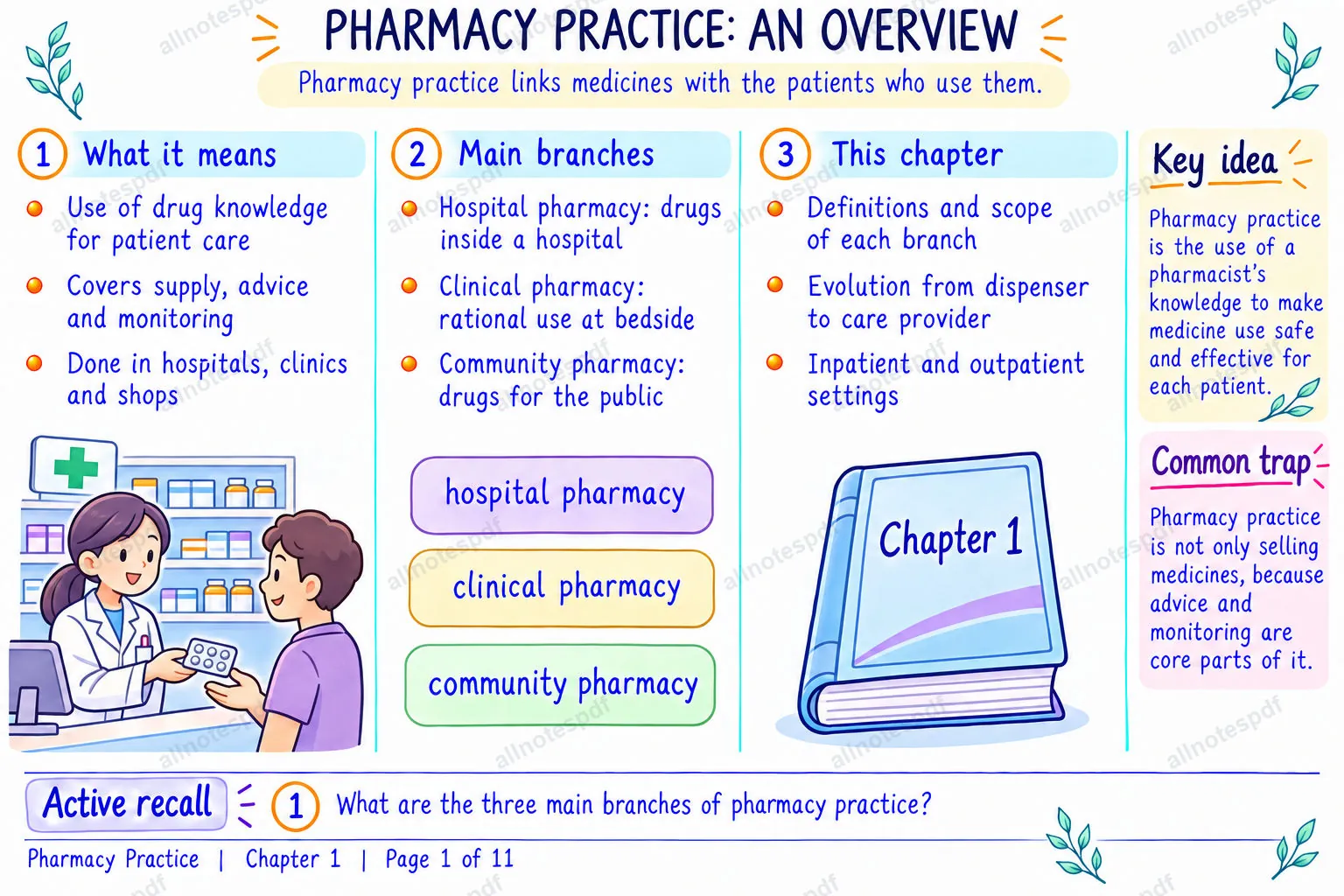
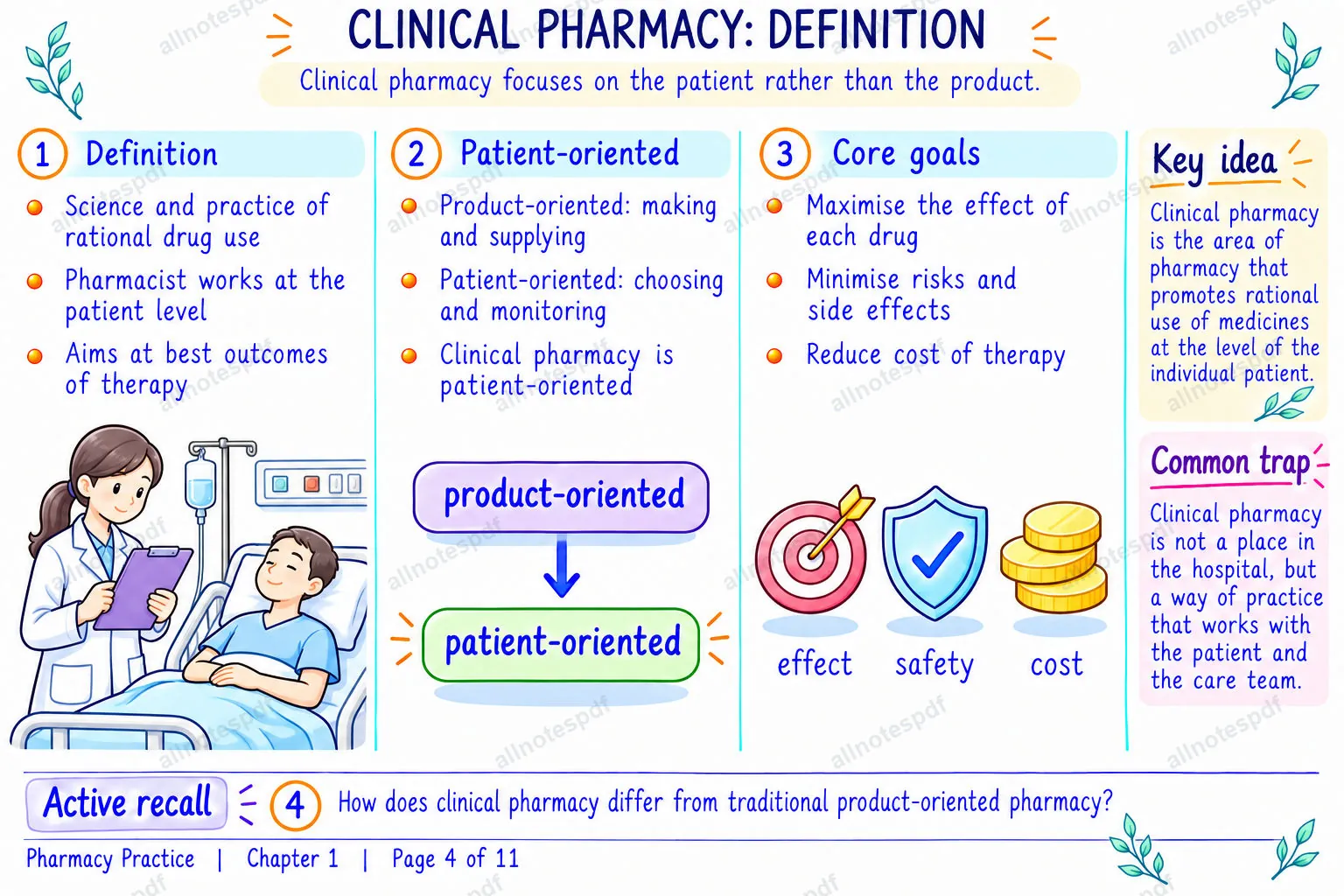
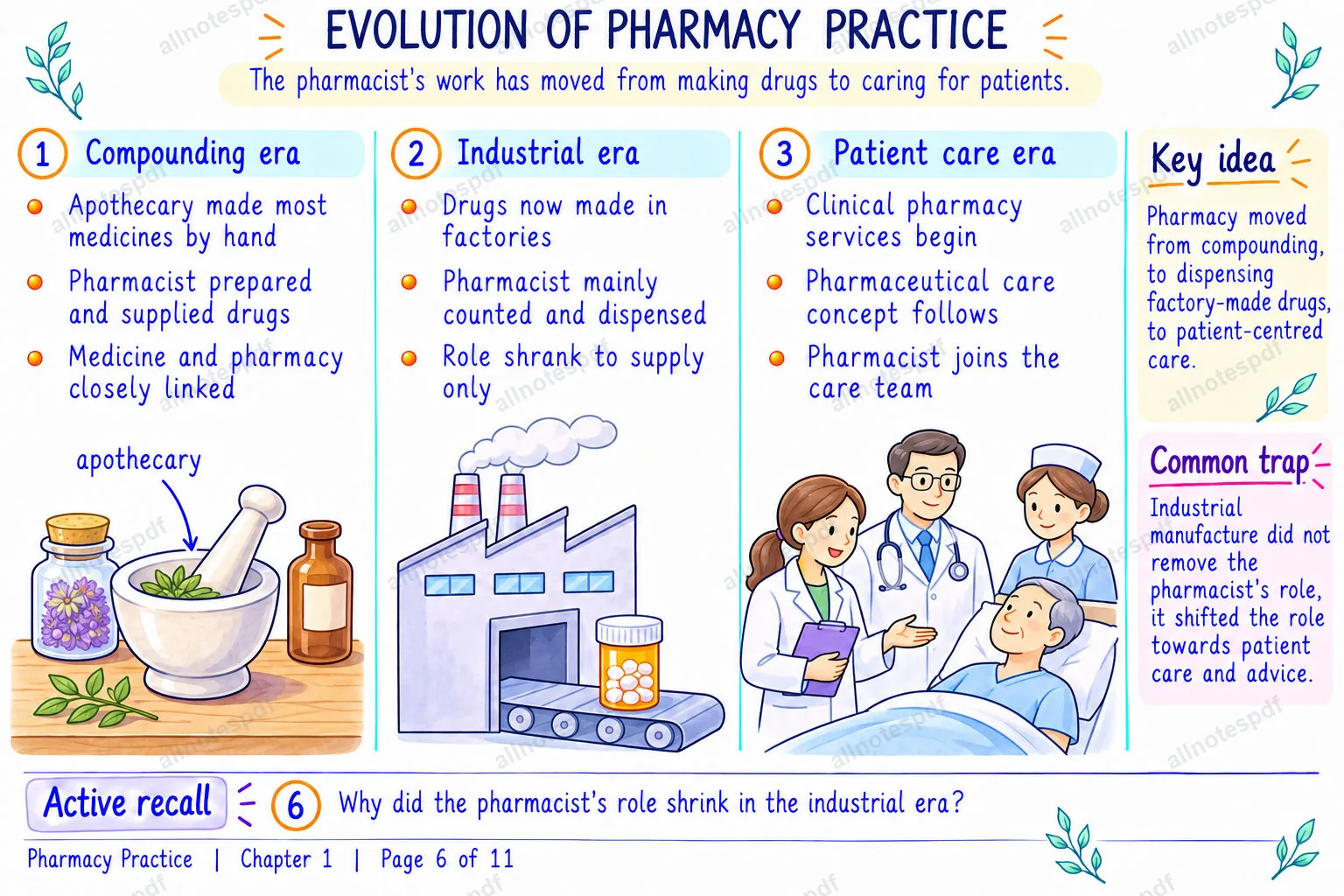
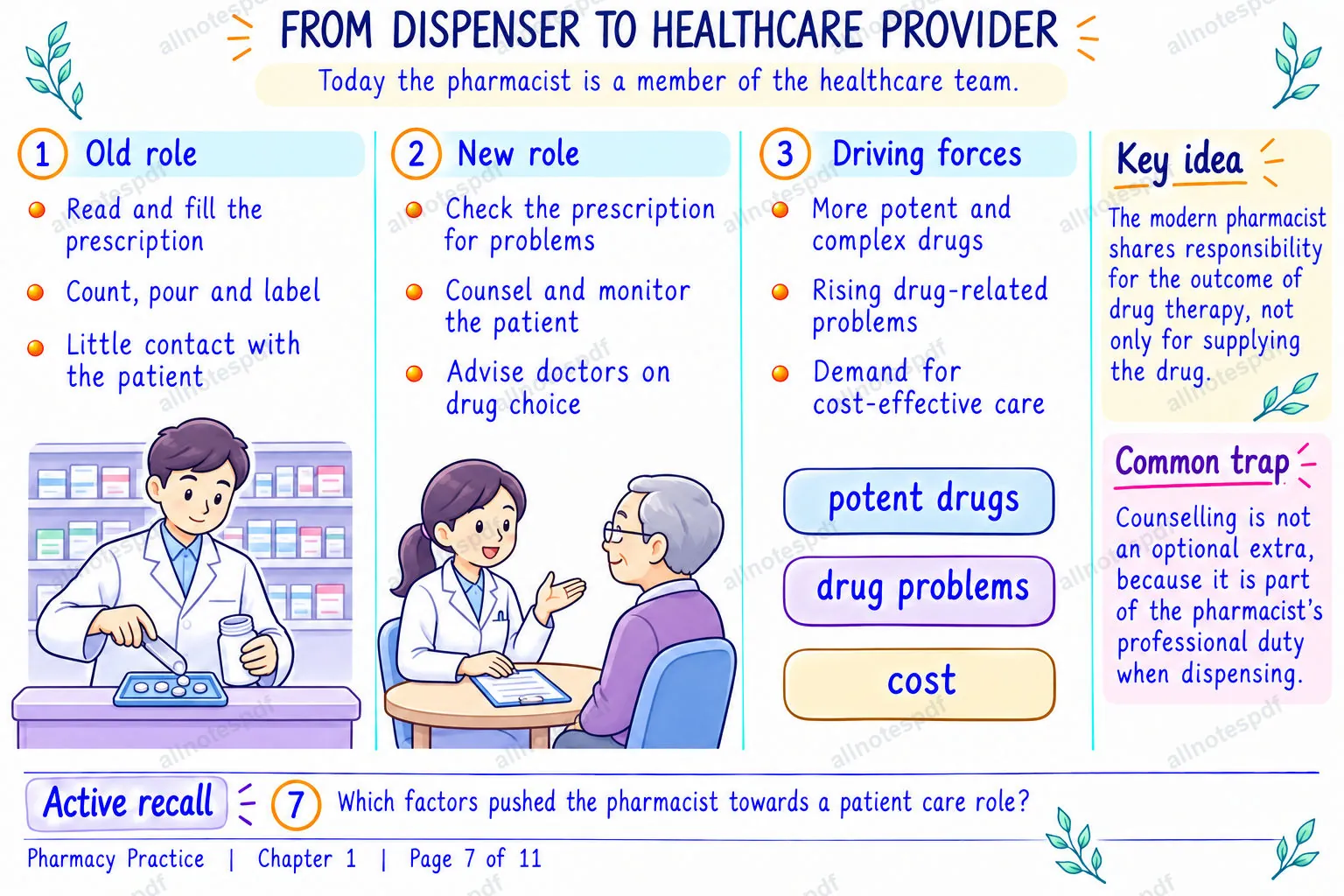
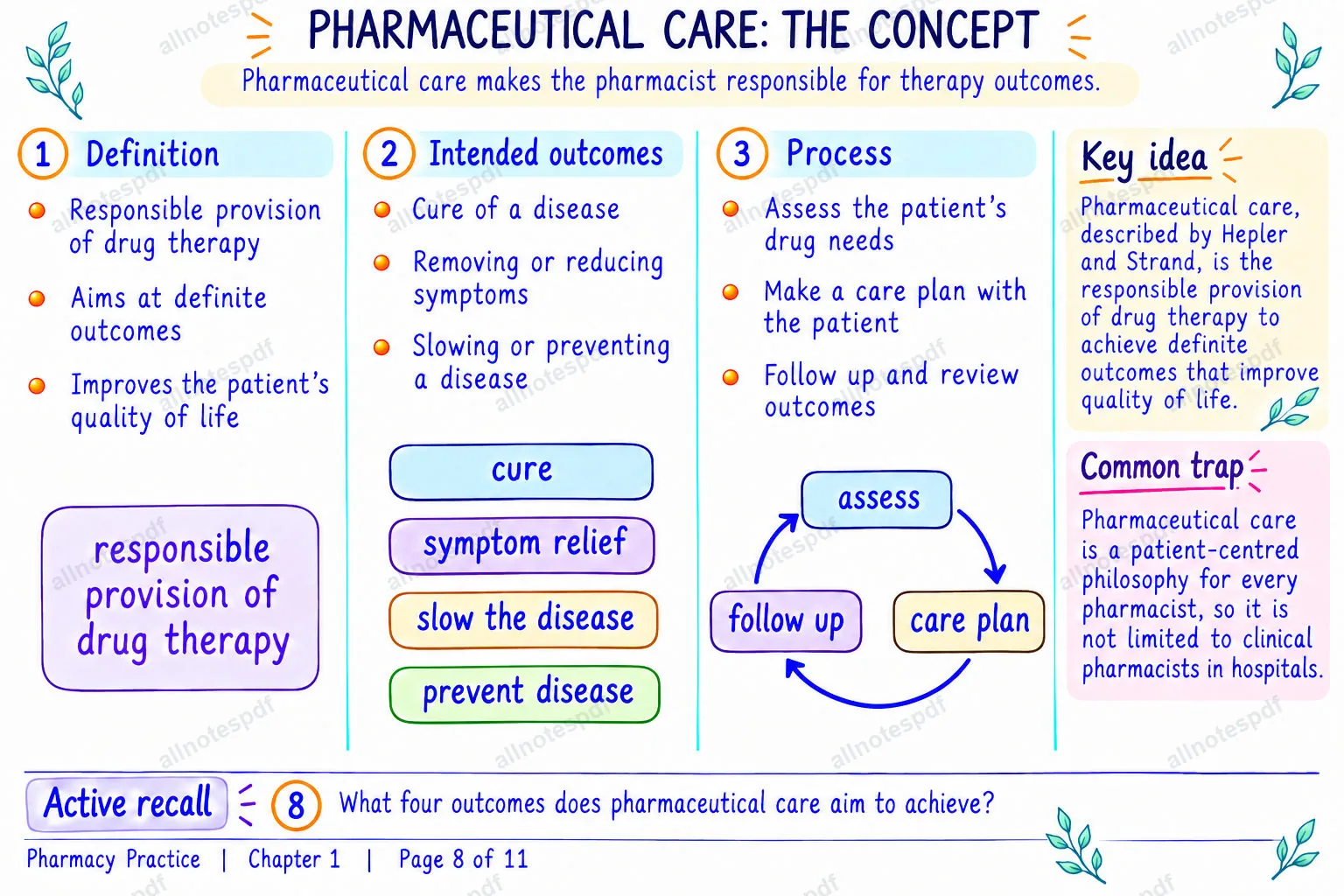
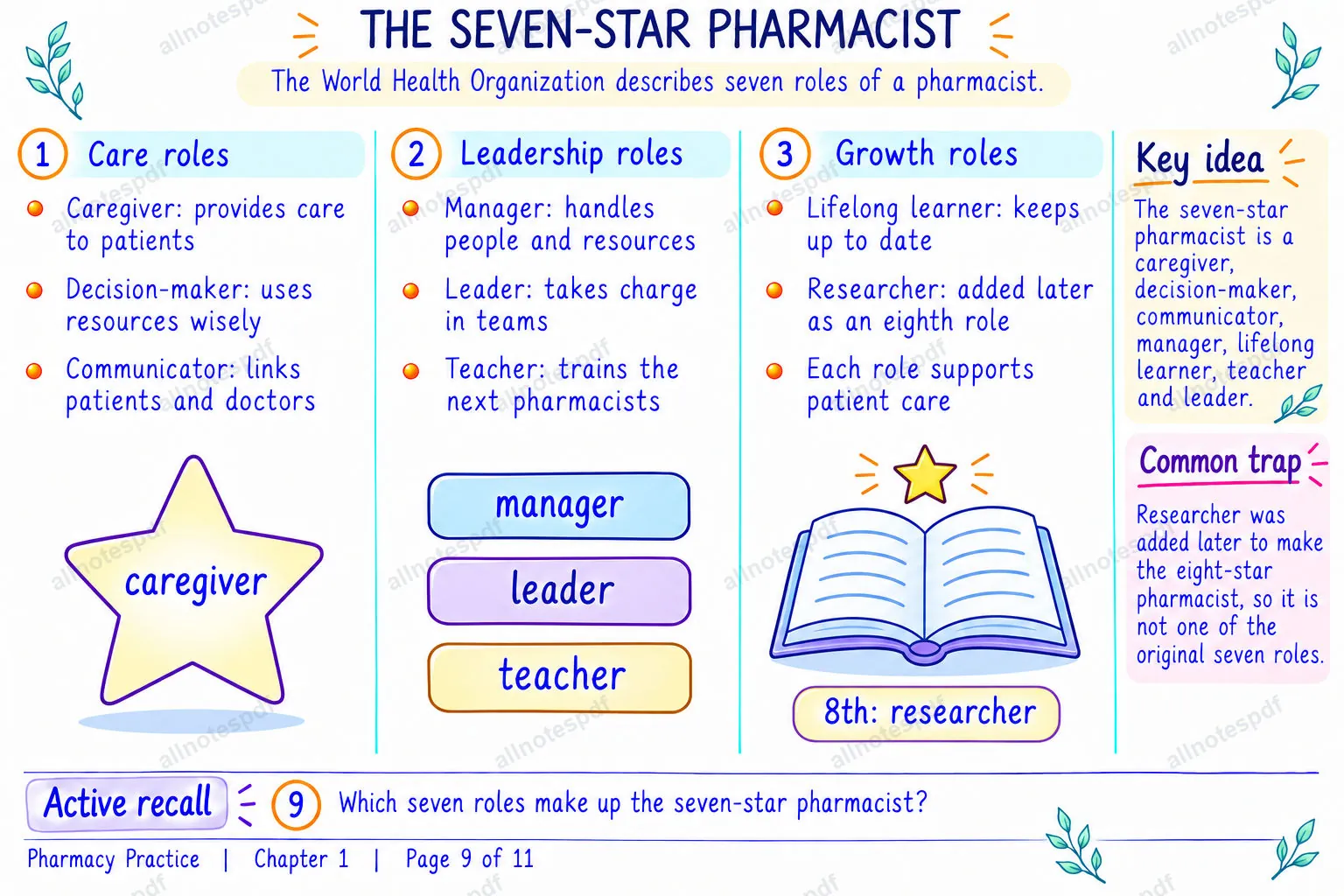
Introduction to pharmacy practice: definition, scope and evolution of hospital and clinical pharmacy, the pharmacist's changing role from dispenser to healthcare provider, pharmaceutical care.
Covers wHO and FIP guidelines on pharmacy practice, concepts and requirements of Good Pharmacy Practice, pharmacy practice regulations in India, the role of pharmacy in public health and policymaking.
Covers the concept of a healthcare delivery system, interprofessional collaboration, primary care at primary health centres, secondary care at community health centres, tertiary care at medical colleges and specialty institutes.
Covers hospital and its organisation: definition and functions of a hospital, classification of hospitals, organisational structure of a hospital, and the healthcare staff involved in hospital services with their functions.
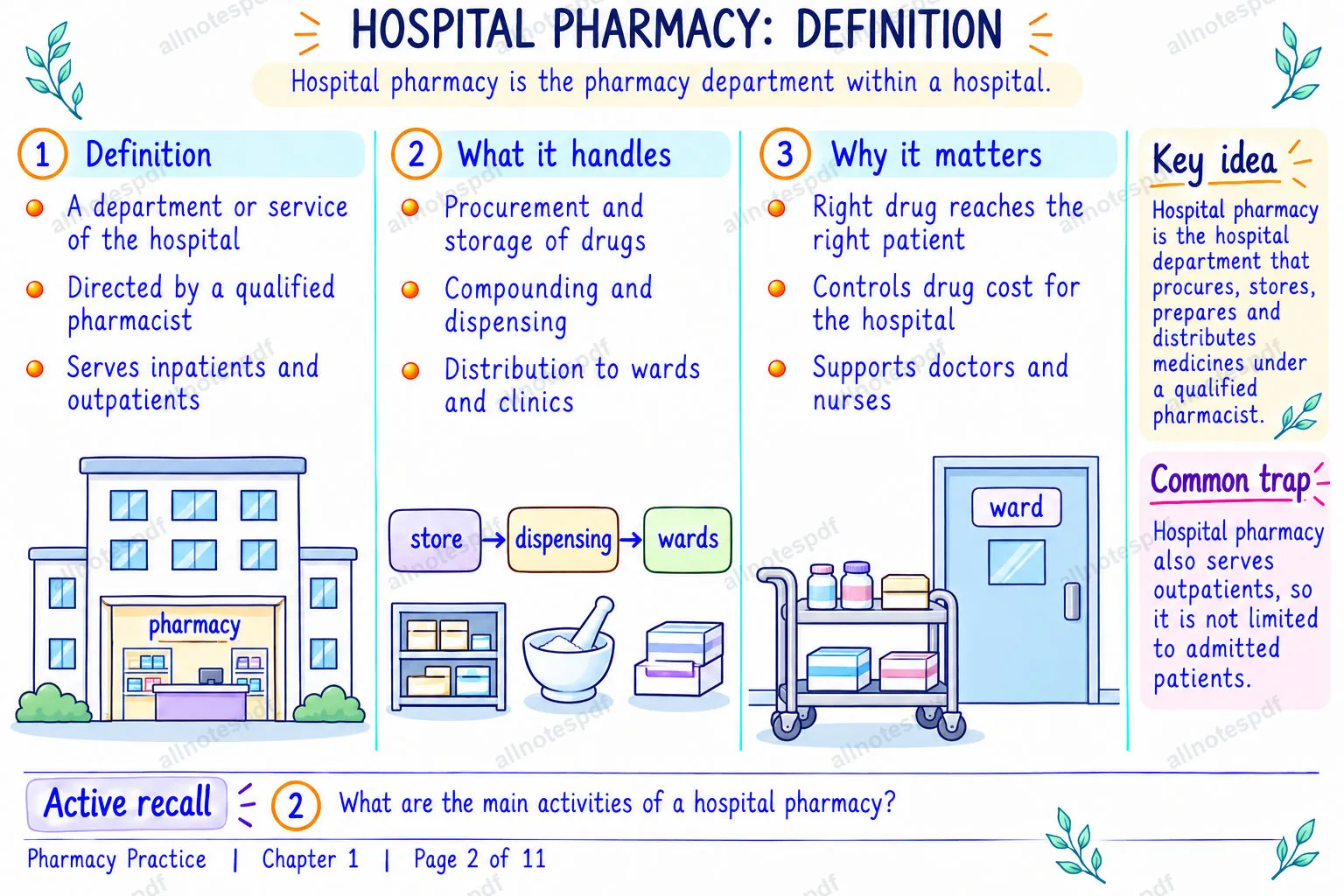
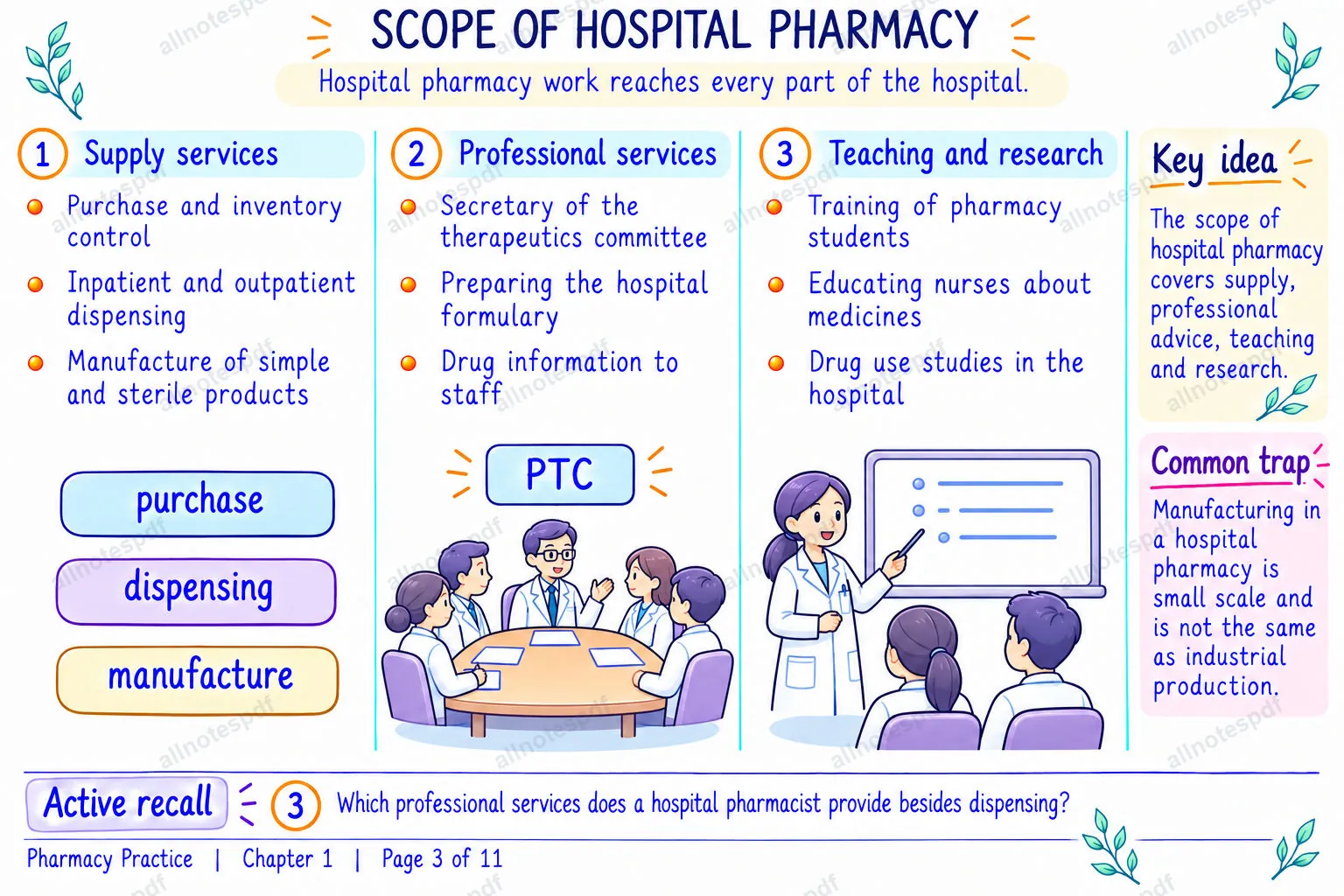
Covers hospital pharmacy and its organisation: definition, objectives, organisation structure, location, layout, staff requirements, and the responsibilities and functions of hospital pharmacists.
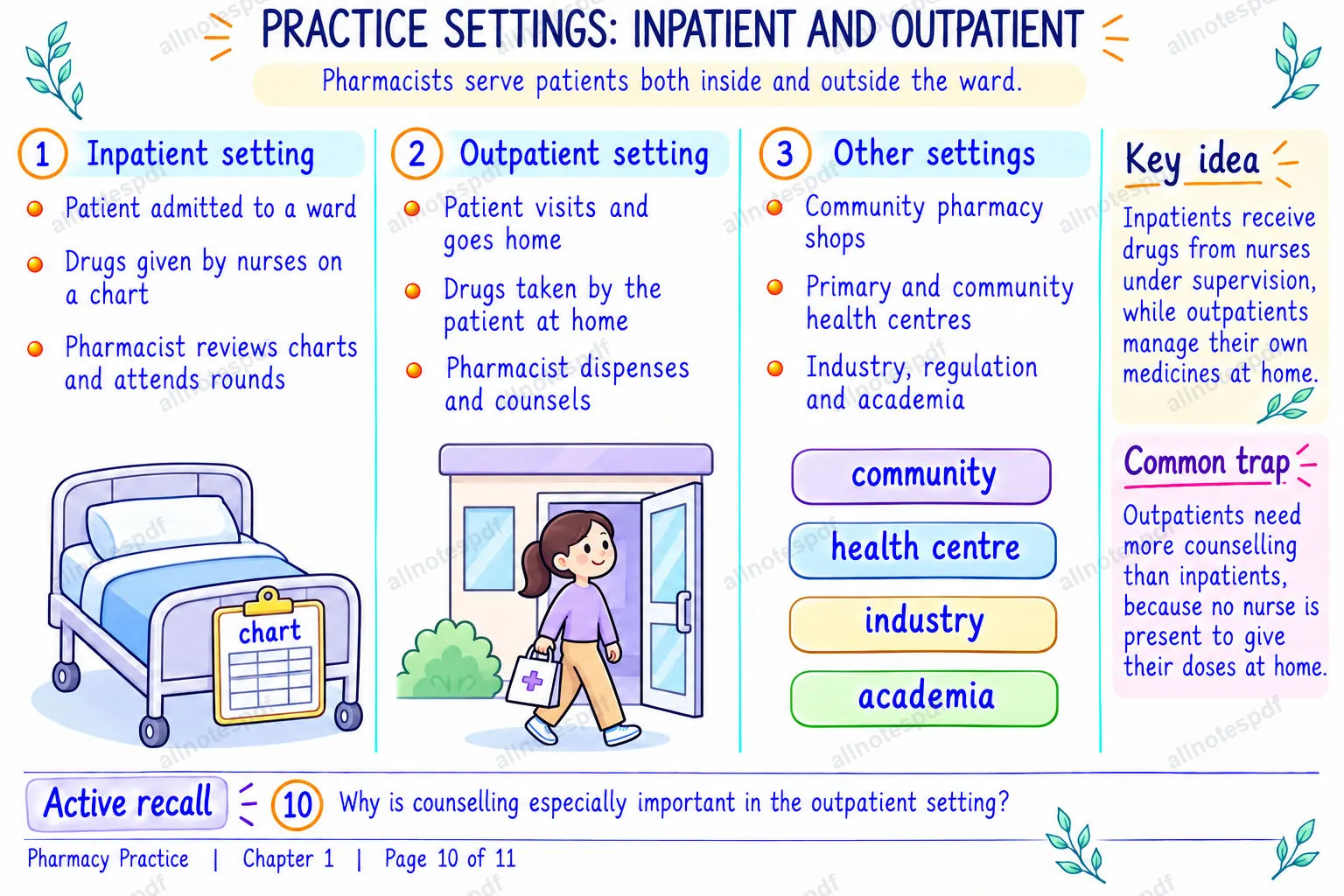
Covers the Pharmacy and Therapeutics Committee: organisation, objectives, functions and policies, drug inclusion into the formulary, inpatient and outpatient prescriptions, automatic stop orders and preparation of the emergency drug list.
Covers hospital formulary: definition, purpose and advantages, contents of the formulary, differences between a hospital formulary and a drug list, formulary system, and preparation and revision of the hospital formulary.
Covers drug procurement in hospitals: purchasing methods and steps, inventory control by ABC, VED and combined analysis, economic order quantity with a worked example, lead time, safety stock and reorder level, and storage of drugs.
Covers drug distribution in a hospital: dispensing to inpatients, individual prescription order, floor stock, unit dose and combination systems, charging policy and labelling.
Covers community pharmacy: organisation of retail and wholesale drug stores, types and design, legal requirements for setting up and running a drug store, dispensing proprietary products, records, prescription handling, labelling.
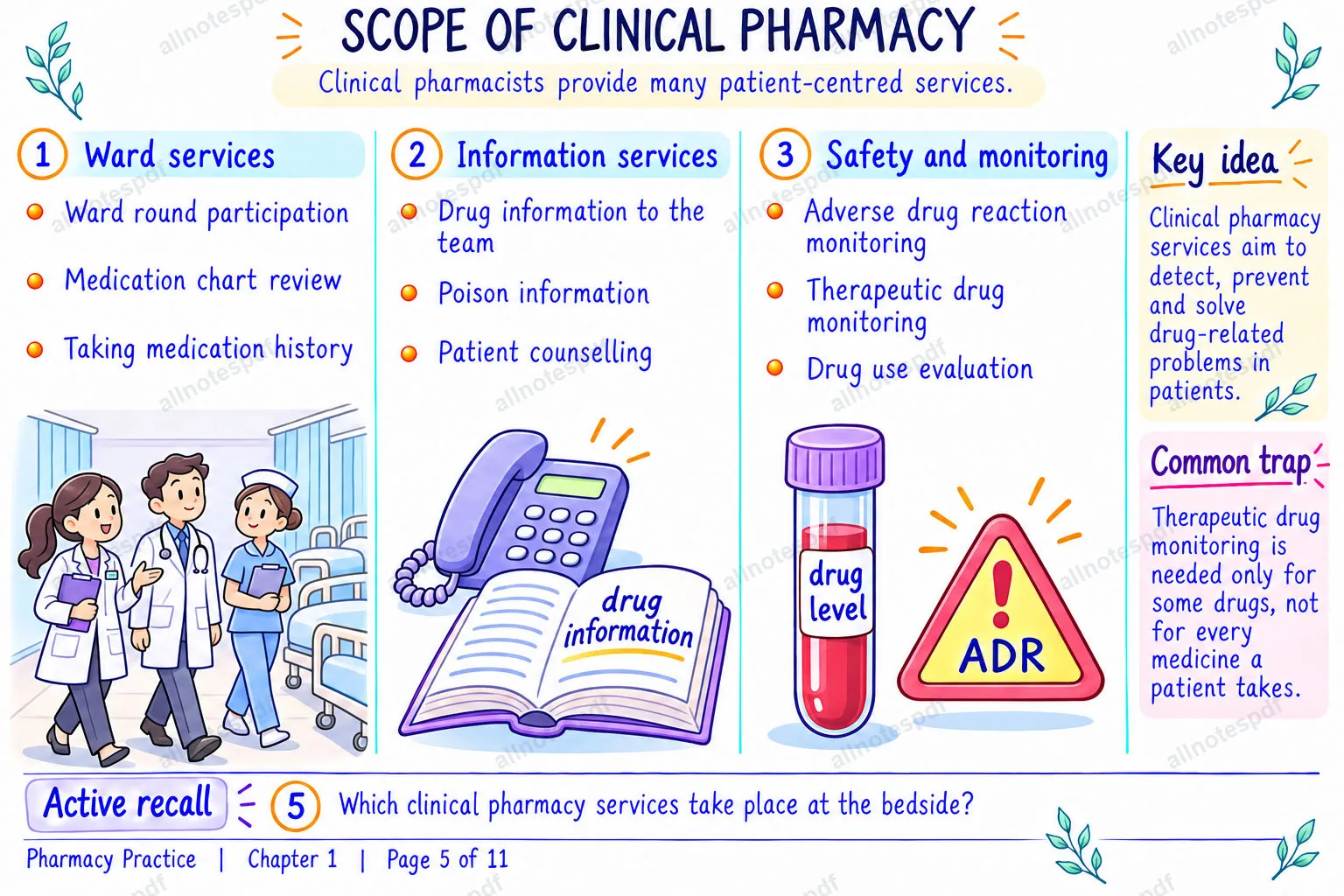
Covers clinical pharmacy services: concept of clinical pharmacy, drug therapy monitoring by medication chart review, clinical review, pharmacist interventions, ward round participation, medication history and pharmaceutical care.
Covers drug information services with the modified systematic approach and information resources, drug and poison information centres, drug-related problems with Hepler and Strand categories.
Covers medication adherence and non-adherence: definition, factors influencing non-adherence, pharmacist's role, monitoring and assessment tools (pill count, Morisky scale, refill records) and strategies to overcome non-adherence.
Covers patient counselling techniques and communication skills: definition, steps of counselling, communication with prescribers and patients, educational materials, barriers to counselling and strategies to overcome them.
Covers health screening services: definition and importance, screening of blood pressure, blood sugar, body mass index and lung function, role of the pharmacist in screening, and telemedicine.
Covers prescribing guidelines for paediatrics, geriatrics, pregnancy and lactation, ISMP high-alert medicines, the WHO essential medicines concept with its principles and features.
Covers rational use of medicines: antibiotics and antibiotic stewardship, injections, OTC drugs, consequences of irrational drug use, and dose calculations in chemotherapy by body surface area.
What you get
- Format
- Downloadable PDF (not a printed book)
- Chapters
- 17 chapter PDFs, one per syllabus unit topic
- Syllabus
- B Pharm Semester 7, PCI NEP-2020 syllabus for Pharmacy Practice
- Style
- Handwritten-style notes with colour diagrams, flowcharts and formula boxes
- Devices
- Phone, tablet and laptop. Print any chapter if you like
- Access
- Lifetime. Download again anytime from My library
- Instant downloadRight after payment
- Free updatesCorrections added free
- Secure paymentUPI, cards, net banking