
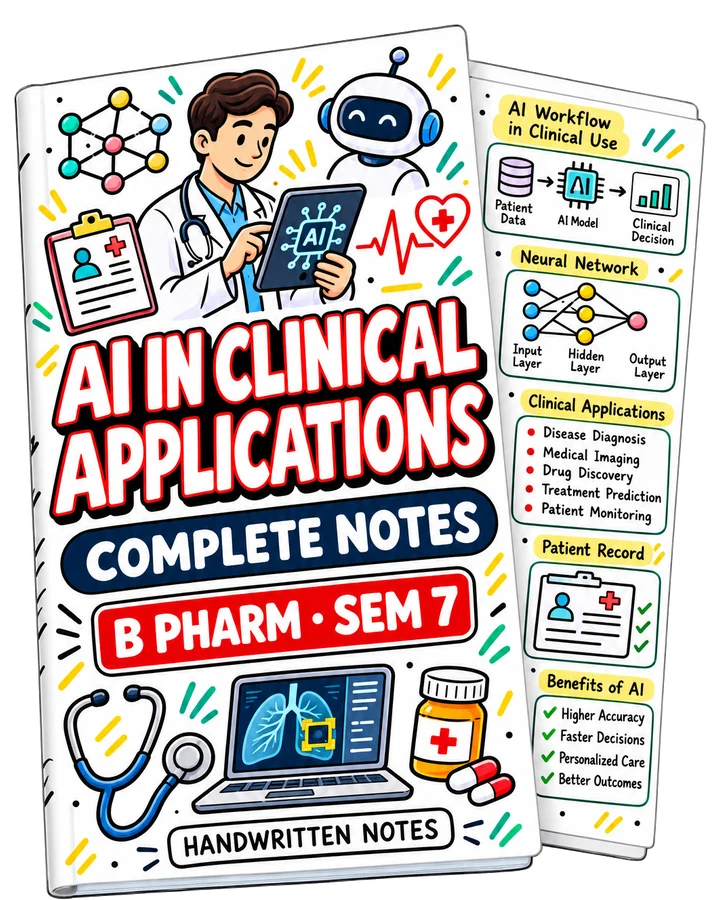
B Pharm · PCI syllabus · Handwritten PDF notes
B Pharm Semester 7AI in Clinical Applications Notes
Instant PDF download after payment. Pay once, keep forever.
- Instant download
- Lifetime access
- UPI, GPay, PhonePe, cards
Watch before you buy
Students on All Notes PDF
Real students talking about how they revise with our handwritten notes.
How it works
Get your notes in 3 easy steps
No app, no waiting. The whole thing takes under a minute.
- STEP 110 sec
Choose your notes
One subject, any two, or a full class set.
- STEP 230 sec
Pay with UPI or card
GPay, PhonePe, Paytm or card. Pay once, no subscription.
- STEP 3Instant
Download your PDFs
Tap Download on any chapter. Links never expire.
- Log in
- My library
- Download
Complete coverage
All 11 chapters, one PDF each
See every downloadable PDF included with B Pharm Semester 7 AI in Clinical Applications, organised chapter by chapter.
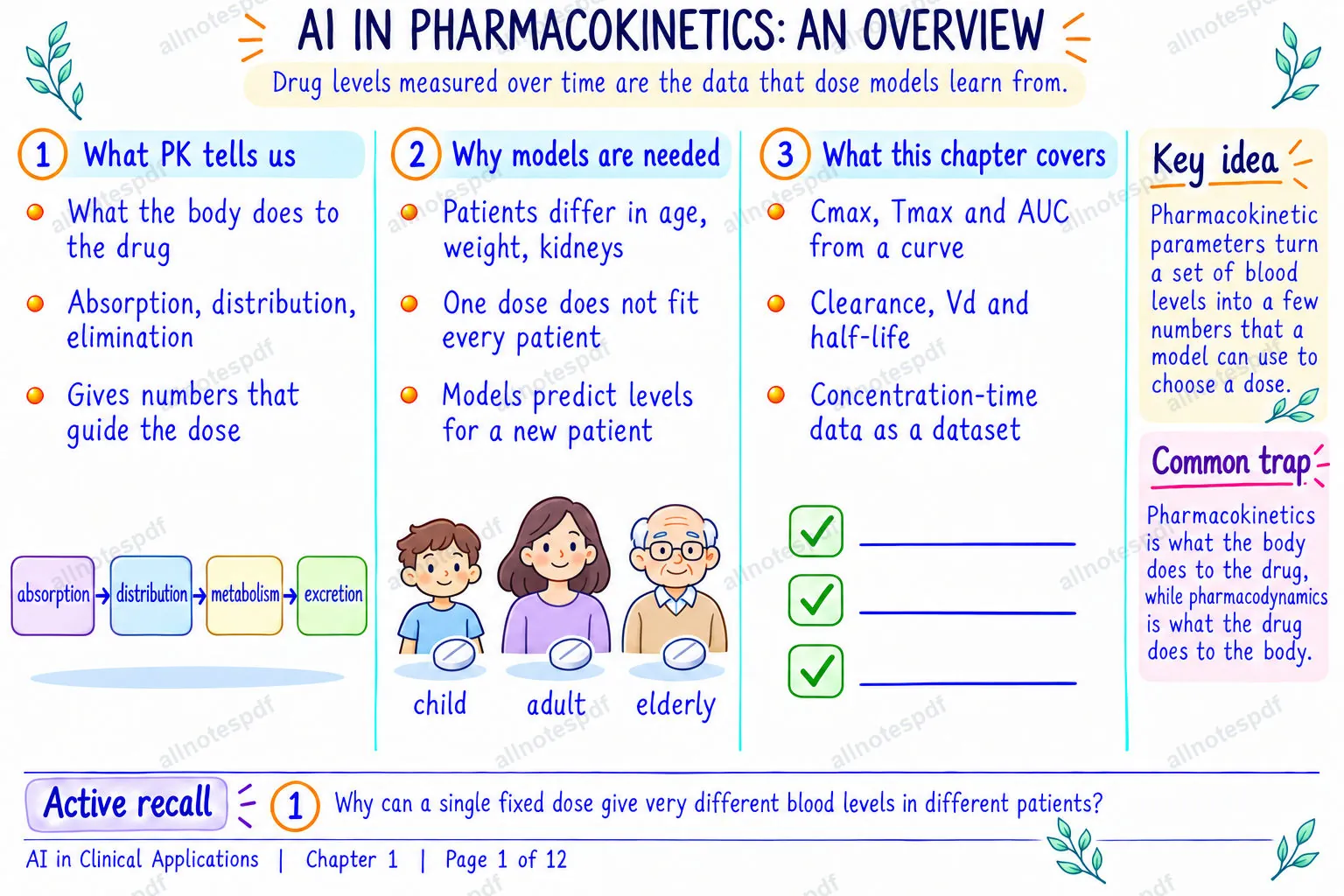
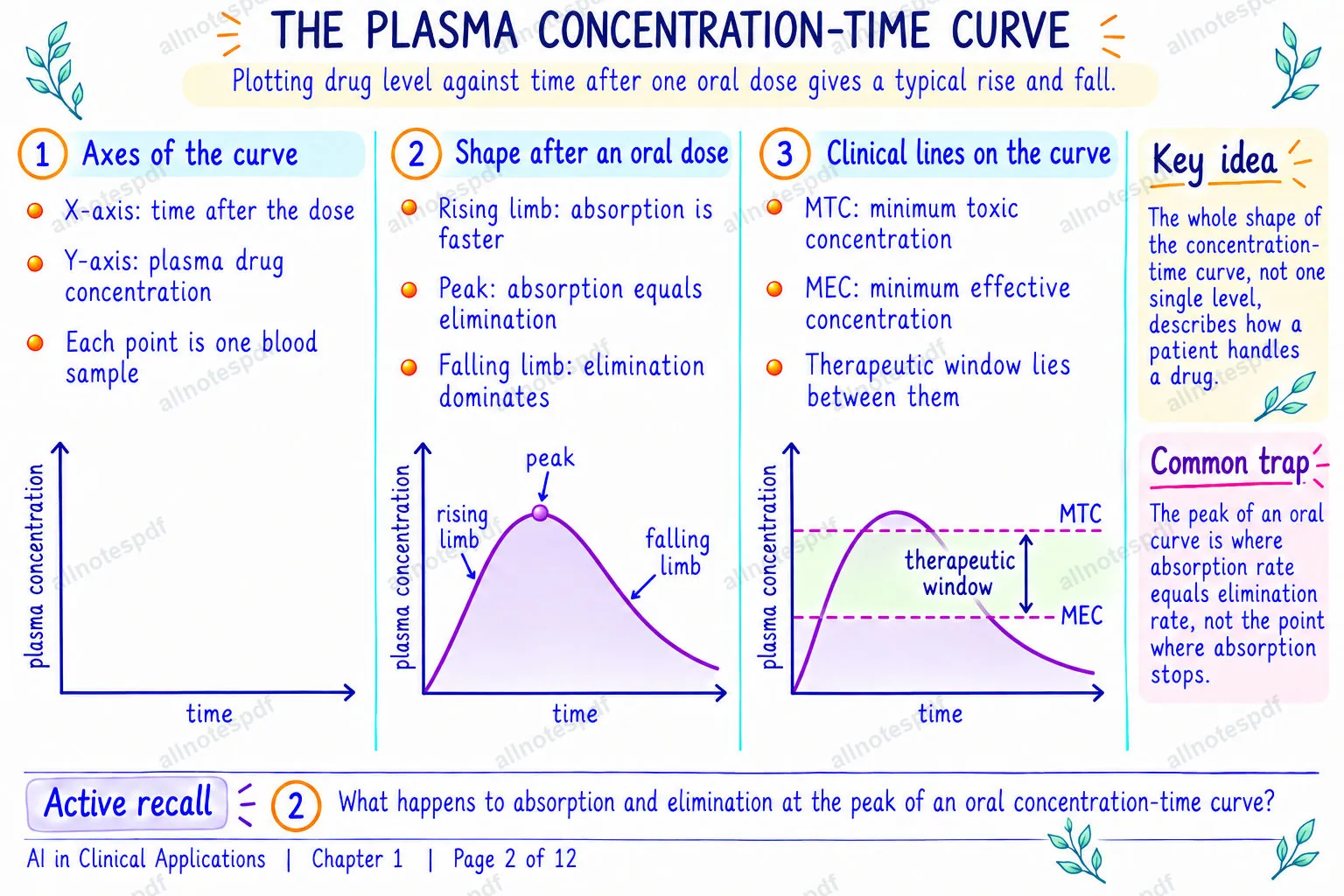
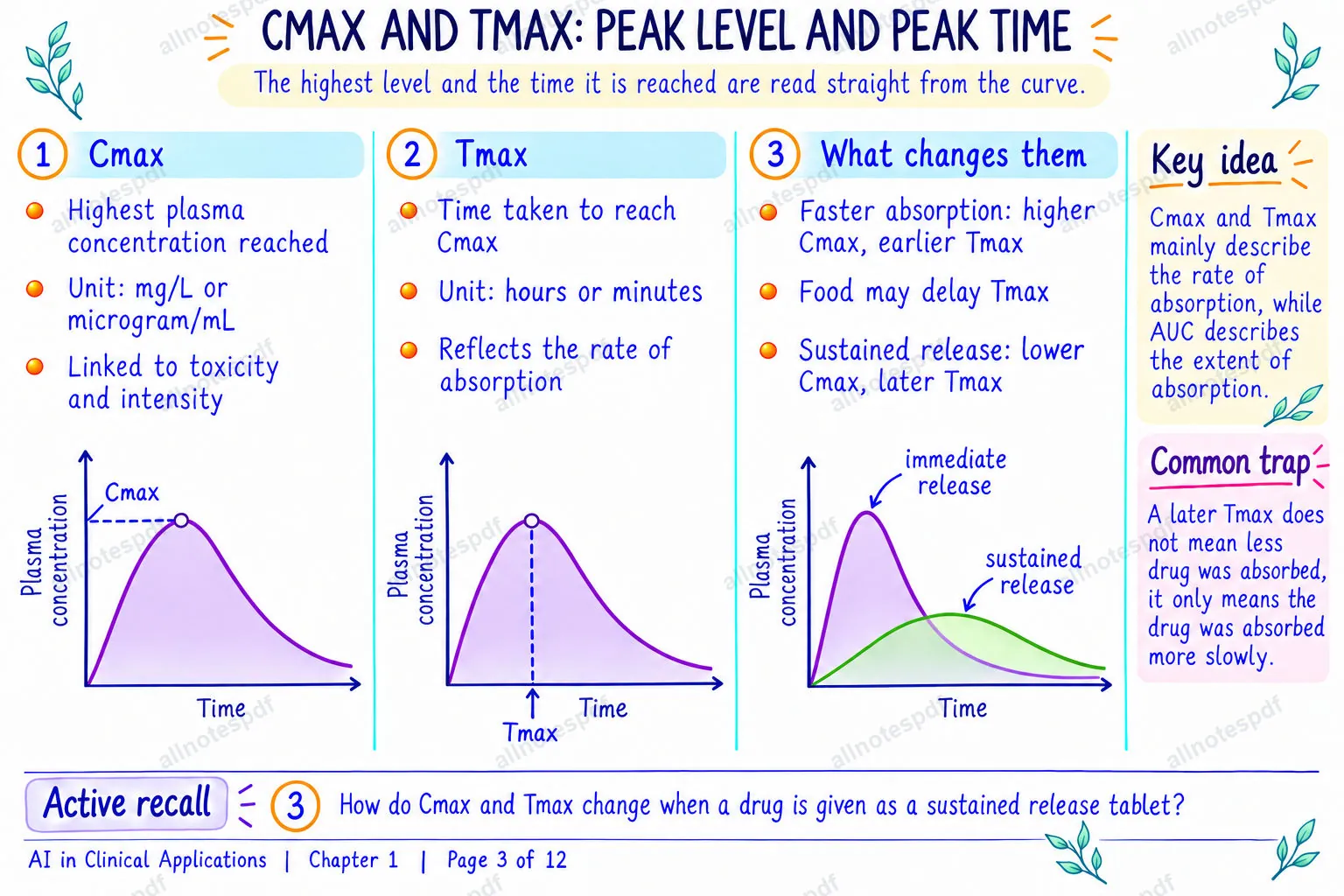
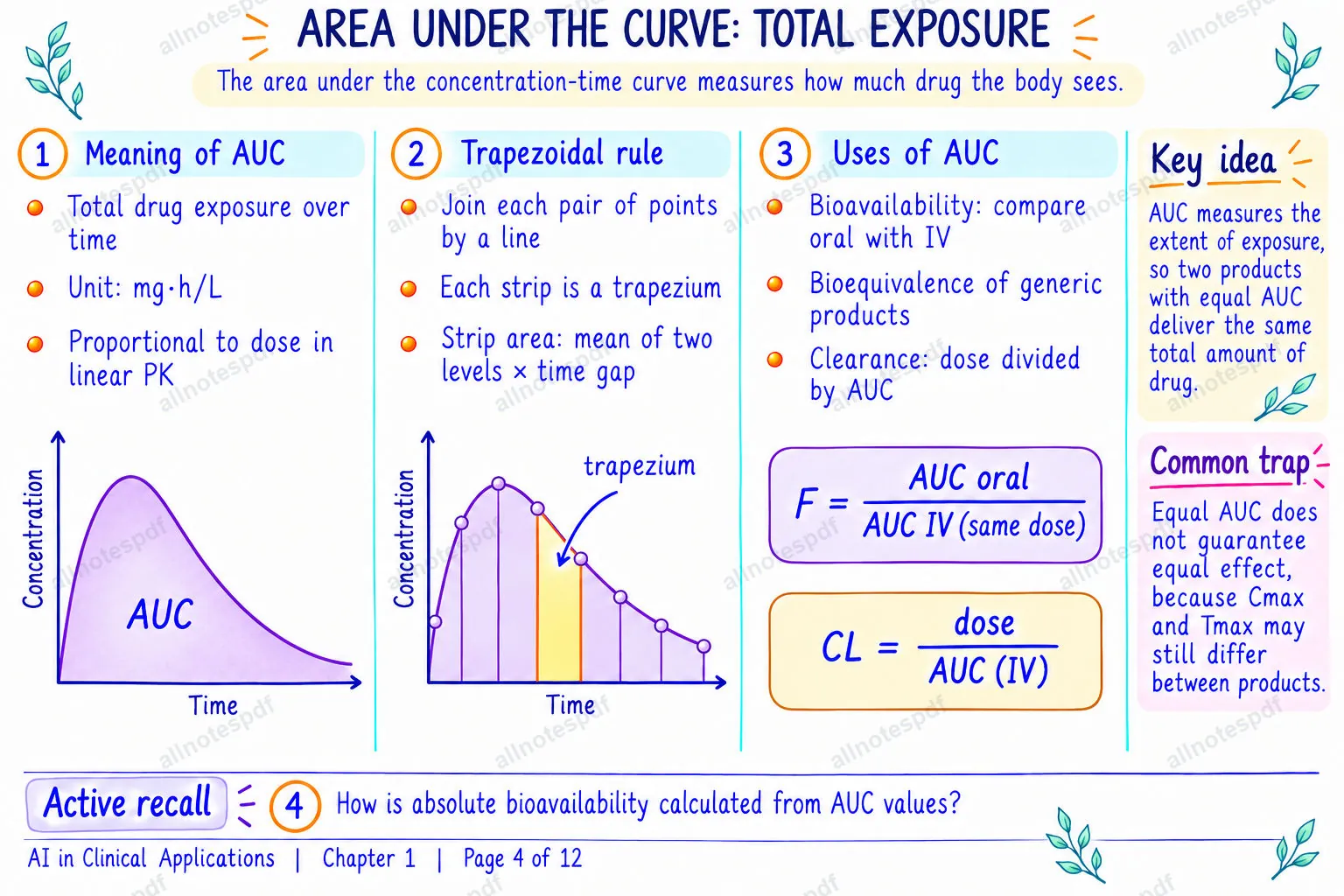
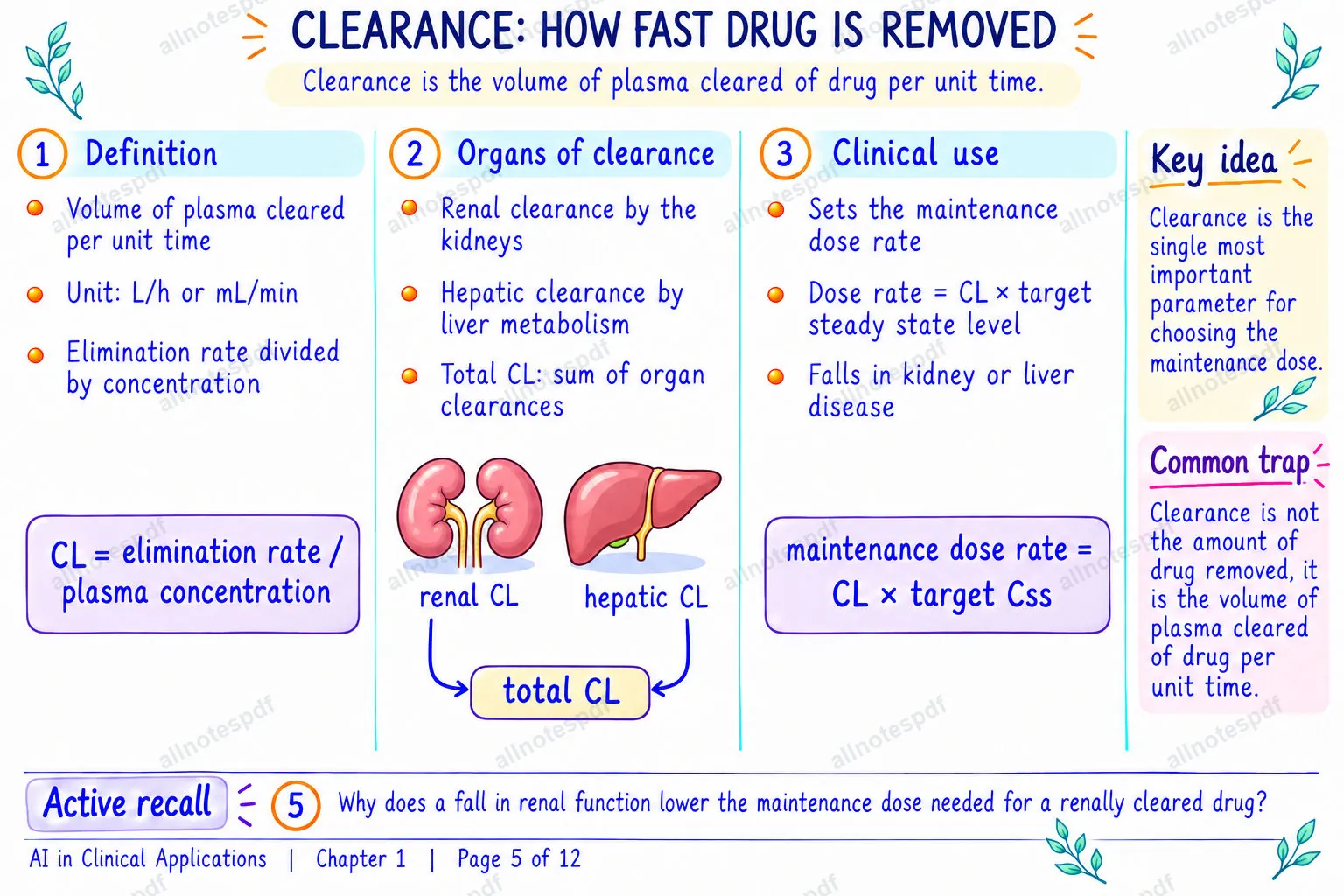
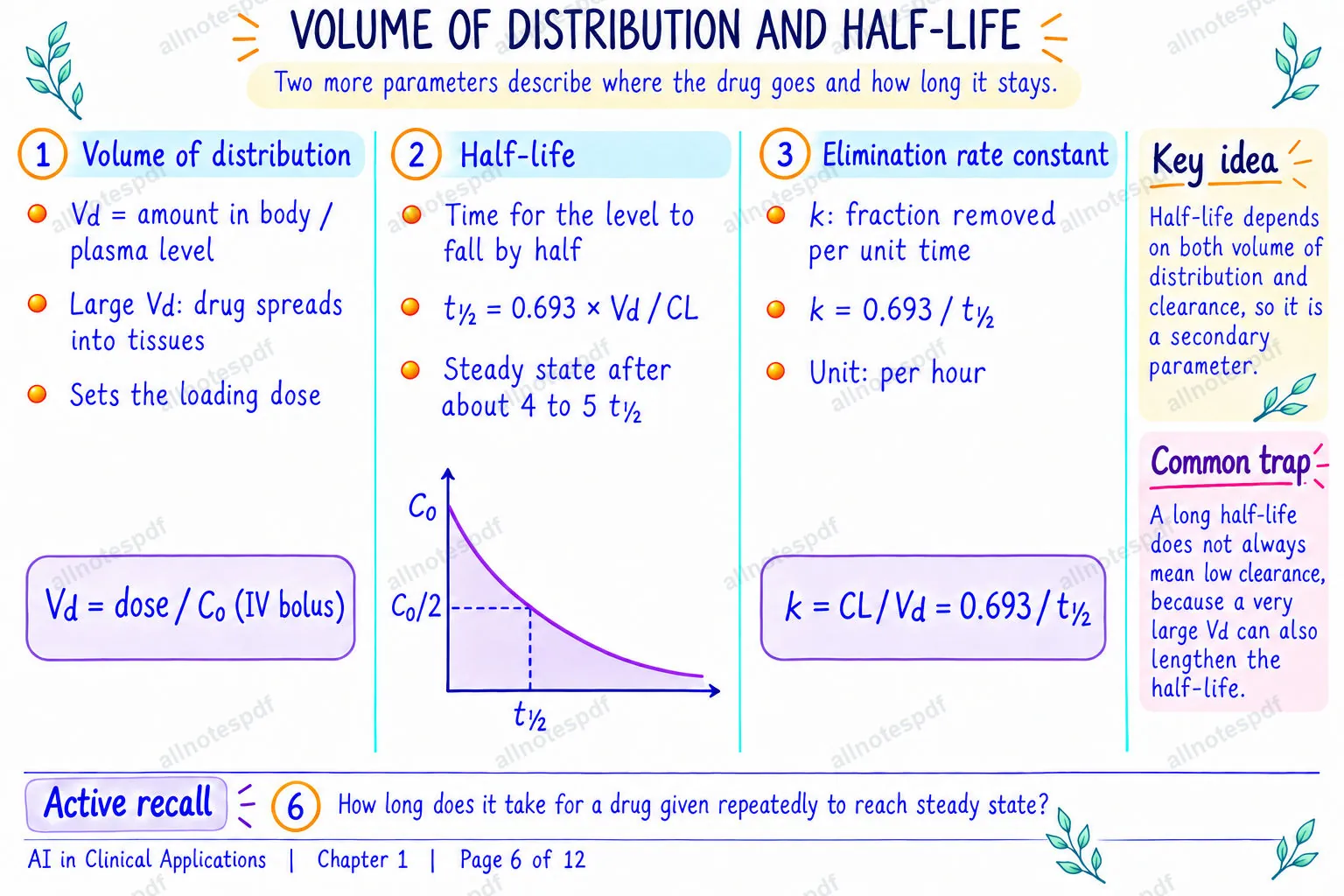
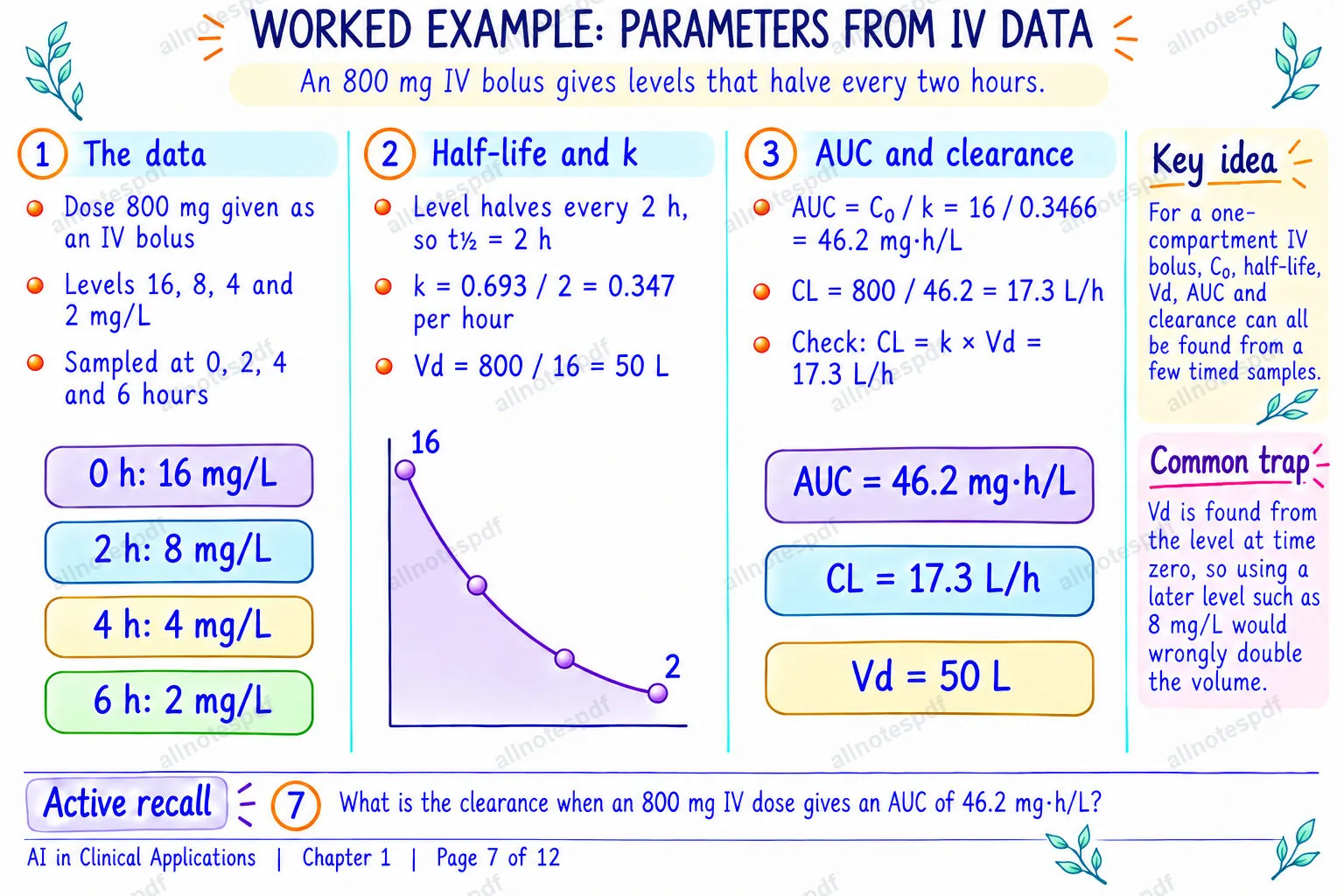
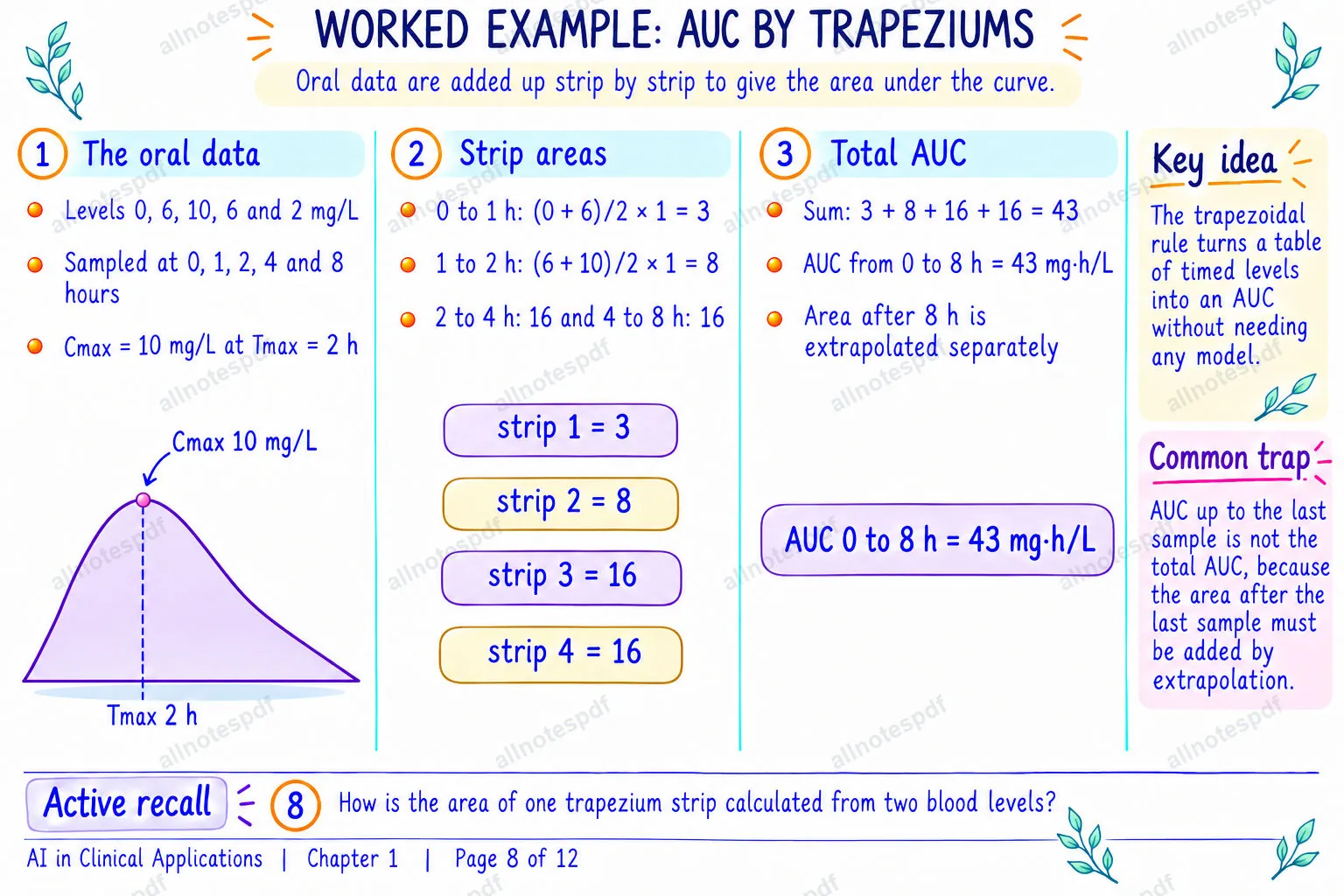
Covers review of pharmacokinetic parameters Cmax, Tmax, AUC, clearance, volume of distribution and half-life, the concentration-time curve.
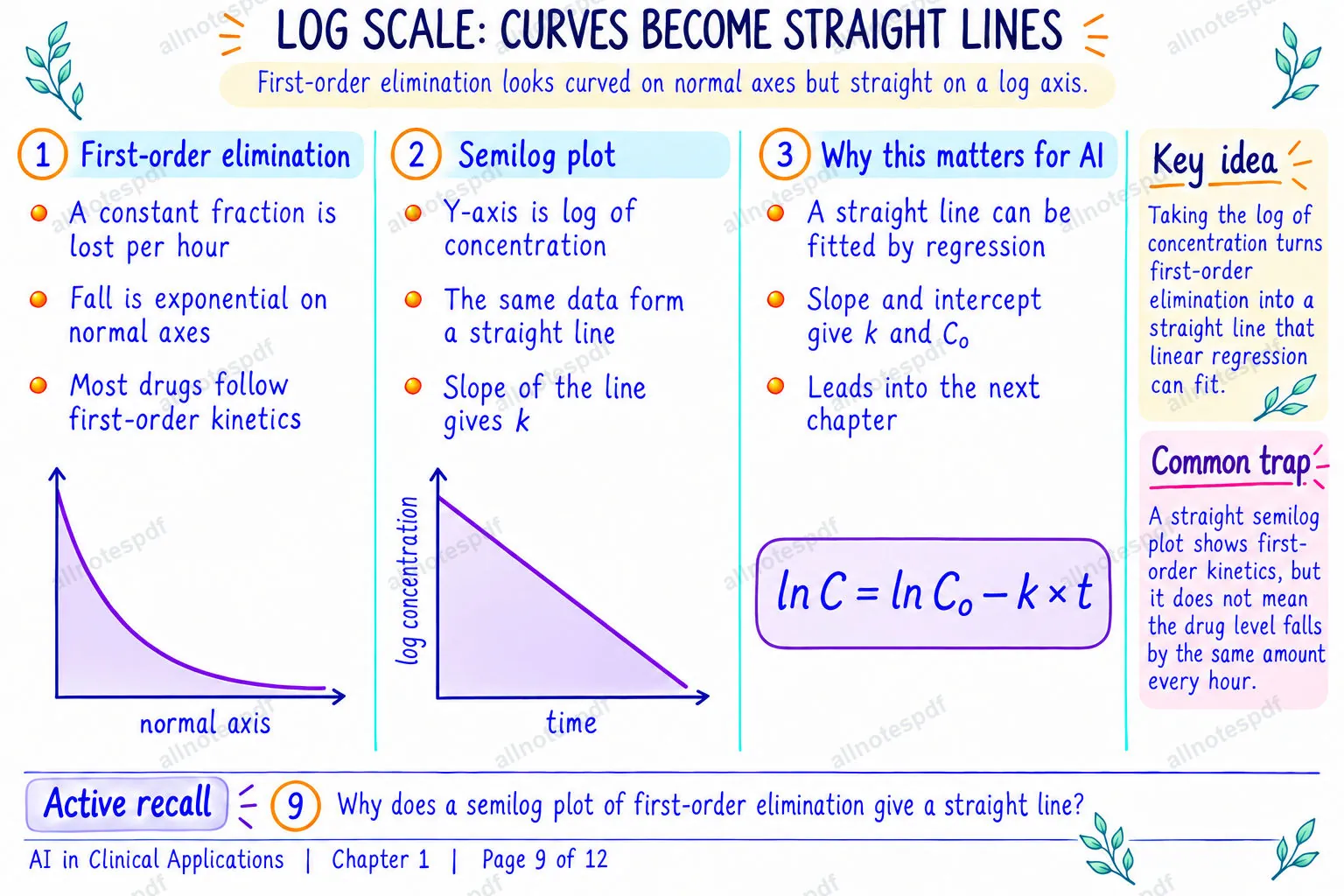
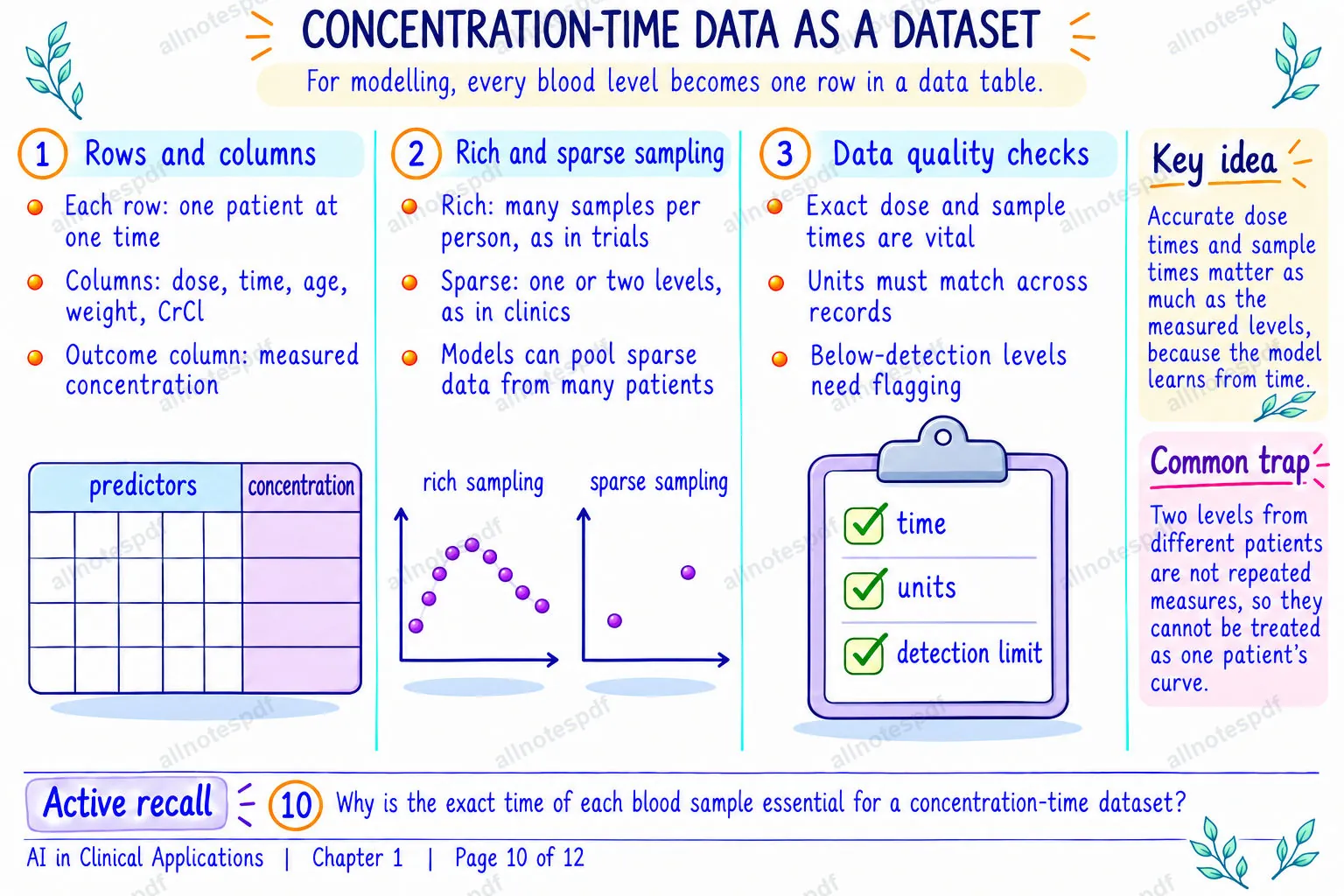
Covers simple linear regression, fitting log concentration against time, multiple regression for dose adjustment using age, body weight and renal function, creatinine clearance.
Covers residuals and residual plots, RMSE, MAE and R² with worked examples, limitations of linear modelling in nonlinear pharmacokinetics such as Michaelis-Menten saturable elimination, and choice of nonlinear, compartmental.
Covers overview of pharmacovigilance systems, spontaneous reports and ICSRs, structure and data formats of FAERS and EudraVigilance, MedDRA and E2B coding, data quality problems.
Covers why linear regression fails for yes or no outcomes, probability, odds and log-odds, the logistic equation and sigmoid curve, predictors and outcome, coefficients as odds ratios, a worked ADR risk calculation.
Covers the confusion matrix, accuracy and the accuracy paradox, sensitivity, specificity, precision, recall, NPV and F1 score with a worked ADR example, trade-offs between metrics.
Covers concept of precision medicine, sources of variation in drug response, patient covariates such as age, body size, organ function, comorbidity and co-medication, genotype and metaboliser phenotypes.
Covers logistic regression for disease risk prediction with a worked example and risk bands, classification of responders and non-responders, ROC curve, AUC or c-statistic, threshold choice with the Youden index, calibration.
Covers structure of electronic health records, structured and unstructured data, coding standards, EHR data for modelling, clinical decision support systems and their types, medication alerts for dose, interaction and allergy checks.
Covers real-world data sources and real-world evidence, comparison with randomised trials, real-world data analytics with an adherence worked example, data challenges, limitations of AI in clinical environments, dataset shift.
Covers steps of a guided supervised learning project: defining the problem, choosing a public dataset, predictor and outcome variables, preprocessing, data splitting and model choice, evaluation metrics.
What you get
- Format
- Downloadable PDF (not a printed book)
- Chapters
- 11 chapter PDFs, one per syllabus unit topic
- Syllabus
- B Pharm Semester 7, PCI NEP-2020 syllabus for AI in Clinical Applications
- Style
- Handwritten-style notes with colour diagrams, flowcharts and formula boxes
- Devices
- Phone, tablet and laptop. Print any chapter if you like
- Access
- Lifetime. Download again anytime from My library
- Instant downloadRight after payment
- Free updatesCorrections added free
- Secure paymentUPI, cards, net banking