
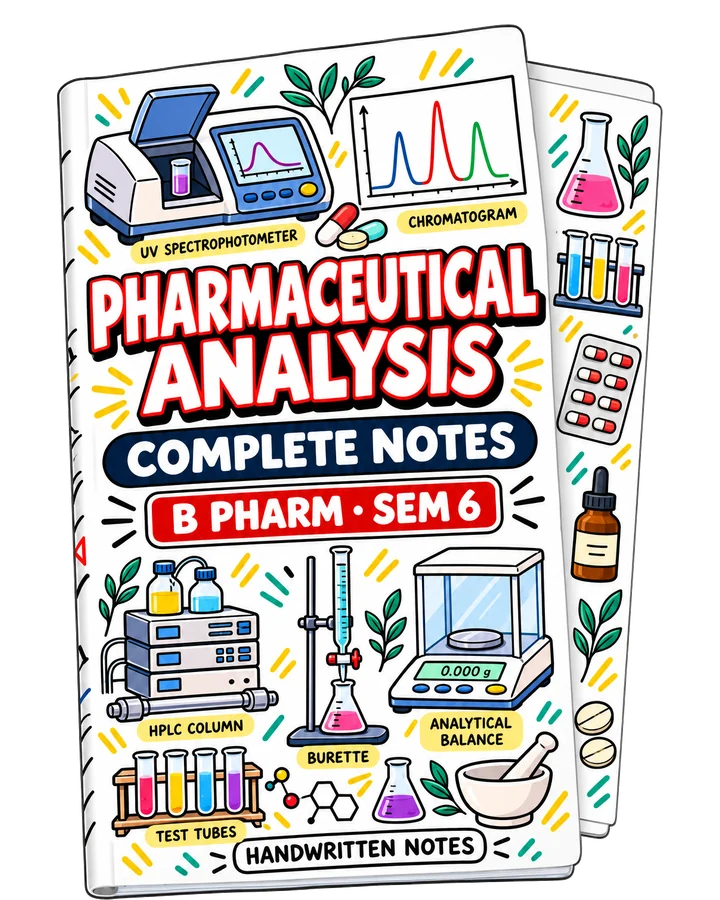
B Pharm · PCI syllabus · Handwritten PDF notes
B Pharm Semester 6Pharmaceutical Analysis Notes
Instant PDF download after payment. Pay once, keep forever.
- Instant download
- Lifetime access
- UPI, GPay, PhonePe, cards
Watch before you buy
Students on All Notes PDF
Real students talking about how they revise with our handwritten notes.
How it works
Get your notes in 3 easy steps
No app, no waiting. The whole thing takes under a minute.
- STEP 110 sec
Choose your notes
One subject, any two, or a full class set.
- STEP 230 sec
Pay with UPI or card
GPay, PhonePe, Paytm or card. Pay once, no subscription.
- STEP 3Instant
Download your PDFs
Tap Download on any chapter. Links never expire.
- Log in
- My library
- Download
Complete coverage
All 15 chapters, one PDF each
See every downloadable PDF included with B Pharm Semester 6 Pharmaceutical Analysis, organised chapter by chapter.
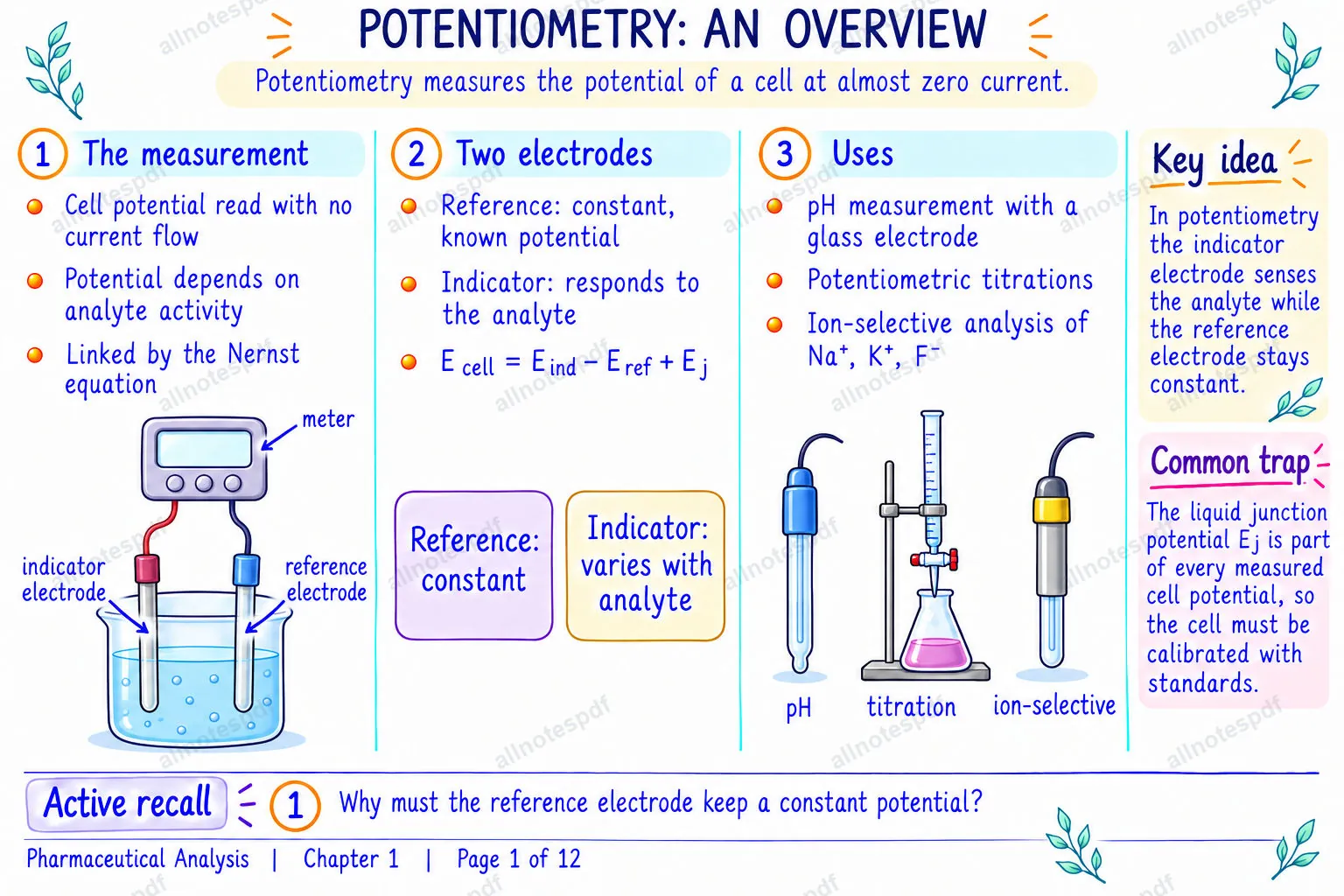
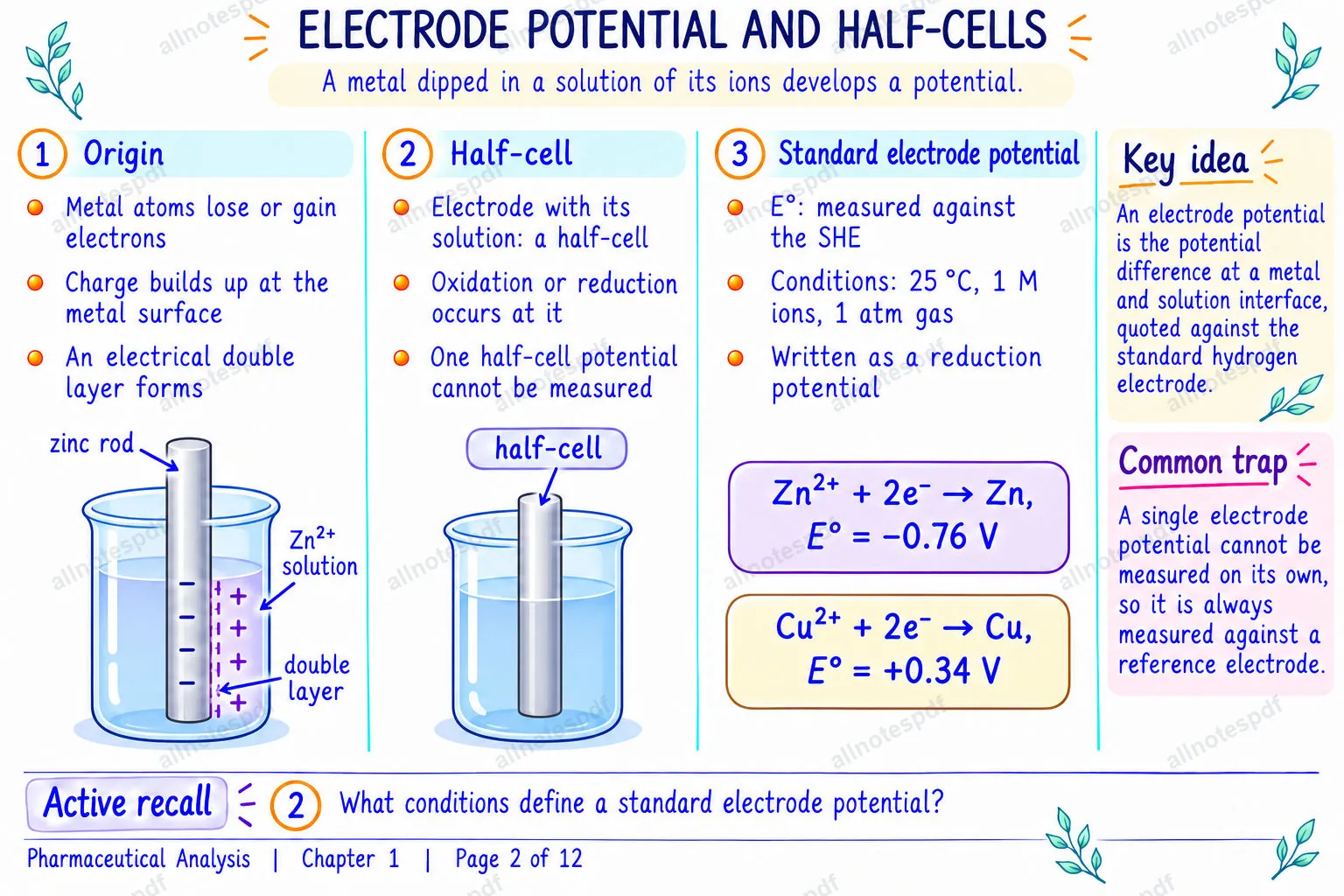
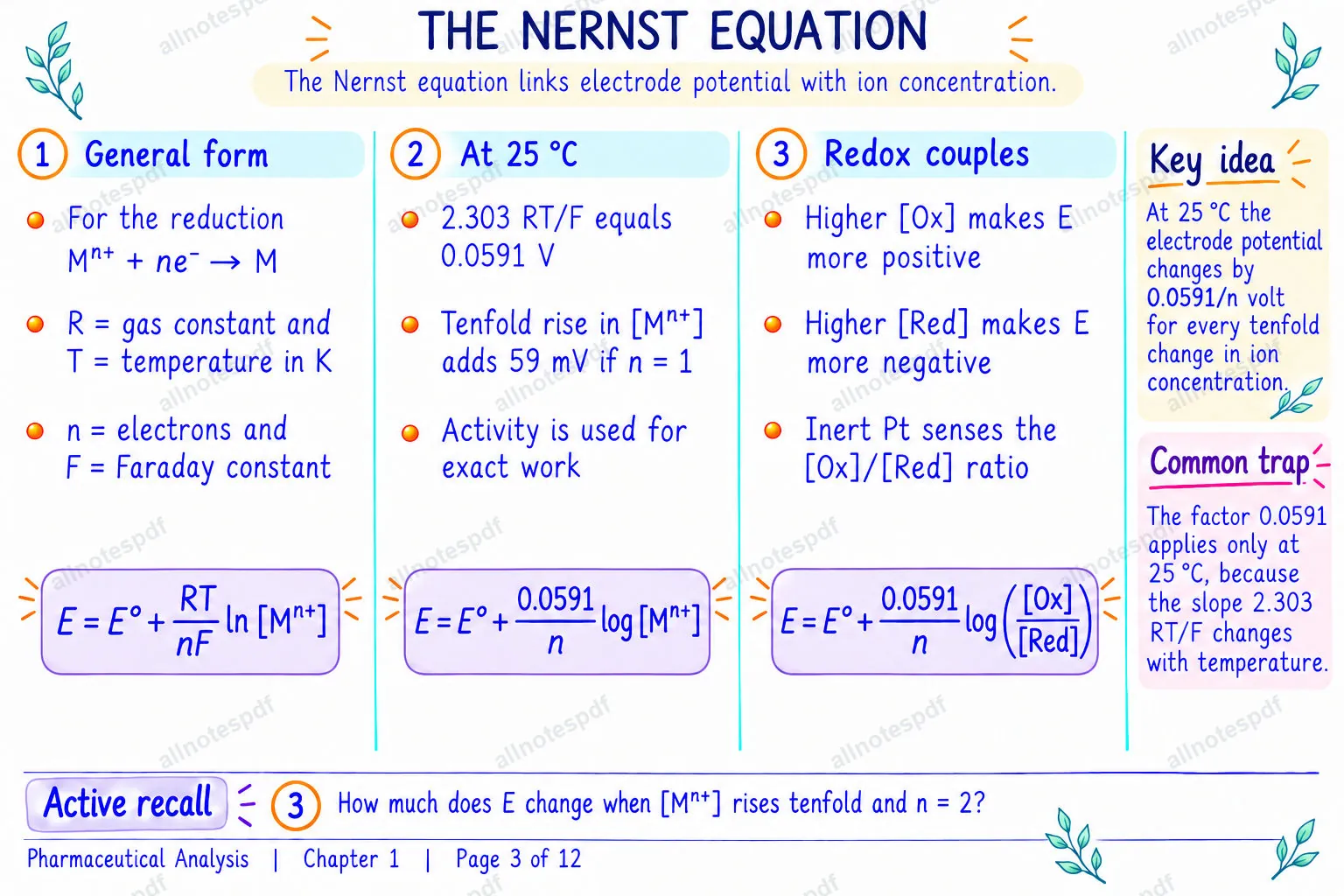
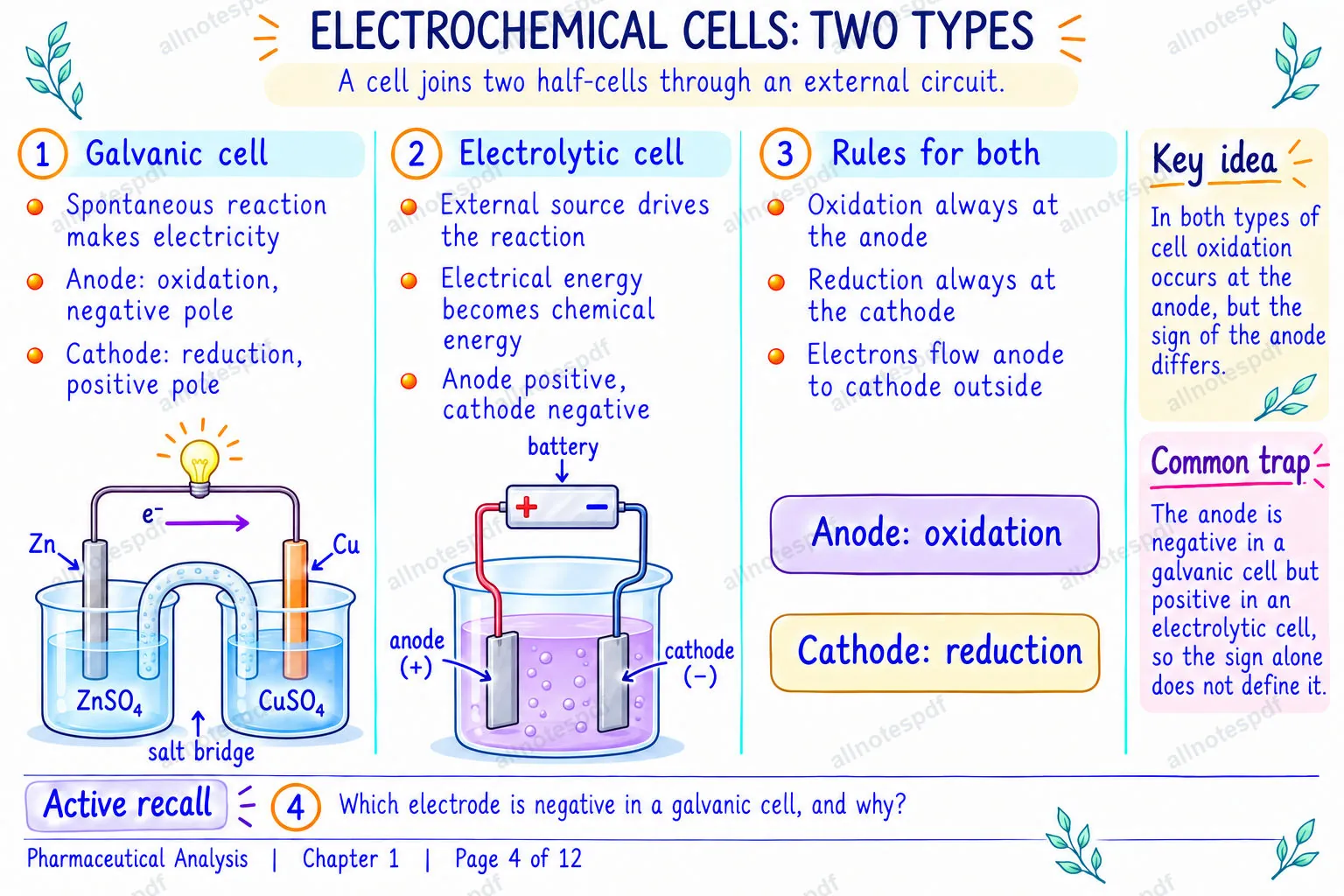
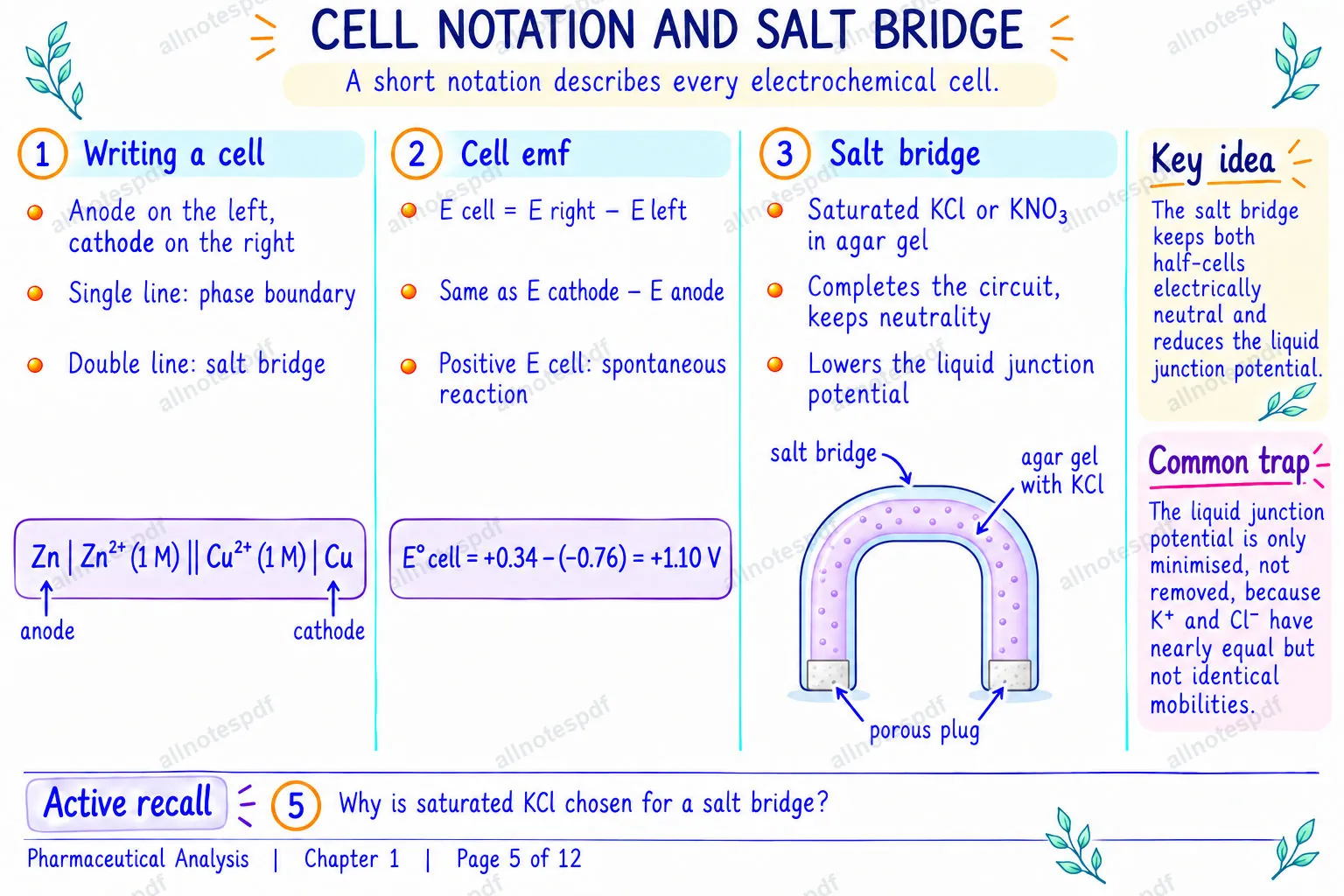
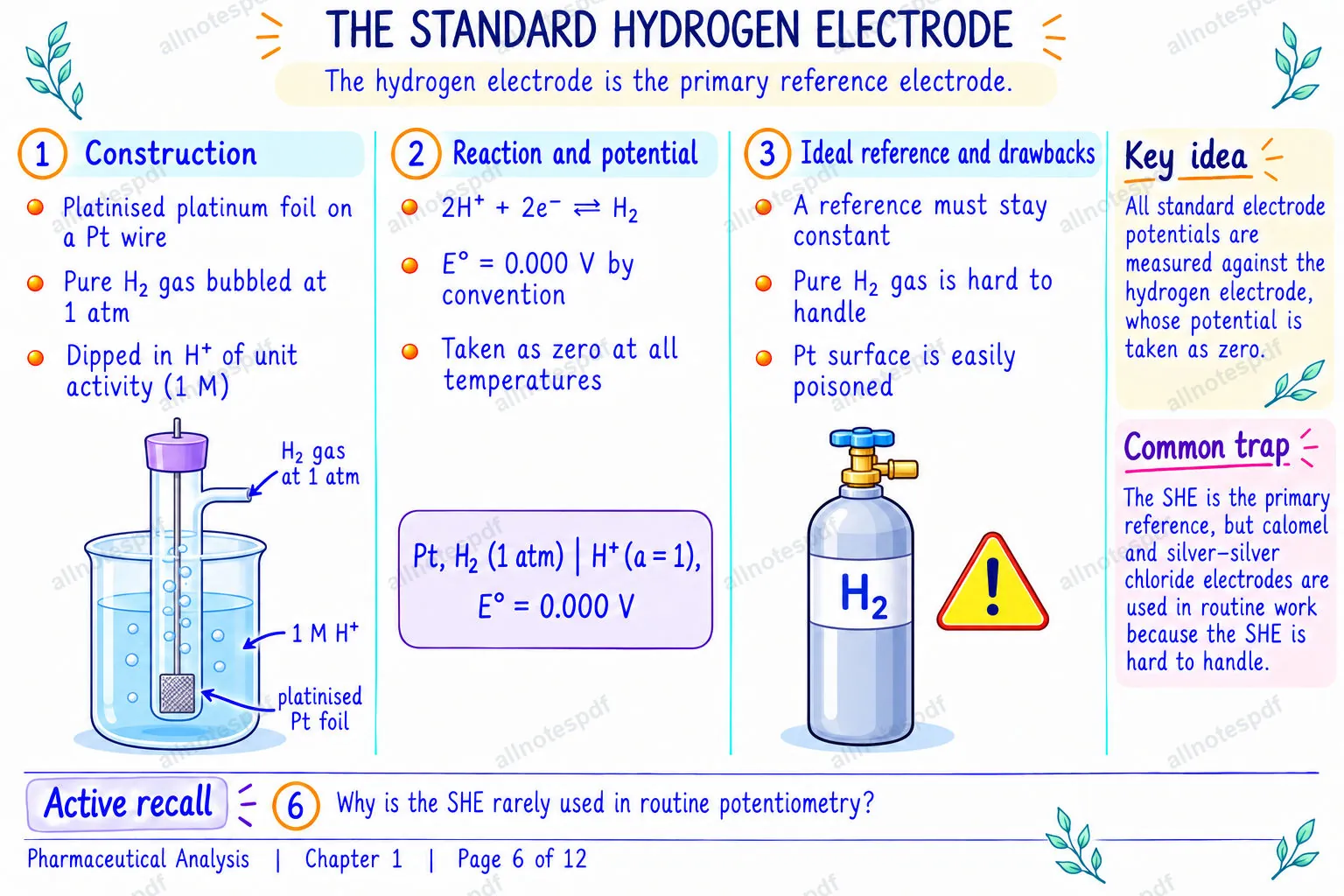
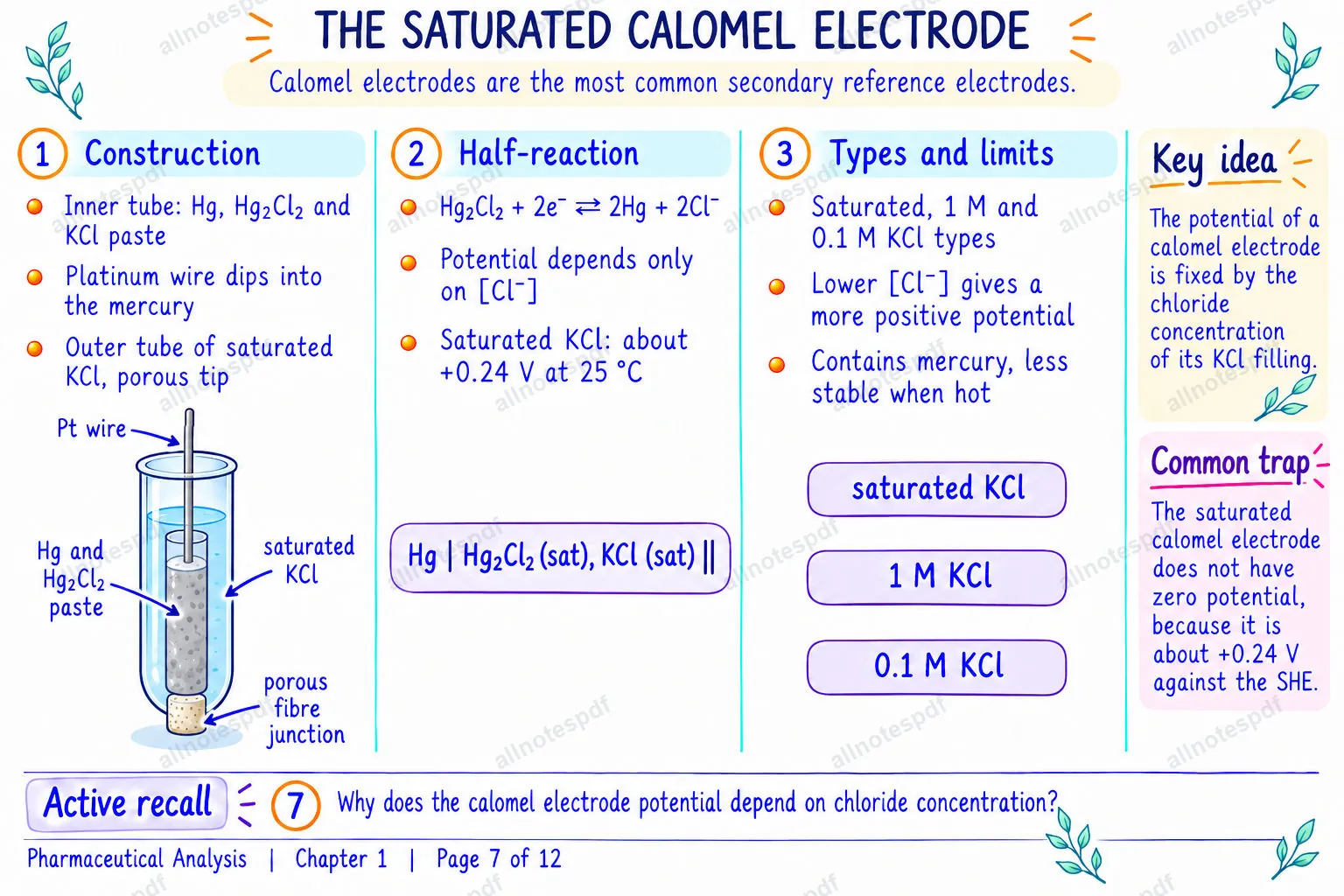
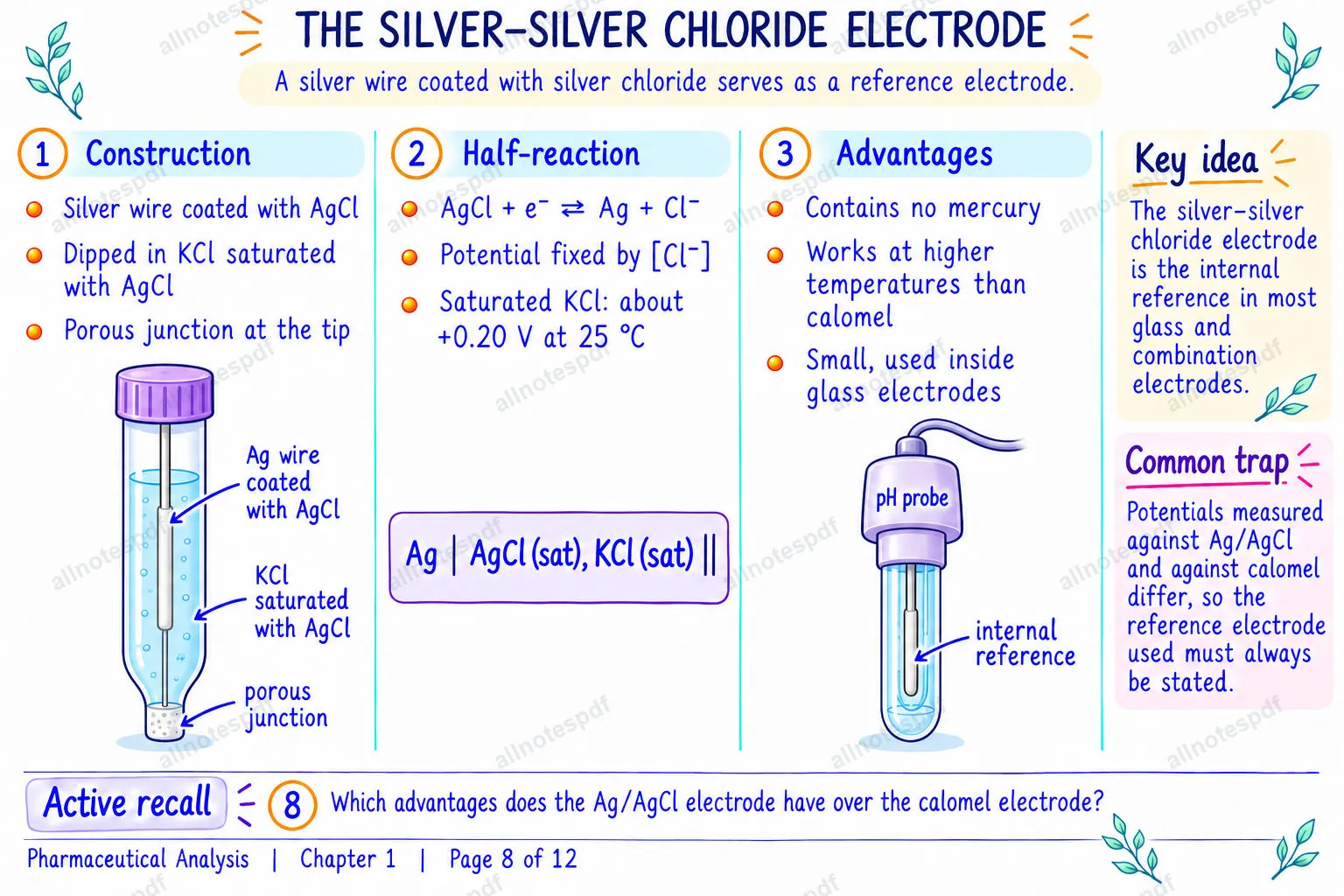
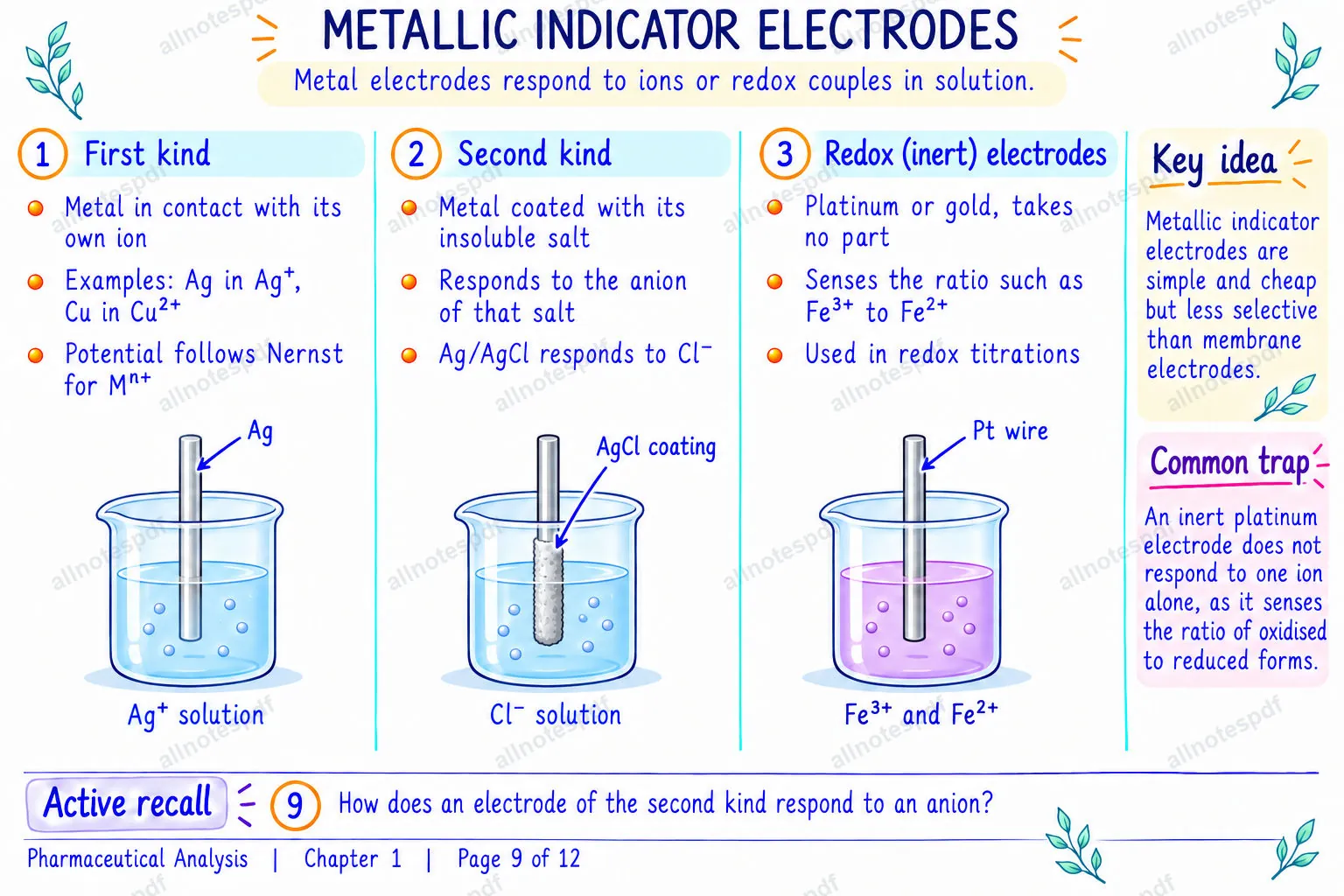
Covers potentiometry: electrode potential, Nernst equation, galvanic and electrolytic cells, cell notation and salt bridge, reference electrodes (standard hydrogen, calomel.
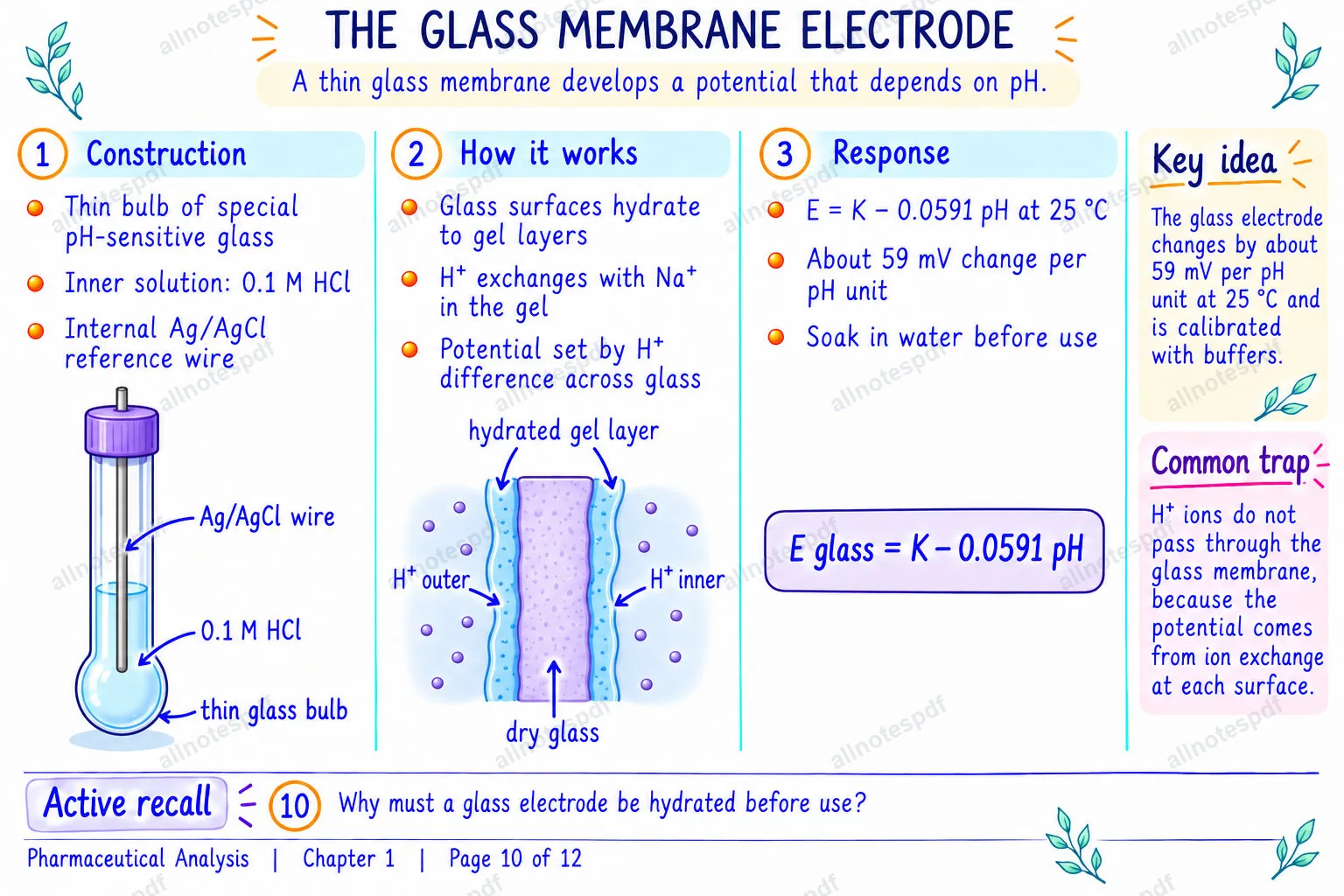
Covers measurement of potential and pH, the pH meter and pH electrodes, potentiometric titrations of acid–base, redox and precipitation types, end-point detection by direct, first-derivative and second-derivative plots.
Covers conductometry: conductance, specific, equivalent and molar conductance, cell constant, effect of dilution and ion mobility, the AC conductance bridge and conductivity cell, conductometric titration curves and applications.
Covers polarography: principle, the polarograph, dropping mercury electrode, residual, migration, diffusion and limiting currents, the polarographic wave, half-wave potential, Ilkovic equation (statement only) and applications.
Covers fundamentals of spectroscopy: wave and particle properties of electromagnetic radiation, wavelength, frequency, wavenumber and energy, the electromagnetic spectrum, molecular energy levels.
Covers uV-visible spectroscopy theory: absorbance and transmittance, Beer–Lambert law with its derivation and deviations, electronic transitions, chromophores, auxochromes, spectral shifts and solvent effects.
Covers uV-visible instrumentation: radiation sources, wavelength selectors, sample cells, detectors (phototube, photomultiplier tube, photovoltaic cell, silicon photodiode), single- and double-beam instruments.
Covers iR spectroscopy: principle and regions, Hooke's law, fundamental modes of vibration in polyatomic molecules, factors affecting vibrational frequencies, dispersive IR instrumentation with sample handling techniques.
Covers fluorimetry: luminescence theory, singlet and triplet states, fluorescence intensity, factors affecting fluorescence, quenching, fluorimeter instrumentation and pharmaceutical applications.
Covers flame photometry and atomic absorption spectrometry: theory, events in the flame, nebulisation and burners, flame regions and flame temperatures, interferences, instrumentation and pharmaceutical applications.
Introduction to chromatography, adsorption and partition principles, stationary and mobile phases, development and detection techniques, Rf value and applications of column, paper and thin layer chromatography.
Covers ion-exchange chromatography principle, resin structure and types, properties, factors affecting ion exchange, methodology and applications, gel filtration and affinity chromatography principles and applications.
Covers electrophoresis principle, electrophoretic mobility and the factors affecting it, paper, gel and capillary electrophoresis techniques and their applications.
Covers gas chromatography introduction and theory, retention, plate theory, resolution, van Deemter equation, instrumentation with carrier gas, injector, columns, oven and detectors (FID, TCD, ECD), temperature programming.
Covers high performance liquid chromatography introduction and theory, normal and reversed phase, instrumentation with pumps, injectors, columns and detectors, advantages and applications, and HPTLC principle.
What you get
- Format
- Downloadable PDF (not a printed book)
- Chapters
- 15 chapter PDFs, one per syllabus unit topic
- Syllabus
- B Pharm Semester 6, PCI NEP-2020 syllabus for Pharmaceutical Analysis
- Style
- Handwritten-style notes with colour diagrams, flowcharts and formula boxes
- Devices
- Phone, tablet and laptop. Print any chapter if you like
- Access
- Lifetime. Download again anytime from My library
- Instant downloadRight after payment
- Free updatesCorrections added free
- Secure paymentUPI, cards, net banking