B Pharm · PCI syllabus · Handwritten PDF notes
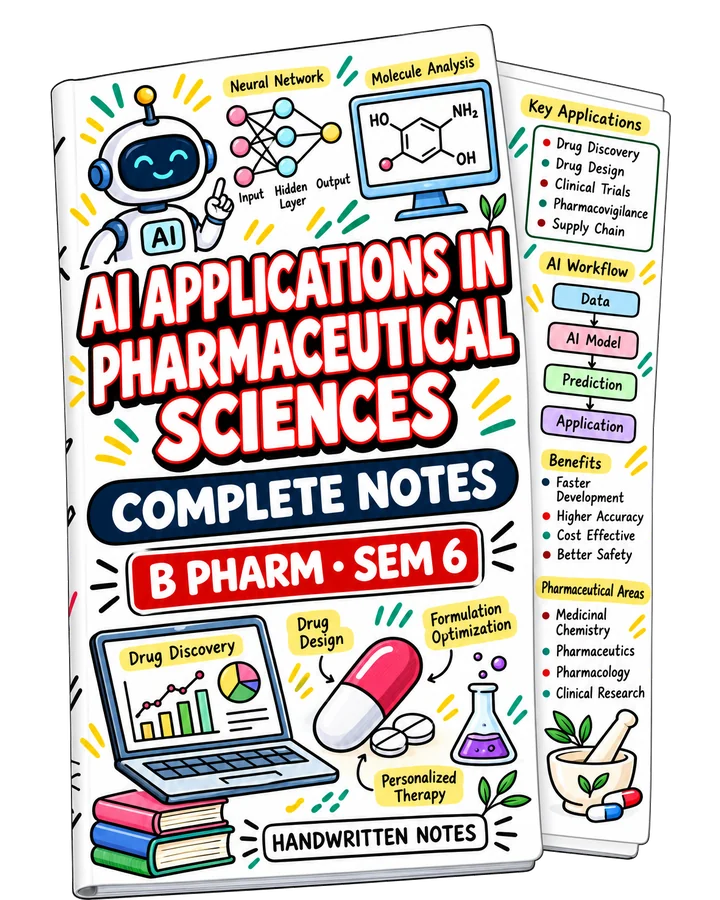
B Pharm Semester 6AI Applications in Pharmaceutical Sciences Notes
Instant PDF download after payment. Pay once, keep forever.
- Instant download
- Lifetime access
- UPI, GPay, PhonePe, cards
Watch before you buy
Students on All Notes PDF
Real students talking about how they revise with our handwritten notes.
How it works
Get your notes in 3 easy steps
No app, no waiting. The whole thing takes under a minute.
- STEP 110 sec
Choose your notes
One subject, any two, or a full class set.
- STEP 230 sec
Pay with UPI or card
GPay, PhonePe, Paytm or card. Pay once, no subscription.
- STEP 3Instant
Download your PDFs
Tap Download on any chapter. Links never expire.
- Log in
- My library
- Download
Complete coverage
All 11 chapters, one PDF each
See every downloadable PDF included with B Pharm Semester 6 AI Applications in Pharmaceutical Sciences, organised chapter by chapter.
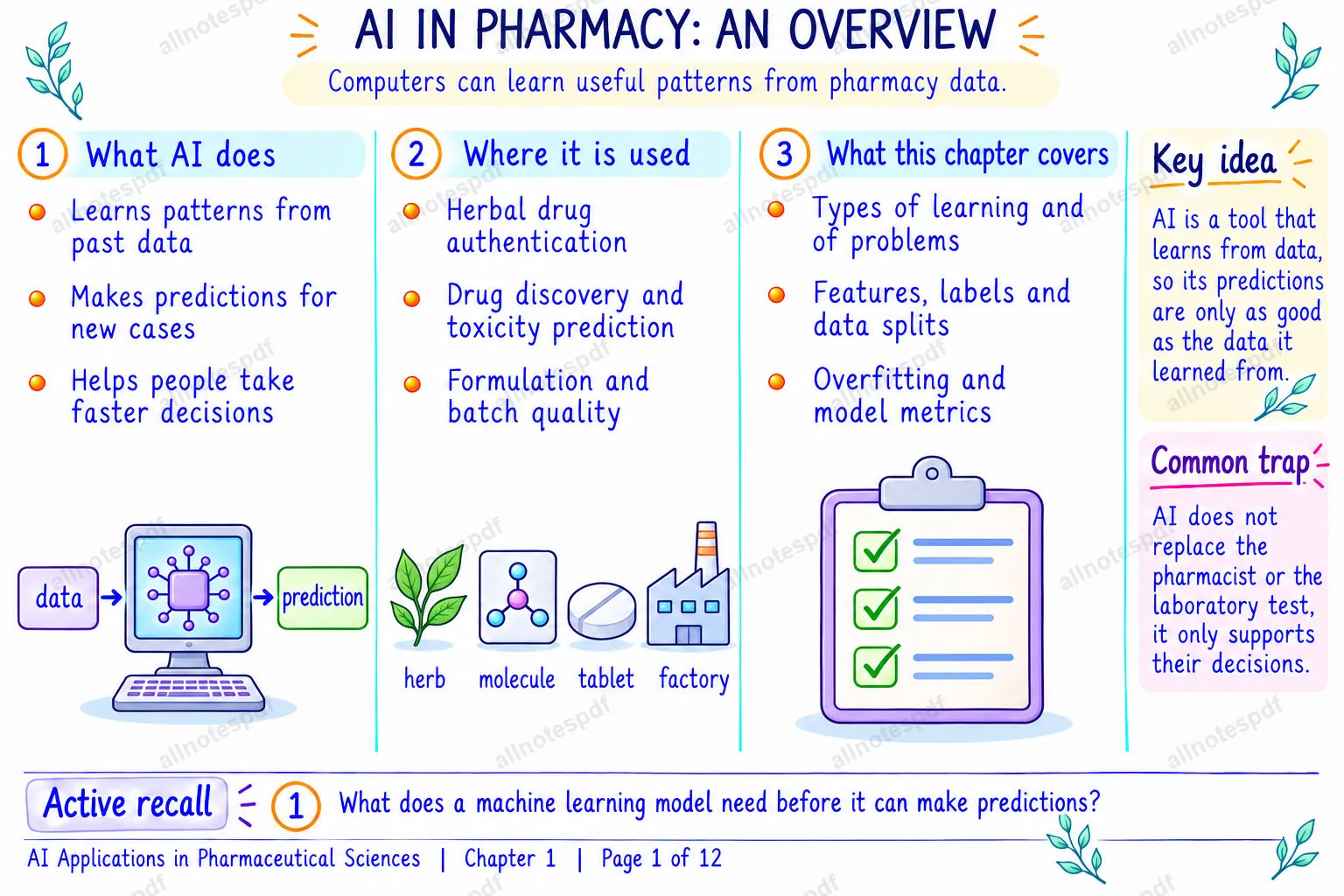
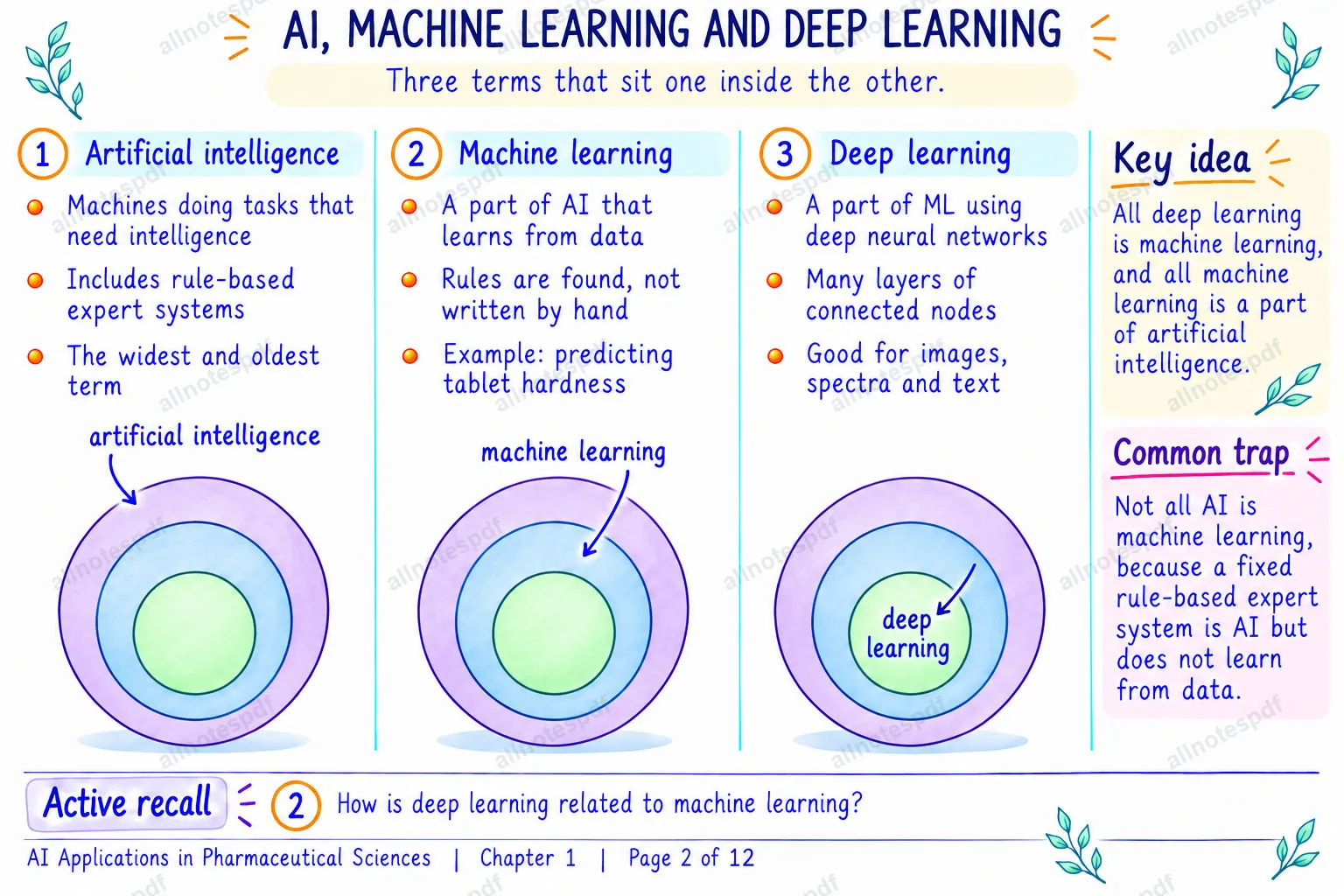
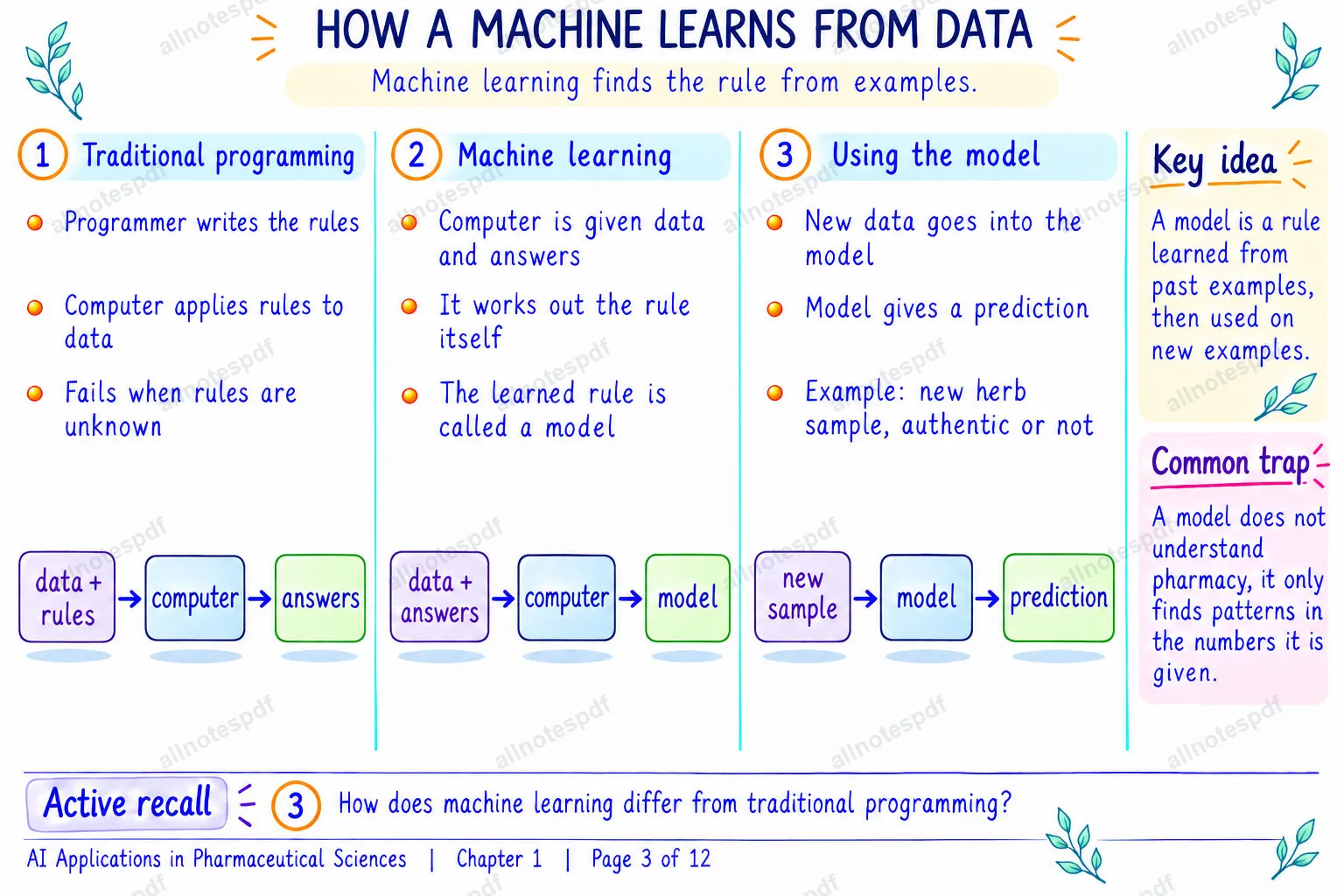
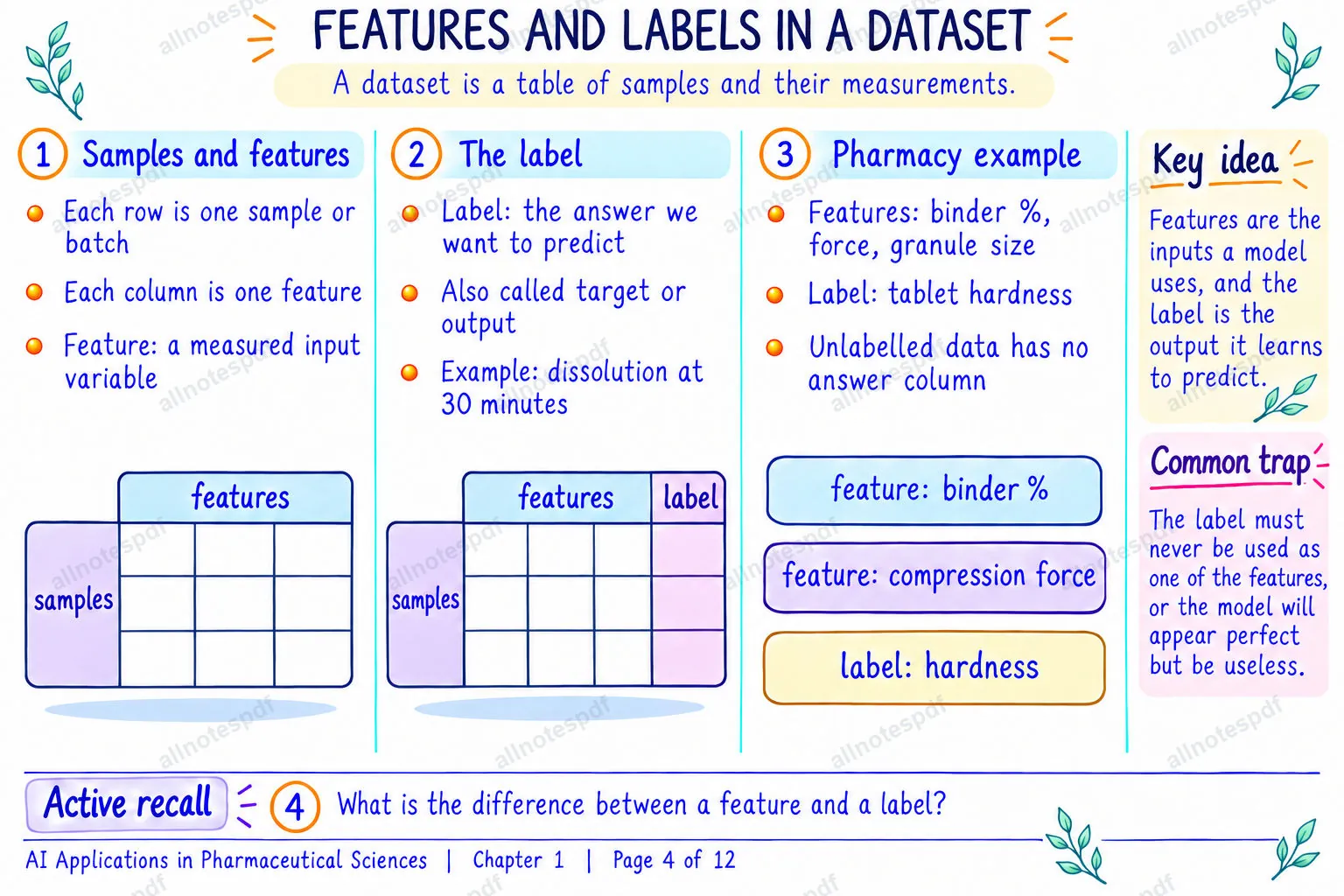
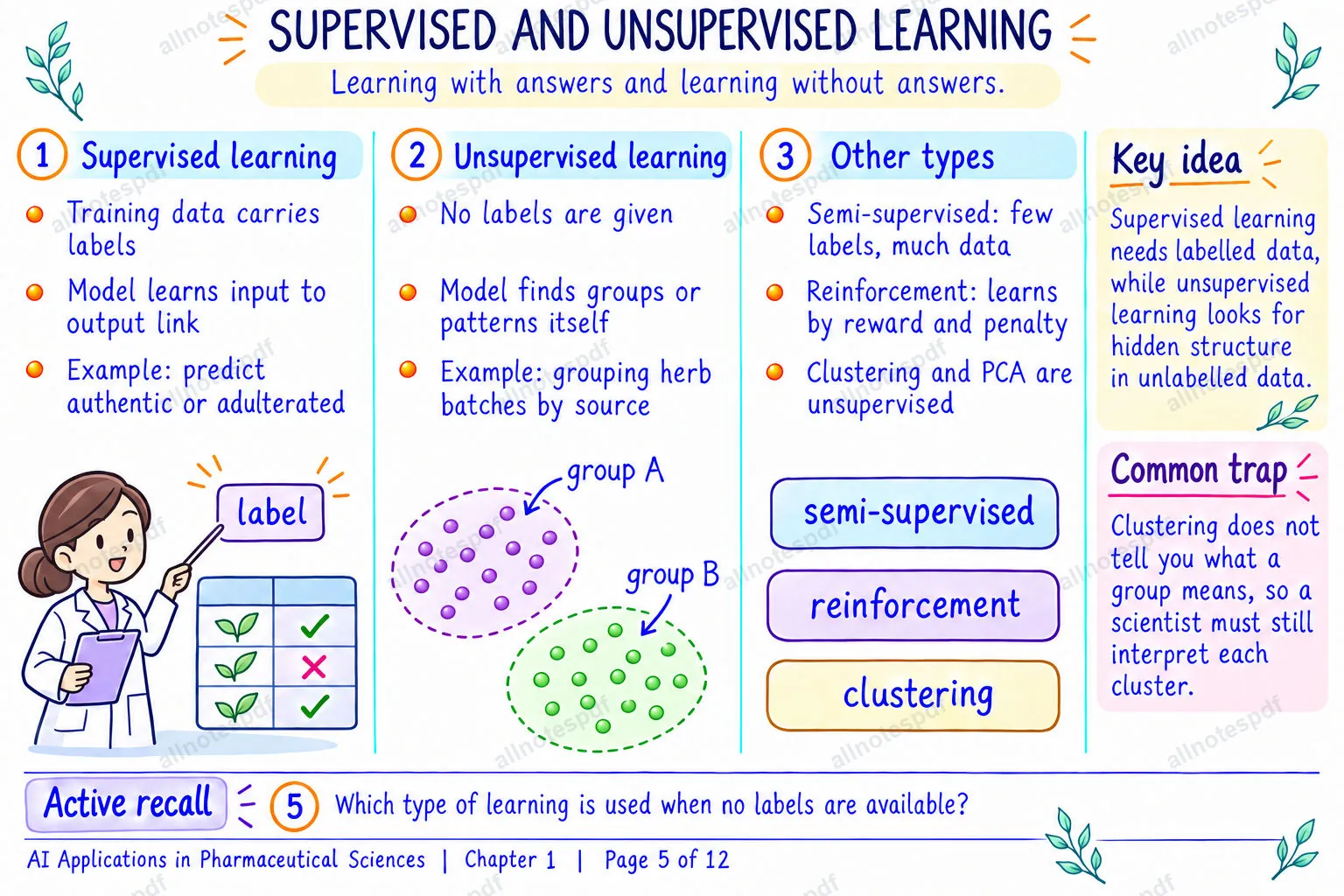
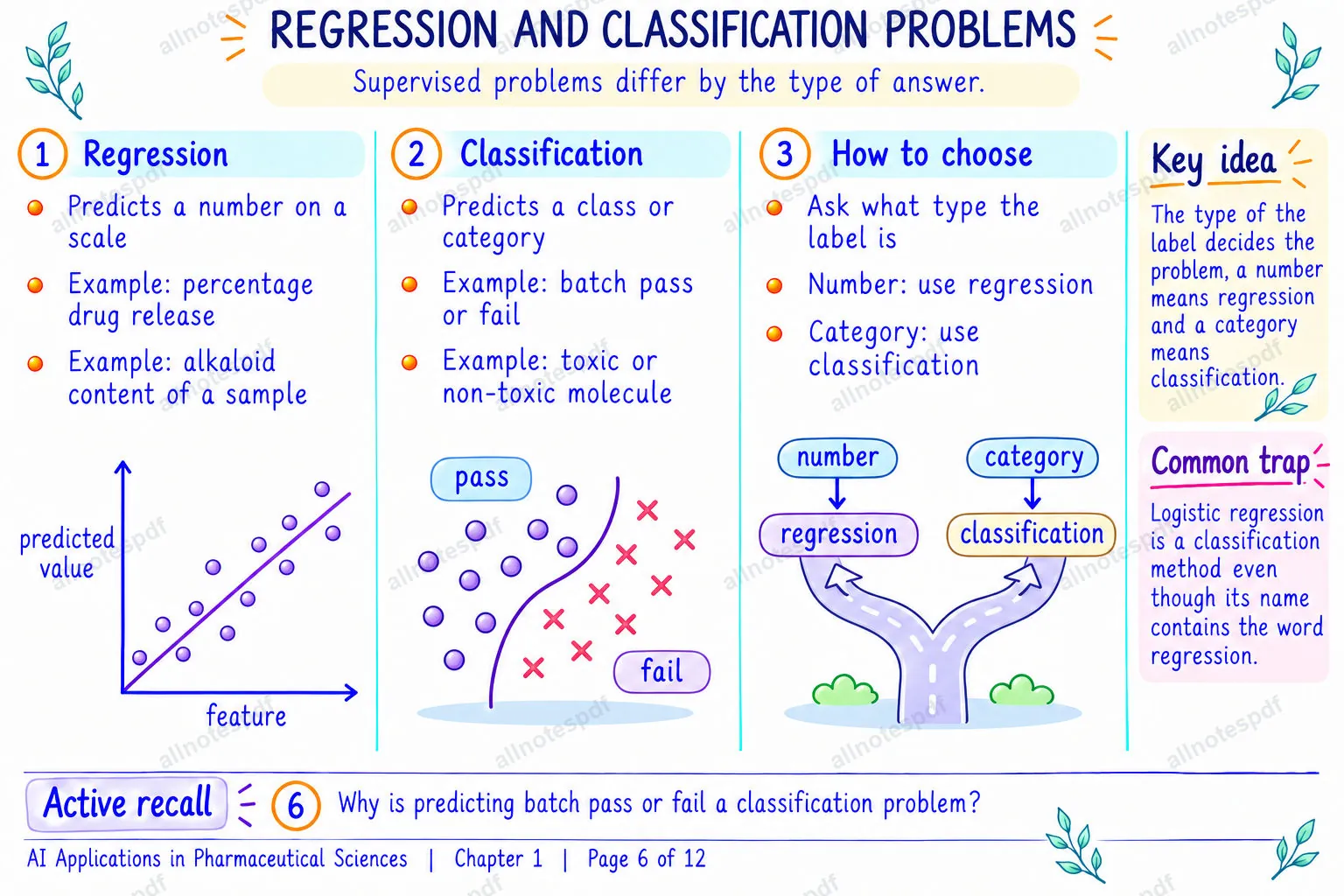
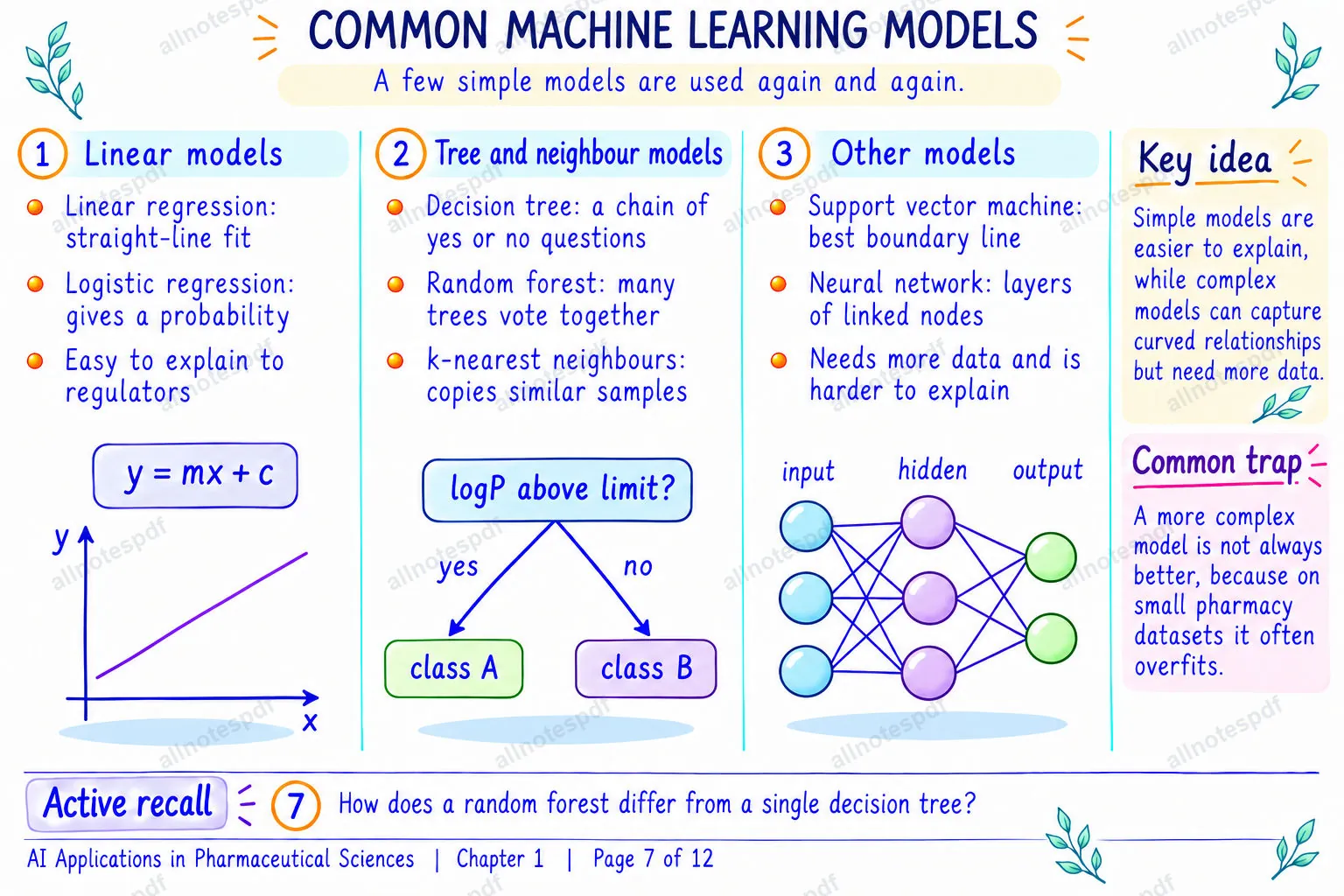
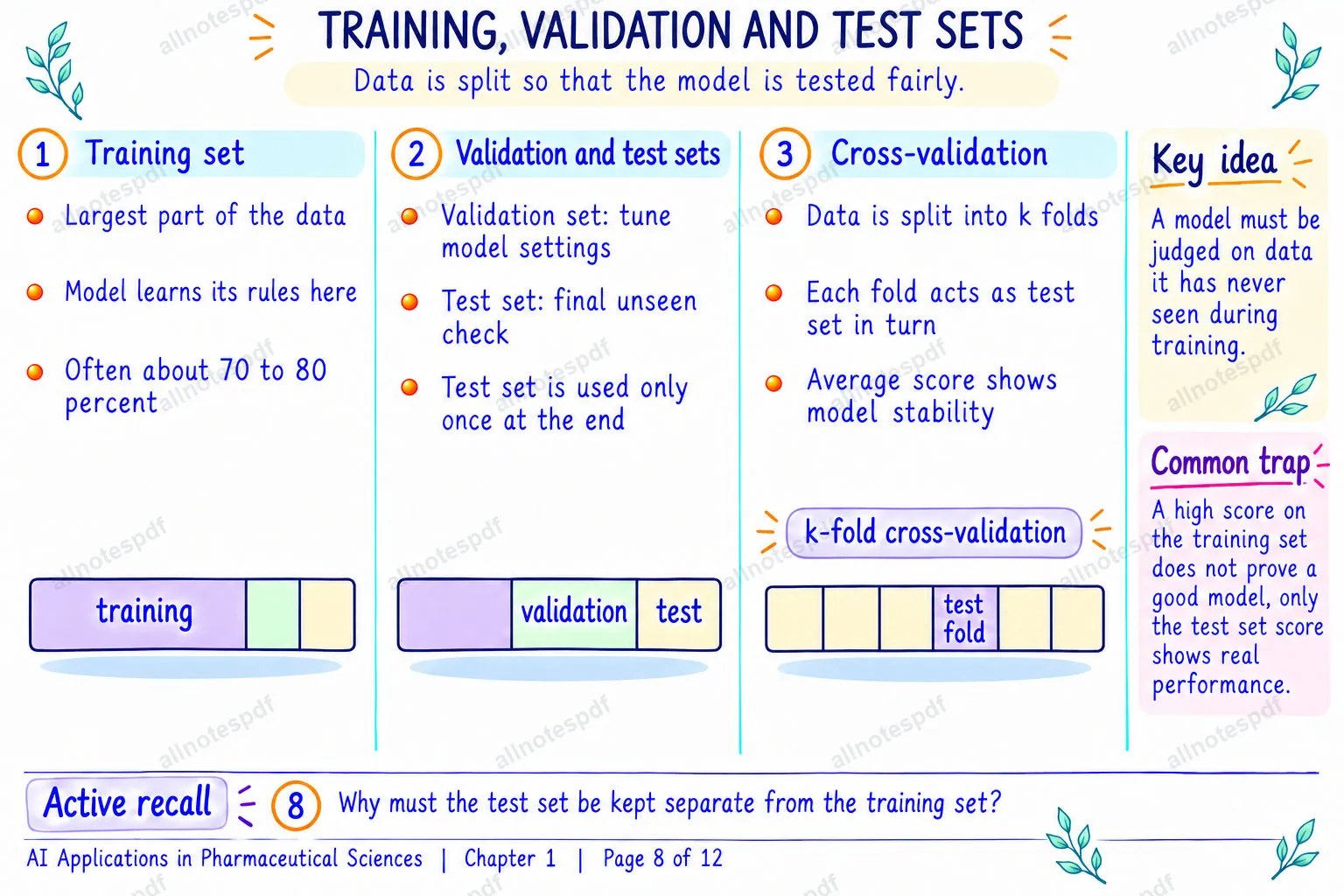
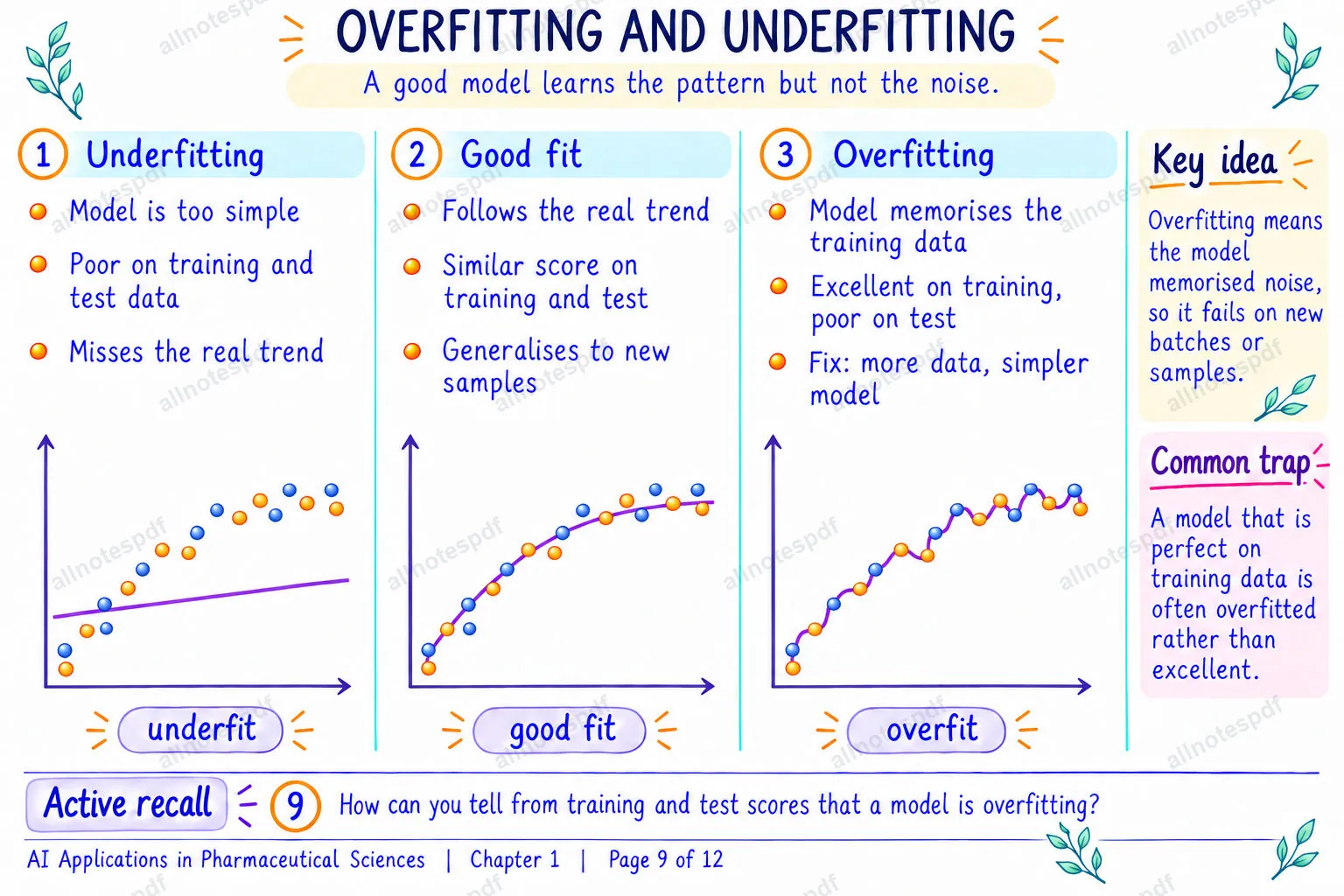
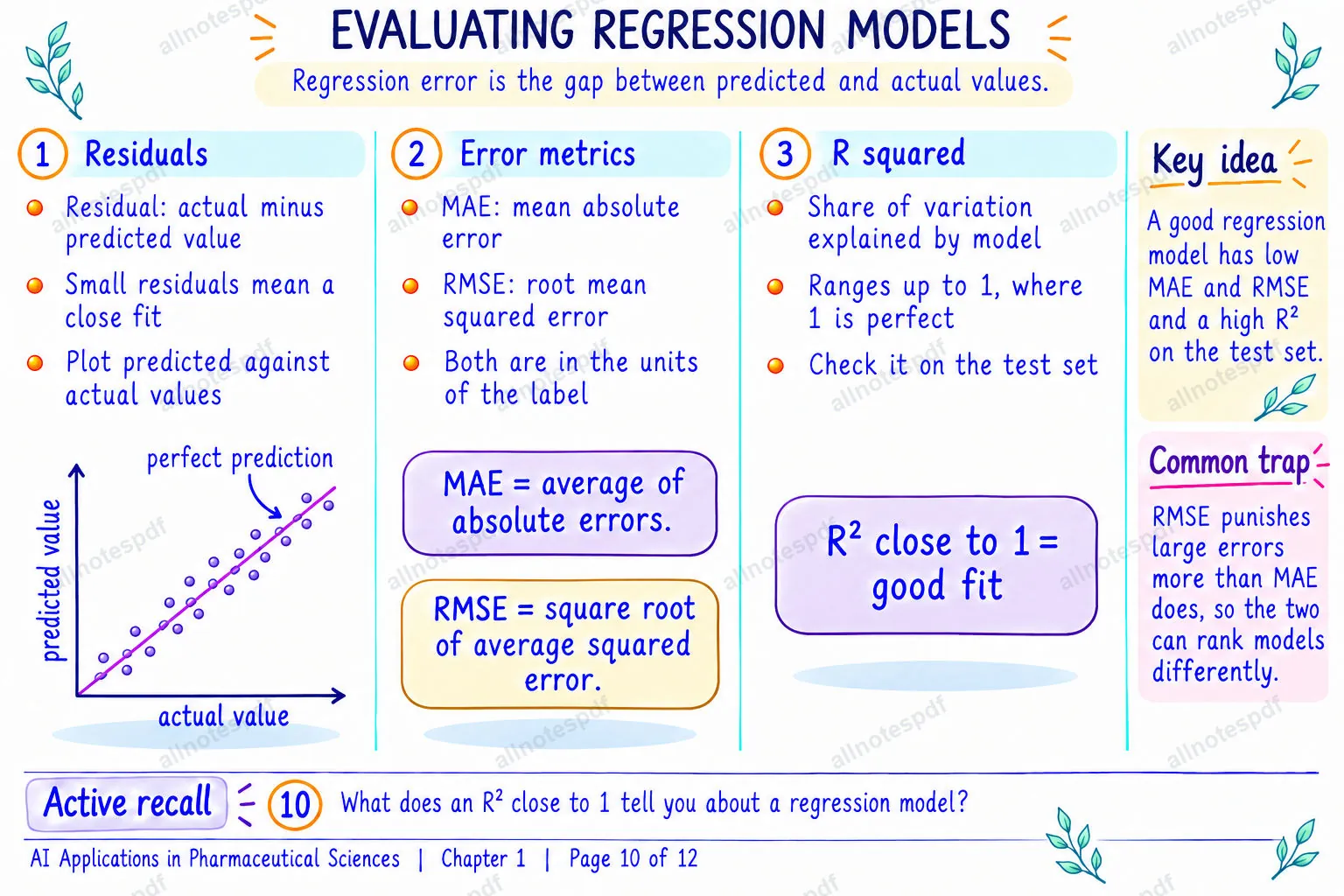
Covers basics of artificial intelligence, machine learning and deep learning, supervised and unsupervised learning, regression and classification, features and labels, training and test sets, overfitting and evaluation metrics.
Covers representation of crude drug data as morphological, microscopic, phytochemical, chromatographic and spectral features, and structuring, cleaning, encoding and quality checking of herbal datasets for predictive modelling.
Covers classification models for authentic versus adulterated crude drugs, regression models for secondary metabolite yield, AI in phytochemical screening and prioritisation.
Covers conversion of molecular structures into numerical descriptors such as MW, logP, HBD, HBA and TPSA, Lipinski rule of five, structured chemical datasets and QSAR modelling with its validation.
Covers regression and classification models for IC₅₀, solubility, ADMET properties and toxicity, virtual screening and lead optimisation concepts, and the limitations of ML models with the importance of chemical reasoning.
Covers dosage form development stages and formulation variables, design of experiments, machine learning in formulation optimisation and excipient selection, and regression modelling for solubility and bioavailability enhancement.
Covers time–concentration modelling of drug release (zero order, first order, Higuchi, Korsmeyer–Peppas), model comparison, machine learning for release prediction, stability study design, degradation trends.
Covers digital data acquisition in pharmaceutical production (sensors, PLC, SCADA, historians, MES, LIMS, PAT), data integrity, quality by design terms, critical quality attributes, critical process parameters, risk assessment.
Covers logistic regression for batch pass/fail prediction, confusion matrix and metrics, class imbalance, feature importance in process monitoring, predictive maintenance.
Introduction to chemometrics and multivariate analytical data, spectral pre-processing, principal component analysis, partial least squares regression, calibration and validation.
Covers chromatographic peak modelling and interpretation (peak parameters, peak shape models, deconvolution, AI peak handling, fingerprints and alignment), substandard and falsified medicines.
What you get
- Format
- Downloadable PDF (not a printed book)
- Chapters
- 11 chapter PDFs, one per syllabus unit topic
- Syllabus
- B Pharm Semester 6, PCI NEP-2020 syllabus for AI Applications in Pharmaceutical Sciences
- Style
- Handwritten-style notes with colour diagrams, flowcharts and formula boxes
- Devices
- Phone, tablet and laptop. Print any chapter if you like
- Access
- Lifetime. Download again anytime from My library
- Instant downloadRight after payment
- Free updatesCorrections added free
- Secure paymentUPI, cards, net banking